Showing posts with label poetry. Show all posts

Friday, 5 June 2015

Death of a War Poet: Walter Lyon 8 May 1915

I apologise that during the General Election I missed three centenaries of war poets. These will now appear on Tuesday, Wednesday and Thursday Friday of this week.


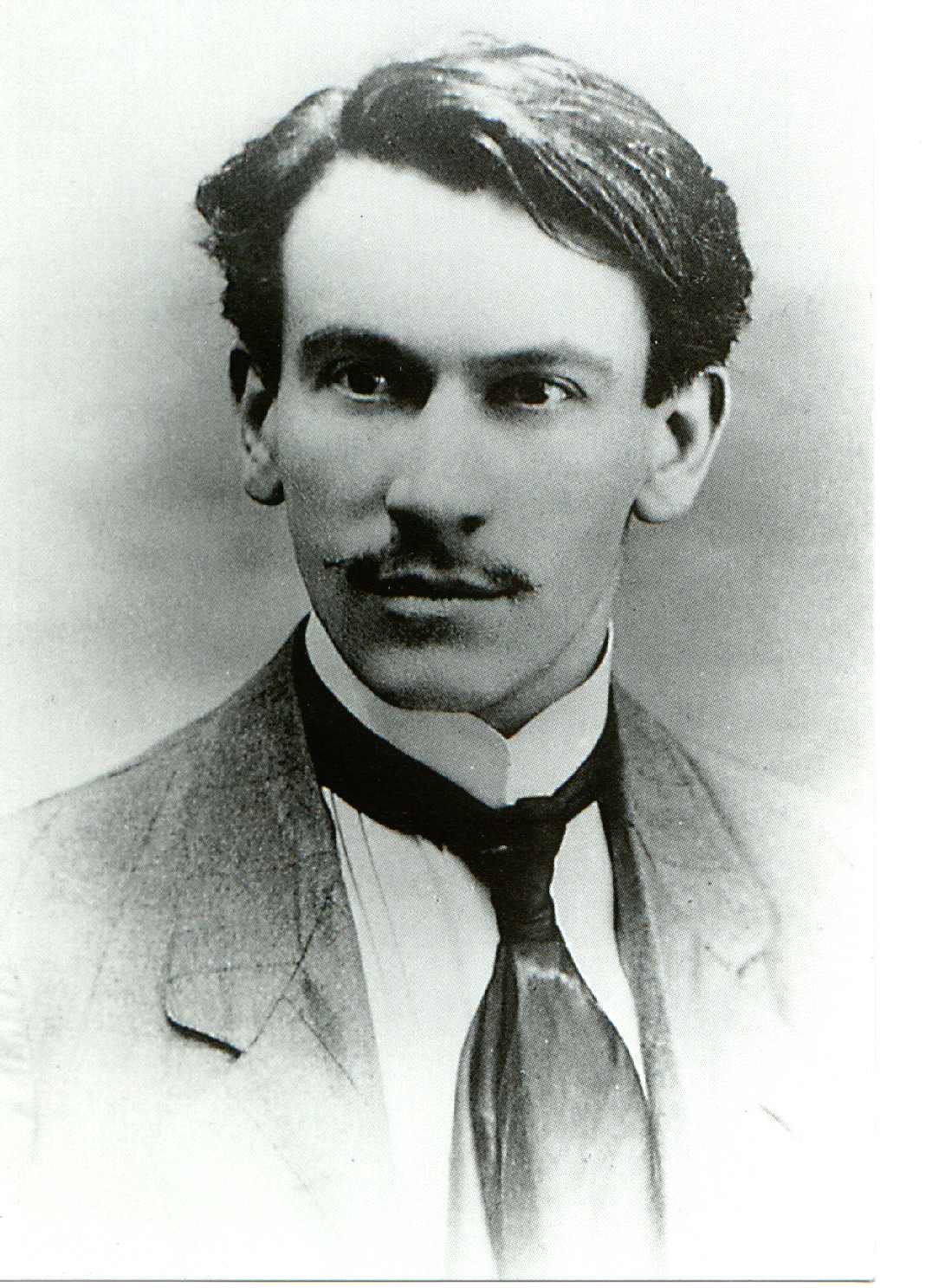
Walter Scott Stuart Lyon was one of five sons of Walter and Isabella Lyon of Tantallon Lodge, North Berwick. He was born on 1 October 1886. He went to Haileybury, before going up to Balliol College, Oxford to study classics.

He volunteered for the 9th Battallion Royal Scots before the war being appointed as a second Lieutenant on 14 December 1909, while at the same time undergoing his law training in Edinburgh. He graduated in law in 1912 and was admitted as a Scottish Advocated later in the same year on Lieutenant on 17th December in the same year.

At the outbreak of war he was appointed staff-captain to the Lothian Brigade but rejoined his battalion in early 1915. In February 1915 Lieutenant Lyon found himself in the terraces near Glencose Wood, Ypres. After this first experience in the line he wrote two poems Easter at Ypres and Lines Written in a Fire Trench. A couple of weeks after this during the fiercest fighting of the second battle of Ypres he wrote two more On a Grave in a Trench and I Tracked a Dead Man Down a Trench.

On 23rd April 1915 he was mentioned in dispatches by Major John Ewing:


"C Company had come to a halt behind a hedge which was so thickly girt with barbed wire that men could not break through without great labour. Noticing this, Lieutenant Lyon very cooly stood up and, taking out his wire-cutters, began to make gaps. Machine-guns played with him, but withouy any sign of haste he proceeded with his task, never stopping until he had the rendered the hedge penetrable."


In May he was located in dugouts in Potijze Woods near the Menin Road about 200 yards from the firing line. On the 8th May the shelling was so fierce that trees were uprooted and tops sliced by shrapnel. Many men died in the onslaught and like Lyon many had not known grave.

A book of his poems Easter at Ypres 1915 and other poems was published in 1916 a mixture of poems he had written before the war plus the four mentioned here and others from the war period.

Of his brothers two of the others were killed in the war and a third died while a student at Haileybury.

I tracked a dead man down a trench

I tracked a dead man down a trench,
I knew not he was dead.&nbsp
They told me he had gone that way,
And there his foot-marks led.
The trench was long and close and curved,
It seemed without an end;
And as I threaded each new bay

I thought to see my friend.
At last I saw his back. He crouched
As still as still could be,
And when I called his name aloud
He did not answer me.

The floor-way of the trench was wet
Where he was crouching dead;
The water of the pool was brown,
And round him it was red.

I stole up softly where he stayed
With head hung down all slack,
And on his shoulders laid my hands
And drew him gently back.

And then, as I had guessed, I saw
His head, and how the crown -
I saw then why he crouched so still,
And why his head hung down.

Walter Scott Stuart Lyon 1 October 1886 North Berwick, East Lothian, Scotland  - 8 May 1915 Potijze Woods, Near Ypres, Belgium

Wednesday, 3 June 2015

Death of a War Poet: Rupert Brooke 23 April 1915

I apologise that during the General Election I missed three centenaries of war poets. These will now appear on Tuesday, Wednesday and Thursday of this week.

Rupert Brooke is one of the best known of the English War Poets, not just amongst those who died but also those who survived.

He was born in Rugby on the 3rd August 1887 the second of Rugby School schoolmaster William Parker Brooke. He travelled Europe and wrote a thesis John Webster and the Elizabethan Drama which earned him a place at King's College, Cambridge to read Classics. While up at Cambridge he became a member of the Cambridge Apostles, was elected President of the Cambridge University Fabian Society and formed the Marlowe Society drama club.

He made friends with the Bloomsbury group of writers some admired his talent, others his boyish good looks, which had allegedly prompted the Irish poet W.B. Yeats to describe him as the "handsomest young man in England". But he was also part of other literary groups the Georgian Poets and the Dymock Group. He also spent some time from 1910 until the outbreak of war renting rooms in the Old Vicarage, Grantchester (now the home of Jeffrey Archer).

He published his first volume of poetry Poems in 1911. Along with his friend Edward Marsh the following year he compiled an anthology Georgian Poetry 1911-12. Marsh was to draw another friend Winston Churchill to the literary talent of his friend Brooke. Just before he died his final volume of poems in his lifetime 1914, and Other Poems (1915) was published. It was based on his five sonnets Peace, Safety, The Dead, The Dead, The Soldier which formed his rally cry to the nation.

In 1912 he suffered what a Harley Street doctor described as a "severe mental breakdown", following three serious relationship breakdowns in the previous five years with the actress Cathleen Nesbitt, his engagement to Noël Olivier and Katherine Laird Cox. But he was widely travelled having spent time in Munich in 1911 to improve his German, and two further visits before the outbreak of war. But he also travelled to USA, Canada and the South Pacific for a year from May 1913. His stay in Tahiti produced some of his best poetry as well as allegedly a daughter with a local woman Taatamata.

Shortly after his return from his trip War was declared, Brooke used his friendship with Churchill to be granted a commission into a new unit of the Royal Naval Division an amphibious unit. He took part in the Antwerp Expedition in October 1914. In February 1915 he set sail with the British Mediterranean Expeditionary Froce bound for Gallipoli. However, Brooke developed sepsis from an infected mosquito bite. He died at 4:46pm on St George's Day, 23 April 1915, which of course is also Shakespeare's birthday on a hospital ship moored in a bay of the Greek Island of Skyros in the Aegean Sea. The expeditionary force had orders to set sail immediately so the Cambridge classics graduate was buried in an olive grove on the island at 11pm.

At his graveside were his close friend William Denis Browne the composer, pianist and music critic (who would die on 4 June at Gallipoli),  fellow poet Patrick Shaw-Stewart (who will feature later in this series) and the Prime Minister's son Arthur Asquith who would be wounded out of action having his leg amputate in January 1918 after being wounded on 17 December 1917 with the rank of Brigadier-General.

His younger brother 2nd Lt. William Alfred Cotterill Brooke of the 8th Battalion London Regiment (Post Office Rifles) was to be killed in action near Le Rutoire Farm, France on 14th June 1915, he had only joined his Battalion in France on 25 May.

Rupert Chawner Brooke 3 Aug 1887 Rugby, Warwickshire, England - 23 Apr 1915 Skyros, GreeceSee also: The other poets who died in the war.

Rather than quote his 1914 poems here are two more that sum up the war. The second a fragment was written in the final week of his life.

The Funeral of Youth: Threnody

The day that YOUTH had died,
There came to his grave-side,
In decent mourning, from the country's ends,
Those scatter'd friends
Who had lived the boon companions of his prime,
And laughed with him and sung with him and wasted,
In feast and wine and many-crown'd carouse,
The days and nights and dawnings of the time
When YOUTH kept open house,
Nor left untasted
Aught of his high emprise and ventures dear,
No quest of his unshar'd --
All these, with loitering feet and sad head bar'd,
Followed their old friend's bier.
FOLLY went first,
With muffled bells and coxcomb still revers'd;
And after trod the bearers, hat in hand --
LAUGHTER, most hoarse, and Captain PRIDE with tanned
And martial face all grim, and fussy JOY,
Who had to catch a train, and LUST, poor, snivelling boy;
These bore the dear departed.
Behind them, broken-hearted,
Came GRIEF, so noisy a widow, that all said,
"Had he but wed
Her elder sister SORROW, in her stead!"
And by her, trying to soothe her all the time,
The fatherless children, COLOUR, TUNE, and RHYME
(The sweet lad RHYME), ran all-uncomprehending.
Then, at the way's sad ending,
Round the raw grave they stay'd. Old WISDOM read,
In mumbling tone, the Service for the Dead.
There stood ROMANCE,
The furrowing tears had mark'd her rouged cheek;
Poor old CONCEIT, his wonder unassuaged;
Dead INNOCENCY's daughter, IGNORANCE;
And shabby, ill-dress'd GENEROSITY;
And ARGUMENT, too full of woe to speak;
PASSION, grown portly, something middle-aged;
And FRIENDSHIP -- not a minute older, she;
IMPATIENCE, ever taking out his watch;
FAITH, who was deaf, and had to lean, to catch
Old WISDOM's endless drone.
BEAUTY was there,
Pale in her black; dry-eyed; she stood alone.
Poor maz'd IMAGINATION; FANCY wild;
ARDOUR, the sunlight on his greying hair;
CONTENTMENT, who had known YOUTH as a child
And never seen him since. And SPRING came too,
Dancing over the tombs, and brought him flowers --
She did not stay for long.
And TRUTH, and GRACE, and all the merry crew,
The laughing WINDS and RIVERS, and lithe HOURS;
And HOPE, the dewy-eyed; and sorrowing SONG; --
Yes, with much woe and mourning general,
At dead YOUTH's funeral,
Even these were met once more together, all,
Who erst the fair and living YOUTH did know;
All, except only LOVE. LOVE had died long ago.

[Fragment]


I strayed about the deck, an hour, to-night
Under a cloudy moonless sky; and peeped
In at the windows, watched my friends at table,
Or playing cards, or standing in the doorway,
Or coming out into the darkness. Still

No one could see me.

                                     I would have thought of them
-Heedless, within a week of battle - in pity,
Pride in their strength and in the weight and firmness
And link'd beauty of bodies, and pity that
This gay machine of splendour 'ld soon be broken,
Thought little of, pashed, scattered ...

                                                          Only, always,

I could but see them - against the lamplights - pass
Like coloured shadows, thinner than filmy glass,
Slight bubble, fainter than the wave's faint light,
That broke to phosphorus out in the night,
Perishing things and strange ghosts - soon to die
To other ghosts - this one, or that, or I.

Tuesday, 2 June 2015

Death of a War Poet: Louis Pergaud 8 April 1915

I apologise that during the General Election I missed three centenaries of war poets. These will now appear on Tuesday, Wednesday and Thursday of this week.

Louis Pergaud was born on the 22 January 1882 in Belmont, in the Doubs department, of the Franche-Compte Region of France. His father was a school master, and Louis excelled at school earning scholarships which enabled him to continue at school completing his studies at the École Normale in Besançon.

He married his first wife in 1903 after completing a year of military service and resumed teaching as Durnes which he had done for a year before carrying out his year in the 35th Infantry. In 1905 he transferred to Landresse and took his wife with him, but he left both in 1907 and headed to Paris. Here he joined fellow poet, long-time friend and inspiration Leon Deubel hoping to achieve his literary dream.

Before he had left for Paris he had published the first of his two collections of poetry, L'Aube was published in 1904. A second collection L'Herbe d'Anvil followed in 1908. In 1910 his first selection of short stories De Goupil à Margot was published, a second collection La Revanche du Corbeau followed the following year.

However, it was his first novel La Guerre des boutons (1912) in which a play war between small boys in two neighbouring villages, in which the losers have their bottons removed as trophies before being sent home, is the most reflective of the years to come. It becomes more sinister as time goes by and the distinction of play and real violence between the boys becomes more blurred. He published a second novel Le Roman de Miraut in 1913.

At the outbreak of war in 1914 the pacifist writer was conscripted into the French army having been placed on the active reserve list following his national service 12 years before. Thus he was involved in the Battle of Lorraine during the German invasion of his homeland France and subsequently on the Western Front. On the 7th April 1915 his regiment attacked German lines near Fresnes-en-Woëvre, Lorraine. He was shot and wounded and fell on barbed wire becoming trapped. Several hours later German soldiers rescued him and other surviving wounded and he was transported to a field hospital behind the German lines. The morning after he was wounded and rescued a French artillery barrage destroyed the hospital killing Pergaud and others.

His novel La Guerre des boutons remains on the French High School Curriculum, has been filmed five times four of them French (1936, 1962, 2011 twice) and once Irish (1994) with the villages revisited as Ballydowse and Carrickdowse. The French versions make it against the backdrop of the Algerian War in 1936 and one of the 2011 versions in occupied France during WWII.

Louis Pergaud 22 January 1882 Belmont, Doubs, France - 8 April 1915 near Fresnes-en-Woëvre, Lorraine, FranceSee also: The other poets who died in the war.

Thursday, 26 March 2015

Death of a Poet: We Will Remember Them Julian Grenfell

Many of the young men who went into battle in World War I were poets, either established or as a way to express themselves and fill the hours of waiting to go over the top. As an act of remembrance to those that never returned to their civilian existence on centenary of the day that they fell I will publish one of their poems.

Today marks 100 years from the passing of Julian Grenfell who as a Captain in the Royal Dragoons on the 13th May had been standing talking to fellow officers near Ypres when a shell landed near them. A splinter hit him in the head and he was transferred to hospital in Boulogne where his mother, father and sister were at his bedside when he died of his wounds. The day after his death alongside news of his death his most famous was published in The Times. 

Into Battle

The naked earth is warm with Spring,
And with green grass and bursting trees
Leans to the sun's gaze glorying,
And quivers in the sunny breeze;
And life is Colour and Warmth and Light,
And a striving evermore for these;
And he is dead who will not fight,
And who dies fighting has increase.
The fighting man shall from the sun
Take warmth, and life from glowing earth;
Speed with the light-foot winds to run
And with the trees to newer birth;
And find, when fighting shall be done,
Great rest, and fullness after dearth.
All the bright company of Heaven
Hold him in their bright comradeship,
The Dog star, and the Sisters Seven,
Orion's belt and sworded hip:
The woodland trees that stand together,
They stand to him each one a friend;
They gently speak in the windy weather;
They guide to valley and ridges end.
The kestrel hovering by day,
And the little owls that call by night,
Bid him be swift and keen as they,
As keen of ear, as swift of sight.
The blackbird sings to him: 'Brother, brother,
If this be the last song you shall sing,
Sing well, for you may not sing another;
Brother, sing.'
In dreary doubtful waiting hours,
Before the brazen frenzy starts,
The horses show him nobler powers; -
O patient eyes, courageous hearts!
And when the burning moment breaks,
And all things else are out of mind,
And only joy of battle takes
Him by the throat and makes him blind,
Through joy and blindness he shall know,
Not caring much to know, that still
Nor lead nor steel shall reach him, so
That it be not the Destined Will.
The thundering line of battle stands,
And in the air Death moans and sings;
But Day shall clasp him with strong hands,
And Night shall fold him in soft wings.


Grenfell attended Eton along with fellow war poet Patrick Shaw-Stewart, before going up to Balliol College Oxford, where he is known to have bullied Philip Sassoon who was later an MP and a cousin of Siegfried. He joined the army in 1910 and , he was the son of William Grenfell who had been Liberal MP for Salisbury (1880-86) and Hereford (1892-3) resigning after falling out with Gladstone over Home Rule, he returned to the commons as Conservative MP for Wycombe (1900-1905) before becoming Baron Desborough. His next oldest brother Gerald William died about 2 months after his elder brother about a mile away from where the shell struck and the youngest brother Ivo George as to perish in a car crash in 1926.

On 1 January 1915 Julian Grenfell was awarded the Distinguished Service Order:
On 17 November he succeeded in reaching a point behind the enemy's trenches and making an excellent reconnaissance, furnishing early information of a pending attack by the enemy.

There are very few poems by Grenfell that exist. But some had been published in the Eton College Chronicle and while studying there also in London World and Vanity Fair.

Julian Henry Francis Grenfell DSO 30 March 1888 London, England - 26 May 1915 Boulogne-sur-Mer, France

See also: The other poets who died in the war.

Friday, 14 November 2014

A poem for equality

I'd love to be regarded as just a person but in Northern Ireland I am not.
The DUP look on me as a dirty blood, my doctors have a different thought.
The DUP call me as promiscuous, but partners would tell them otherwise
The DUP say I'm not child safe, despite niece and nephew's smiles.
The DUP think I'm anti-Christian, yet I have a faith just like they themselves espouse.

Yet even my church can't judge me on faith alone because of being gay I suppose.
I've been called "one of them" by the new health minister to my face,
Yet when we meet at family gatherings it can be he looks ill at ease

Sadly not all people are equal with each other here in Northern Ireland,
Not just with those around you but 'cross England, Wales and Scotland
Those who claim to support the union and keep us all as British
When if comes to our equality they act with anger and are skittish.
Because from their view point as white and male, protestant heterosexuals
Though loyal they claim to the Queens, to queens they act abysmal.
They life a live of privilege tell us they stand for equality
Yet their failure to deliver on that is plain for all to see.

You see when you place a petition of concern and fight our equality in courts
It clear that those words are hollow, we look past such words to your thoughts.
And there the truth is all to clear, other words ring through our ears
Because you still want to save Ulster from Sodomy after all these years.
Yet what you fear is that we actually are normal just like you
Want families and weddings and to not to stand out in a queue
Unless of course we want to, but that's a valid choice as well
So don't cover up our frustrations as "everything's going swell".
We live, we eat, we vote, we sleep, we serve you and your kin
Yet to treat us as your equals when will that walk begin.

To tell us we should expect not to be served, for others freedom of conscience,

That fighting for our equality can be discriminated against. Hence,
When we face a hurdle, that you and some of faith place in our way
We'll reach out those those with a stronger voice to let us have our say.
To challenge privilege you want to hold on to for a few, elect, the chosen ones.
Yet some of us are friends, your servers, family, daughters, sons?

So while we wait for you to enact on adoption, allow us a family life,

We'll carry on the fight for husband to wed husband and wife to take a wife.
While you take the blood of anyone when supplies are running low,
It's irrational that when MSM meet criteria that's fine elsewhere you still say no.
By your actions they shall know you, is what the good book proclaims
Your actions aren't loving when on equality all there is is shame.

So listen to what we're saying, look at the evidence science lights upon,
You've not stifle our cries of "unfair" the fight for equality rumbles on.


© 2014 Stephen Glenn 

Footnote This poem started to write itself in my head during the whole Ashers debate, it came to a head when Nelson McCausland wrote this opinion piece in the Belfast Telegraph. Some of the words on this then became an adaptation of my own comments.


 ,

Monday, 3 November 2014

Death of a Poet: We Will Remember Them Georg Trakl 3 November 2014

Georg Trakl was an Austrian pharmacist, poet and playwright who spent the first 21 years of his life in the home town of Mozart, before moving to Vienna. Despite his parents being protestants he was sent the the Catholic elementary school and started writing poetry from the age of 13.

After quitting high school he worked in a pharmacy and pursued this as a career as well as writing two short plays All Soul's Day and Fata Morgana but neither was a success. His move to Vienna in 1908 was so he could study pharmacy. But also brought him to the attention of Ludwig von Ficker the editor of the journal Der Brenner who became his patron. He approached Ludwig Wittgenstein the philosopher who provided a stipend anonymously so that Trakl could write full time in 1913.

At the outbreak of war he was sent to the Eastern Front as a medical official to treat soldiers in Galicia (which is parts of Ukraine and Poland today). But he suffered bouts of depression treating so many victims of the war. During a serious bout of depression Trakl wrote to Ficker for advise who suggested he communicate with Wittgenstein. Upon received the note from Trakl, Wittgenstein headed to the hospital in which Trakl was stationed only to find he had died of a cocaine overdose.

While not the victim of a bullet, mortar or bombing Trakl is neither the less a victim of the war. He is also the first of the poets in the series to have died on the Eastern Front and therefore his poem about that front is the one that I shall use to mark his memory.

On the Eastern Front
The winter storm's mad organ playing
is like the Volk's dark fury,
the black-red tidal wave of onslaught,
defoliated stars.
Her features smashed, her arms silver,
night calls to the dying men,
beneath shadows of November's ash,
ghost casualties heave.
A spiky no-man's-land encloses the town.
The moon hunts petrified women
from their blood-spattered doorsteps.
Grey wolves have forced the gates.
    
Im Osten
Den wilden Orgeln des Wintersturms
Gleicht des Volkes finstrer Zorn,
Die purpurne Woge der Schlacht,
Entlaubter Sterne.
Mit zerbrochnen Brauen, silbernen Armen
Winkt sterbenden Soldaten die Nacht.
Im Schatten der herbstlichen Esche
Seufzen die Geister der Erschlagenen.
Dornige Wildnis umgürtet die Stadt.
Von blutenden Stufen jagt der Mond
Die erschrockenen Frauen.
Wilde Wölfe brachen durchs Tor.

Georg Trakl 3 Feb 1887 Salzburg, Cisleithania, Austria-Hungary - 3 Nov 1914 Krákow, Austria-Hungary (now Poland)See also: The other poets who died in the war.

Thursday, 30 October 2014

Death of a Poet: We Will Remember Them Ernst Stadler 30 October 1914

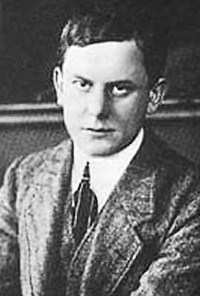
The German expressionist poet Ernst Stadler had been a Rhodes Scholar in 1906 and studied at Magdalan College, Oxford. Less than a decade later he would no doubt have been facing some of his fellow Oxford colleagues in the war. He was born in the disputed border territory of Alsace-Lorraine in the town of Colmar, as a result of the Franco-Prussian War the region had been annexed by the new German Empire since 1871.

His early work was inspired by amongst others the first poet to have fallen WWI the French poet Charles Péguy with whom he had corresponded. But in 1911 he started to develop a different style more inspired by the free verse style of Walt Whitman which led to his 1913 collection Der Aufbruch.

It was from this collection that one poem Setting Out was used by some as evidence of early enthusiasm for the war, but Stadler himself was disturbed by the lack of respect for human life and how many were becoming desensitised to the violence.

At the outbreak of war he joined the German army as an artillery officer. He was killed in battle during the First Battle of Ypres.


Setting Out


There was a time before, when fanfares bloodily tore 
apart my own impatient brain,
So that, up-rearing like a horse, it bit savagely at the rein.
Then tambourines sounded the alarm on every path
And a hail of bullets seemed like the loveliest music on earth.
Then, suddenly, life stood still. Different paths were leading between the old trees.
Rooms were tempting. It was sweet to linger and sweet to rest at ease,
And, unchaining my body from reality, like some old dusty armour,
To nestle voluptuosly in the down of soft dream-hour,
But then one morning through the misty air there rolled the echo of the bugle's ring.
Hard, sharp, whistling like a sword-thrust. As if suddenly on darkness lights had started shining.
As if, through the tented dawn, trumpet-jolts had roused the sleeping forces,
The waking soldiers leapt up and struck their tents and busily harnessed their horses.
I was locked into lines like splints that thrust into morning, with fire on helmet and stirrup,
Forward, with battle in my blood and in my eyes, and reins held up.
Perhaps in the evening, victory marches would play around my head.
Perhaps we all would lie somewhere, stretched out among the dead.
But before the reaching out and before the sinking,
Our eyes would see their fill of world and sun, and take it in, glowing and drinking.

Ernst Stadler 11 Oct 1883 Colmar, Alsace, (then Germany) - 30 Oct 1914 Zandvoorde, Flanders, Belgium

Thursday, 4 September 2014

Death of a Poet: We Will Remember Them Charles Péguy 4 September 1914

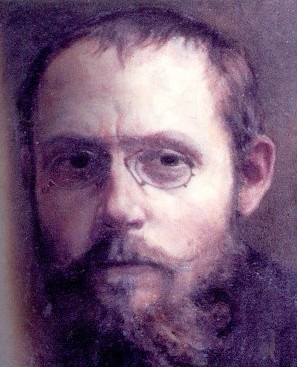
The first poet to die in the First World War was the French free verse poet Charles Péguy who was socialist and nationalist. From 1908 he was a non-practising Roman Catholic and an uneasy agnostic.

When the war broke out he became a Lieutenant in the 19th Company of the French 276th Infantry Regiment. His military career was short lived, he was shot in the forehead the day before the start of the Battle of the Marne, the second major battle of the war in a bit to prevent the German advance into France and to take away their freedom.

It is therefore his poem Freedom that we will use to remember him, translated below into English.

Freedom


GOD SPEAKS:

When you love someone, you love him as he is.


I alone am perfect.

It is probably for that reason

That I know what perfection is

And that I demand less perfection of those poor people.

I know how difficult it is.

And how often, when they are struggling in their trials,

How often do I wish and am I tempted to put my hand under their stomachs

In order to hold them up with my big hand

Just like a father teaching his son how to swim

In the current of the river

And who is divided between two ways of thinking.

For on the one hand, if he holds him up all the time and if he holds him too much,

The child will depend on this and will never learn how to swim.

But if he doesn't hold him up just at the right moment

That child is bound to swallow more water than is healthy for him.

In the same way, when I teach them how to swim amid their trials

I too am divided by two ways of thinking.

Because if I am always holding them up, if I hold them up too often,

They will never learn how to swim by themselves.

But if I don't hold them up just at the right moment,

Perhaps those poor children will swallow more water than is healthy for them.

Such is the difficulty, and it is a great one.

And such is the doubleness itself, the two faces of the problem.

On the one hand, they must work out their salvation for themselves. That is the rule.

It allows of no exception. Otherwise it would not be interesting. They would not be men.

Now I want them to be manly, to be men, and to win by themselves

Their spurs of knighthood.

On the other hand, they must not swallow more water than is healthy for them,

Having made a dive into the ingratitude of sin.

Such is the mystery of man's freedom, says God,

And the mystery of my government towards him and towards his freedom.

If I hold him up too much, he is no longer free

And if I don't hold him up sufficiently, I am endangering his salvation.

Two goods in a sense almost equally precious.


For salvation is of infinite price.

But what kind of salvation would a salvation be that was not free?

What would you call it?

We want that salvation to be acquired by himself,

Himself, man. To be procured by himself.

To come, in a sense, from himself. Such is the secret,

Such is the mystery of man's freedom.

Such is the price we set on man's freedom.

Because I myself am free, says God, and I have created man in my own image and likeness.

Such is the mystery, such the secret, such the price

Of all freedom.

That freedom of that creature is the most beautiful reflection in this world

Of the Creator's freedom. That is why we are so attached to it,

And set a proper price on it.

A salvation that was not free, that was not, that did not come from a free man could in no wise be attractive to us. What would it amount to?

What would it mean?

What interest would such a salvation have to offer?

A beatitude of slaves, a salvation of slaves, a slavish beatitude, how do you expect me to interested in that kind of thing? Does one care to be loved by slaves?

If it were only a matter of proving my might, my might has no need of those slaves, my might is well enough known, it is sufficiently known that I am the Almighty.

My might is manifest enough in all matter and in all events.


My might is manifest enough in the sands of the sea and in the stars of heaven.


It is not questioned, it is known, it is manifest enough in inanimate creation.


It is manifest enough in the government,


In the very event that is man.


But in my creation which is endued with life, says God, I wanted something more.


Infinitely better. Infinitely more. For I wanted that freedom.


I created that very freedom. There are several degrees to my throne.


When you once have known what it is to be loved freely, submission no longer has any taste.


All the prostrations in the world

Are not worth the beautiful upright attitude of a free man as he kneels. All the submission, all the dejection in the world


Are not equal in value to the soaring up point,


The beautiful straight soaring up of one single invocation


From a love that is free.

Charles Péguy 7 Jan 1873 Orléans, France - 4 Sep 1914 Villeroy, Seine-et-Marne, France
See also: The other poets who died in the war.

Friday, 30 August 2013

Seamus Heaney Tribute 4: Keeping Going

My final poem is one that sums up my Ulster Scots roots and the fact that I have spent over 10 years of my life living and working in Scotland.

Keeping Going

The piper coming from far away is you
With a whitewash brush for a sporran
Wobbling round you, a kitchen chair
Upside down on your shoulder, your right arm
Pretending to tuck the bag beneath your elbow,
Your pop-eyes and big cheeks nearly bursting
With laughter, but keeping the drone going on
Interminably, between catches of breath.


The whitewash brush. An old blanched skirted thing
On the back of the byre door, biding its time
Until spring airs spelled lime in a work-bucket
And a potstick to mix it in with water.
Those smells brought tears to the eyes, we inhaled
A kind of greeny burning and thought of brimstone.
But the slop of the actual job
Of brushing walls, the watery grey
Being lashed on in broad swatches, then drying out
Whiter and whiter, all that worked like magic.
Where had we come from, what was this kingdom
We knew we'd been restored to? Our shadows
Moved on the wall and a tar border glittered
The full length of the house, a black divide
Like a freshly opened, pungent, reeking trench.

Piss at the gable, the dead will congregate.
But separately. The women after dark,
Hunkering there a moment before bedtime,
The only time the soul was let alone,
The only time that face and body calmed
In the eye of heaven.

Buttermilk and urine,
The pantry, the housed beasts, the listening bedroom.
We were all together there in a foretime,
In a knowledge that might not translate beyond
Those wind-heaved midnights we still cannot be sure
Happened or not. It smelled of hill-fort clay
And cattle dung. When the thorn tree was cut down
You broke your arm. I shared the dread
When a strange bird perched for days on the byre roof.


That scene, with Macbeth helpless and desperate
In his nightmare--when he meets the hags agains
And sees the apparitions in the pot--
I felt at home with that one all right. Hearth,
Steam and ululation, the smoky hair
Curtaining a cheek. 'Don't go near bad boys
In that college that you're bound for. Do you hear me?
Do you hear me speaking to you? Don't forget!'
And then the postick quickening the gruel,
The steam crown swirled, everything intimate
And fear-swathed brightening for a moment,
Then going dull and fatal and away.

Grey matter like gruel flecked with blood
In spatters on the whitewash. A clean spot
Where his head had been, other stains subsumed
In the parched wall he leant his back against
That morning like any other morning,
Part-time reservist, toting his lunch-box.
A car came slow down Castle Street, made the halt,
Crossed the Diamond, slowed again and stopped
Level with him, although it was not his lift.
And then he saw an ordinary face
For what it was and a gun in his own face.
His right leg was hooked back, his sole and heel
Against the wall, his right knee propped up steady,
So he never moved, just pushed with all his might
Against himself, then fell past the tarred strip,
Feeding the gutter with his copious blood.

*

My dear brother, you have good stamina.
You stay on where it happens. Your big tractor
Pulls up at the Diamond, you wave at people,
You shout and laugh about the revs, you keep
old roads open by driving on the new ones.
You called the piper's sporrans whitewash brushes
And then dressed up and marched us through the kitchen,
But you cannot make the dead walk or right wrong.
I see you at the end of your tether sometimes,
In the milking parlour, holding yourself up
Between two cows until your turn goes past,
Then coming to in the smell of dung again
And wondering, is this all? As it was
In the beginning, is now and shall be?
Then rubbing your eyes and seeing our old brush
Up on the byre door, and keeping going.


Tribute to Seamus Heaney 3: Digging

Today marks the death of Ulster's most world renowned poet Seamus Heaney as I said earlier I will be sharing some of his work that has touched me through the years for different reasons.

This next one is another experience we both shared, my father had a sizable vegetable patch out the back of the house I spent my formative years in. Planting seeds and harvesting the various vegetables and fruits became a family endeavour. I was too young then to have homeworks over the weekends but later on when we moved house I would on occasion be working away in my room and hear my parents at work in the garden somewhere below me.

Digging

Between my finger and my thumb
The squat pin rest; snug as a gun.

Under my window, a clean rasping sound
When the spade sinks into gravelly ground:
My father, digging. I look down

Till his straining rump among the flowerbeds
Bends low, comes up twenty years away
Stooping in rhythm through potato drills
Where he was digging.

The coarse boot nestled on the lug, the shaft
Against the inside knee was levered firmly.
He rooted out tall tops, buried the bright edge deep
To scatter new potatoes that we picked,
Loving their cool hardness in our hands.

By God, the old man could handle a spade.
Just like his old man.

My grandfather cut more turf in a day
Than any other man on Toner's bog.
Once I carried him milk in a bottle
Corked sloppily with paper. He straightened up
To drink it, then fell to right away
Nicking and slicing neatly, heaving sods
Over his shoulder, going down and down
For the good turf. Digging.

The cold smell of potato mould, the squelch and slap
Of soggy peat, the curt cuts of an edge
Through living roots awaken in my head.
But I've no spade to follow men like them.

Between my finger and my thumb
The squat pen rests.
I'll dig with it.

Postscript there is something of a irony about this poem inspiring this poet. As someone said to be near the end of my A'Levels I was probably the most widely read poet in the sixth form. The reason being that some of mine would circulate the sixth form centre when we were supposed to be studying and there were more people there than took English Literature.

Tribute to Seamus Heaney 2: Blackberry-Picking

As I said earlier today marks the sad passing of Seamus Heaney and I shall be marking today with some of his poems. This next one reminds me of an activity that I enjoyed around this time of year with my grandfather as we walked along the hedgerow of a farmer friend's fields, him reaching high and me lower.

Blackberry-Picking 

 Late August, given heavy rain and sun
For a full week, the blackberries would ripen.
At first, just one, a glossy purple clot
Among others, red, green, hard as a knot.
You ate that first one and its flesh was sweet
Like thickened wine: summer's blood was in it
Leaving stains upon the tongue and lust for
Picking. Then red ones inked up and that hunger
Sent us out with milk cans, pea tins, jam-pots
Where briars scratched and wet grass bleached our boots.
Round hayfields, cornfields and potato-drills
We trekked and picked until the cans were full
Until the tinkling bottom had been covered
With green ones, and on top big dark blobs burned
Like a plate of eyes. Our hands were peppered
With thorn pricks, our palms sticky as Bluebeard's.
We hoarded the fresh berries in the byre.
But when the bath was filled we found a fur,
A rat-grey fungus, glutting on our cache.
The juice was stinking too. Once off the bush
The fruit fermented, the sweet flesh would turn sour.
I always felt like crying. It wasn't fair
That all the lovely canfuls smelt of rot.
Each year I hoped they'd keep, knew they would not.

Tribute to Seamus Heaney 1: Death of a Naturalist

Growing up in Northern Ireland part of of English Literature course was to study the works of Irish posts. Even then we had a living luminary that the world recognised who wrote sometimes about things so quintessentially about Ulster and in language that was so us (or our grandparents as some of us were urban youth) that it made us hunger for more.

Today we have learnt that the Nobel Laureate (1995) poet has passed away. As a tribute today I'll be publishing some of his works, some are the ones I learnt about in school, some are ones I came to love later. All are the essence of the man and his rural upbringing in Ulster.


Death of a Naturalist (1966)

All year the flax-dam festered in the heart
Of the townland; green and heavy headed
Flax had rotted there, weighted down by huge sods.
Daily it sweltered in the punishing sun.
Bubbles gargled delicately, bluebottles
Wove a strong gauze of sound around the smell.
There were dragon-flies, spotted butterflies,
But best of all was the warm thick slobber
Of frogspawn that grew like clotted water
In the shade of the banks. Here, every spring
I would fill jampotfuls of the jellied
Specks to range on window-sills at home,
On shelves at school, and wait and watch until
The fattening dots burst into nimble-
Swimming tadpoles. Miss Walls would tell us how
The daddy frog was called a bullfrog
And how he croaked and how the mammy frog
Laid hundreds of little eggs and this was
Frogspawn. You could tell the weather by frogs too
For they were yellow in the sun and brown
In rain.
Then one hot day when fields were rank
With cowdung in the grass the angry frogs
Invaded the flax-dam; I ducked through hedges
To a coarse croaking that I had not heard
Before. The air was thick with a bass chorus.
Right down the dam gross-bellied frogs were cocked
On sods; their loose necks pulsed like sails. Some hopped:
The slap and plop were obscene threats. Some sat
Poised like mud grenades, their blunt heads farting.
I sickened, turned, and ran. The great slime kings
Were gathered there for vengeance and I knew
That if I dipped my hand the spawn would clutch it.