...have women secured more first preferences than men in the European seat.
Despite only have 4 of the 10 candidates women broke through a certain glass ceiling in last week's European election in Northern Ireland for the first time they secured more first preference votes than the men.
In 1979 there was only one female candidate Bernadette McAliskey who was standing as an independent republican. Her 33,969 (5.94%) was enough to see her survive the first three stages before she was eliminated, there were twelve men against her in those first elections.
Five years later in 1984 men took 100% of the votes as there were no women among the eight candidates.
In 1989 there was again a sole lady, Myrtle Boal was standing for the Conservatives and secured 25,789 (4.82%) of the first preferences there were nine men against her five secured more votes than her. She was also the first woman not to be eliminated, but then this was an election that the surplus of the stage one winner elected the final seat on stage two and nobody was excluded.
1994 saw Myrtle joined on the ballot by Mary Clark-Glass (Alliance), Dodie McGuinness (one of three Sinn Féin candidates), June Champion (Independent) and Susannah Thompson (one of three Natural Law candidates). It was the most congested Northern Irish European ballot so far with 17 candidates. Between them the five women won 47,477 (8.48%) votes.
However, after the high of five female candidates there were none again in 1999 when 8 men filled the ballot.
In 2004 women returned to the ballot and one of them was to make a little history. Bairbre de Brún (Sinn Féin) was to become the first female Northern Irish MEP she was joined on the ballot by Lindsay Whitcroft (Green). The two secured as record 119,351 (21.73%) first preferences for women.
2009 was to see another ground breaking result with two of the three seats being won by women. Diane Dodds (DUP) was to join de Brún in Brussels but they were the only two women amongst the 7 candidates. Bairbre de Brún was also the first woman to top the poll as between them they secured 214,530 (44.27%) of the first preferences.
Which brings us to this year de Brún had been replaced as Sinn Féin candidate by Martina Anderson, along with Dodds they took the top two spots after first preferences. Anna Lo (Alliance) was 6th and Tina McKenzie (NI21) completed the quartet. Between them their 345,961 votes was greater than the 6 men they stood against who got 285,164. So in the 2014 European Election here in Northern women secured 55.25% of the first preferences from the 626,125 valid votes.
Wednesday, 28 May 2014

Never in the history of Northern Irish politics...part 3
...have the pick three not dominated in European quota collection.
Many have passed comment on the length of time this European election has taken. But unlike in previous elections no candidate or pair of candidates has dominated enough in first preferences to make the transfer of their surplus more or less decide the election.
In 1979 Ian Paisley was elected on first preferences of 1.19 quotas, John Hume was second on 0.98 quotas and was swiftly elected with the exclusion of the various independent and smaller nationalist/republican votes in the third stage. The UUP actually had 0.87 of a quota in the first round but this was split between two candidates which had them sitting 3rd and 4th on first preferences and it wasn't until his running mate Harry West's vote pushed John Taylor over the quota.
In other words the big three had 3.04 quotas between them.
In 1984 Paisley sailed in with 1.34 quotas and the UUP putting up just one candidate this time also saw John Taylor in with 1.08 quota on first preferences. Hume for the SDLP was slightly further away this time with 0.88 of a quota, but was soon elected no the fourth stage with the exclusion of Alliance and UPUP.
However, the three who got elected had ensured that 3.3 quotas were theirs from first preference.
1989 saw Paisley in first with 1.20 quotas and Hume also sneaked in on first preference with 1.02. Jim Nicholson replacing Taylor on the UUP ticket was on 0.89 which was close enough to see him elected on the transfers of Paisley's surplus at stage 2. Between then the 3.11 was enough to ensure they were all elected without the elimination of another candidate.
In 1994 Paisley and Hume again sailed through on first preferences with 1.17 and 1.16 of a quota respectively. Nicholson was just under with 0.95, but once again it was enough for his election on the surplus of Paisley. The 3.28 quotas was just behind the peak of 1984 for centralising the vote within the big three.
Paisley's last European election in 1999 saw him once again top the poll with 1.14 quota. Hume also facing his last Euro electorate also was safely in with 1.12 and Nicholson posted at the time the poorest showing for one the big three with only 0.70 of a quota. It was still a respectable 2.96 of a quota. The elimination of all four of the lowest candidates made it a two person run off for the last seat, but it was only when Paisley's surplus was distributed in stage 3 that Nicholson was elected.
In 2004 we saw new faces for all but the UUP of the big four.But Jim Allister then still with the DUP carried on the Paisley legacy securing 1.27 of a quota to be elected top, Sinn Féin's Bairbre de Brún was also over the threshold with 1.05 of a quota. Nicholson faired worse still with only 0.66 of a quota which meant that the Allister surplus didn't see him over the line but the elimination of all bar the SDLP candidate did.
The top three parties were still polling 2.98 quotas. But there had been a shift in the nationalist vote and now the SDLP found themselves just behind the UUP in 4th.
Last time out in 2004 was the first time after 4 cycles that only person achieved the quota on first preferences. It was Bairbre de Brún who managed it with 1.04 of a quota a drop in the share she had last time. Nicholson rallied slightly to 0.68 but Diane Dodds replacing the defected Jim Allister only secured 0.73 enough to be ahead of the UUP but the DUP's worst ever showing in the European elections. The reason for this was the 0.54 that Allister himself secured for his new TUV party.
However, the net result was the that big three only had 2.45 quotas between then and only 0.04 of a surplus from first preferences. However, elimination of the Green and Alliance for stage 2, followed by the TUV in stage three soon saw the UCU-NF candidate safely over the threshold, and Dodds deemed elected due to the small surpluses not being enough to get the SDLP above her.
Which leads to this year, Martina Anderson of Sinn Féin was elected first round but with only 1.02 of a quota the smallest winning quota ever in Northern Irish European elections. Diane Dodds improved to 0.84 but Nicholson only just sneaked over half a quota on 0.53, the SDLP weren't far off with 0.52.
It meant that the three largest parties had dipped even further down to 2.39 and the battle was entered to secure almost double their first preference between the UUP and SDLP. Allister for the TUV had 0.48 of it and would not be eliminated until stage 7 and the three non-designated parties (Alliance, Grenn, NI21) had 0.42 of their quota their highest ever. This is why the election went so deep, there wasn't masses of other naturally unionist votes to be transferred until a late stage.
Many have passed comment on the length of time this European election has taken. But unlike in previous elections no candidate or pair of candidates has dominated enough in first preferences to make the transfer of their surplus more or less decide the election.
In 1979 Ian Paisley was elected on first preferences of 1.19 quotas, John Hume was second on 0.98 quotas and was swiftly elected with the exclusion of the various independent and smaller nationalist/republican votes in the third stage. The UUP actually had 0.87 of a quota in the first round but this was split between two candidates which had them sitting 3rd and 4th on first preferences and it wasn't until his running mate Harry West's vote pushed John Taylor over the quota.
In other words the big three had 3.04 quotas between them.
In 1984 Paisley sailed in with 1.34 quotas and the UUP putting up just one candidate this time also saw John Taylor in with 1.08 quota on first preferences. Hume for the SDLP was slightly further away this time with 0.88 of a quota, but was soon elected no the fourth stage with the exclusion of Alliance and UPUP.
However, the three who got elected had ensured that 3.3 quotas were theirs from first preference.
1989 saw Paisley in first with 1.20 quotas and Hume also sneaked in on first preference with 1.02. Jim Nicholson replacing Taylor on the UUP ticket was on 0.89 which was close enough to see him elected on the transfers of Paisley's surplus at stage 2. Between then the 3.11 was enough to ensure they were all elected without the elimination of another candidate.
In 1994 Paisley and Hume again sailed through on first preferences with 1.17 and 1.16 of a quota respectively. Nicholson was just under with 0.95, but once again it was enough for his election on the surplus of Paisley. The 3.28 quotas was just behind the peak of 1984 for centralising the vote within the big three.
Paisley's last European election in 1999 saw him once again top the poll with 1.14 quota. Hume also facing his last Euro electorate also was safely in with 1.12 and Nicholson posted at the time the poorest showing for one the big three with only 0.70 of a quota. It was still a respectable 2.96 of a quota. The elimination of all four of the lowest candidates made it a two person run off for the last seat, but it was only when Paisley's surplus was distributed in stage 3 that Nicholson was elected.
In 2004 we saw new faces for all but the UUP of the big four.But Jim Allister then still with the DUP carried on the Paisley legacy securing 1.27 of a quota to be elected top, Sinn Féin's Bairbre de Brún was also over the threshold with 1.05 of a quota. Nicholson faired worse still with only 0.66 of a quota which meant that the Allister surplus didn't see him over the line but the elimination of all bar the SDLP candidate did.
The top three parties were still polling 2.98 quotas. But there had been a shift in the nationalist vote and now the SDLP found themselves just behind the UUP in 4th.
Last time out in 2004 was the first time after 4 cycles that only person achieved the quota on first preferences. It was Bairbre de Brún who managed it with 1.04 of a quota a drop in the share she had last time. Nicholson rallied slightly to 0.68 but Diane Dodds replacing the defected Jim Allister only secured 0.73 enough to be ahead of the UUP but the DUP's worst ever showing in the European elections. The reason for this was the 0.54 that Allister himself secured for his new TUV party.
However, the net result was the that big three only had 2.45 quotas between then and only 0.04 of a surplus from first preferences. However, elimination of the Green and Alliance for stage 2, followed by the TUV in stage three soon saw the UCU-NF candidate safely over the threshold, and Dodds deemed elected due to the small surpluses not being enough to get the SDLP above her.
Which leads to this year, Martina Anderson of Sinn Féin was elected first round but with only 1.02 of a quota the smallest winning quota ever in Northern Irish European elections. Diane Dodds improved to 0.84 but Nicholson only just sneaked over half a quota on 0.53, the SDLP weren't far off with 0.52.
It meant that the three largest parties had dipped even further down to 2.39 and the battle was entered to secure almost double their first preference between the UUP and SDLP. Allister for the TUV had 0.48 of it and would not be eliminated until stage 7 and the three non-designated parties (Alliance, Grenn, NI21) had 0.42 of their quota their highest ever. This is why the election went so deep, there wasn't masses of other naturally unionist votes to be transferred until a late stage.
Tuesday, 27 May 2014
Never in the history of Northern Irish politics...Part 2
...have the Alliance votes transferred so poorly to unionist candidates.
In 1979 the Alliance candidate was eliminated after the election of John Hume SDLP elected after stage 3 and all the last Independent nationalist Bernadette McAliskey who was eliminated at stage 4 so we have no idea how else the Alliance vote would have transferred.
In 1984 Alliance were eliminated along with UPUP candidate Jim Kilfedder but the only parties left after their elimination were SDLP and Sinn Fein so it is impossible again to guage the split in preference.
In 1989 we didn't get to the elimination stage and with DUP and SDLP elected on stage one the Paisley surplus was sufficient to elect Jim Nicholson UUP. The same thing happened in 1994.
In 1999 there was an option as to where the Alliance vote may have transferred to. At the time of elimination Sean Neeson had 14,391 votes. But he was eliminated as the same time as the PUP, UKUP and Natural Law candidates. Jim Nicholson UUP and Mitchell McLaughlin Sinn Féin were both left. But as only 1709 went to Sinn Féin and even if all of these had been from Neeson was only 11.87% of his vote.Over 50% of the Alliance vote that would have transferred therefore would have gone UUP assuming that 33% was non transferable.
In 2004 there was no Alliance candidate as they along with the Workers Party, Conservative and Labour parties were backing John Gilliland the outgoing President of the Ulster Farmers' Union.
To complicate matters in 2009 once again the Alliance were eliminated at the same time as another party. This time it was the Greens. Combined they transferred 38.44% to the SDLP but 43.78% to UCUNF, DUP and TUV unionist candidates. The Alliance had the bigger share of those transfers with 62.88% of the combined total that was reallocated.
That leads to this week, Anna Lo was eliminated by herself in stage 6. 44.58% of her vote went to the SDLP with UUP, DUP and TUV still in play. The unionists got only 21.25% of her vote.
Hypothesis 1
Taking this back to 2004 it would have equated to the SDLP getting 11,903 votes off Alliance of the 16,325, but would have left 23,012 votes to go of which 15,764 would have been a totally transferable Green vote. For the sake of argument let's assume that they did all transfer that leaves 4,422 Green votes left to fill up the SDLP vote and 11, 342 going to unionism. That would still result in 7,248 Alliance votes that could go unionist but even that is 27.15% of the Alliance transfers.
Clearly there would not have been 100% transferable votes from the Greens. Therefore there has to be an even bigger reduction in the proportion of Alliance votes than the mere 6% that this hypothetical scenario shows.
Hypothesis 1b
Lets assume that a universal 17.77% of non transferables for both parties (7,548 of the 42,463 combined was actually non transferable) of those Green votes were non-transferable, this would come off the resultant unionist vote. It would mean 8540 of their votes go to unionism, leaving 10,050 of Alliances vote or 37.64% heading to unionists.
Hypothesis 2
The Green Party candidate Ross Brown was eliminated at stage 4 along with NI21's Tina McKenzie. Their combined vote of 21900.53 at the time of elimination saw 8661.10 going to Alliance to we discount that to leave 13,239.43.
Of that 3107 (23.46%) went nationalist and 5809 went unionist (43.87%)
Applying that to their 2009 vote 3,699 votes went nationalist and 6,916 unionist.
The impact this would have on 2009 would be that 12,626 (47.29%) Alliance votes were nationalist and 11,674 (43.62%) unionist at a 91% transferability rate.
As it is I suspect that the Green vote would have had a higher proportion of nationalists to NI21 which means that the proportion of Alliance votes going Unionist would actually have been higher in 2009.
The Alliance has for a while not transferred toward DUP in large numbers and as a by product TUV. But has been relatively happy to go UUP. However, this time that has not been the case.
The reasons are pretty clear. The outright attack on Naomi Long even before the vote in Belfast City Council on flag and the lack of timely or outright condemnation of the attack on Alliance party office or elected reps homes that resulted from the Unionists. There is also the issues of equality on which the UUP have been as intolerant as DUP but the SDLP and Sinn Féin more liberal. This could be borne out by those who campaigned for equal marriage saying if your not prepared to vote for us and ours you'll not get our vote.
As I also said there was 17.8% non transferable from Alliance and Greens in 2009, but 33% non transferable on this occasion. So even those that would not transfer to SDLP have not transferred to unionism.
Hardline unionism may well benefit them in FPTP Westminster elections (providing they work on the pacts) but it is damaging the unionists on getting transfers from Alliance in other elections in Northern Ireland.
In 1979 the Alliance candidate was eliminated after the election of John Hume SDLP elected after stage 3 and all the last Independent nationalist Bernadette McAliskey who was eliminated at stage 4 so we have no idea how else the Alliance vote would have transferred.
In 1984 Alliance were eliminated along with UPUP candidate Jim Kilfedder but the only parties left after their elimination were SDLP and Sinn Fein so it is impossible again to guage the split in preference.
In 1989 we didn't get to the elimination stage and with DUP and SDLP elected on stage one the Paisley surplus was sufficient to elect Jim Nicholson UUP. The same thing happened in 1994.
In 1999 there was an option as to where the Alliance vote may have transferred to. At the time of elimination Sean Neeson had 14,391 votes. But he was eliminated as the same time as the PUP, UKUP and Natural Law candidates. Jim Nicholson UUP and Mitchell McLaughlin Sinn Féin were both left. But as only 1709 went to Sinn Féin and even if all of these had been from Neeson was only 11.87% of his vote.Over 50% of the Alliance vote that would have transferred therefore would have gone UUP assuming that 33% was non transferable.
In 2004 there was no Alliance candidate as they along with the Workers Party, Conservative and Labour parties were backing John Gilliland the outgoing President of the Ulster Farmers' Union.
To complicate matters in 2009 once again the Alliance were eliminated at the same time as another party. This time it was the Greens. Combined they transferred 38.44% to the SDLP but 43.78% to UCUNF, DUP and TUV unionist candidates. The Alliance had the bigger share of those transfers with 62.88% of the combined total that was reallocated.
That leads to this week, Anna Lo was eliminated by herself in stage 6. 44.58% of her vote went to the SDLP with UUP, DUP and TUV still in play. The unionists got only 21.25% of her vote.
Hypothesis 1
Taking this back to 2004 it would have equated to the SDLP getting 11,903 votes off Alliance of the 16,325, but would have left 23,012 votes to go of which 15,764 would have been a totally transferable Green vote. For the sake of argument let's assume that they did all transfer that leaves 4,422 Green votes left to fill up the SDLP vote and 11, 342 going to unionism. That would still result in 7,248 Alliance votes that could go unionist but even that is 27.15% of the Alliance transfers.
Clearly there would not have been 100% transferable votes from the Greens. Therefore there has to be an even bigger reduction in the proportion of Alliance votes than the mere 6% that this hypothetical scenario shows.
Hypothesis 1b
Lets assume that a universal 17.77% of non transferables for both parties (7,548 of the 42,463 combined was actually non transferable) of those Green votes were non-transferable, this would come off the resultant unionist vote. It would mean 8540 of their votes go to unionism, leaving 10,050 of Alliances vote or 37.64% heading to unionists.
Hypothesis 2
The Green Party candidate Ross Brown was eliminated at stage 4 along with NI21's Tina McKenzie. Their combined vote of 21900.53 at the time of elimination saw 8661.10 going to Alliance to we discount that to leave 13,239.43.
Of that 3107 (23.46%) went nationalist and 5809 went unionist (43.87%)
Applying that to their 2009 vote 3,699 votes went nationalist and 6,916 unionist.
The impact this would have on 2009 would be that 12,626 (47.29%) Alliance votes were nationalist and 11,674 (43.62%) unionist at a 91% transferability rate.
As it is I suspect that the Green vote would have had a higher proportion of nationalists to NI21 which means that the proportion of Alliance votes going Unionist would actually have been higher in 2009.
The Alliance has for a while not transferred toward DUP in large numbers and as a by product TUV. But has been relatively happy to go UUP. However, this time that has not been the case.
The reasons are pretty clear. The outright attack on Naomi Long even before the vote in Belfast City Council on flag and the lack of timely or outright condemnation of the attack on Alliance party office or elected reps homes that resulted from the Unionists. There is also the issues of equality on which the UUP have been as intolerant as DUP but the SDLP and Sinn Féin more liberal. This could be borne out by those who campaigned for equal marriage saying if your not prepared to vote for us and ours you'll not get our vote.
As I also said there was 17.8% non transferable from Alliance and Greens in 2009, but 33% non transferable on this occasion. So even those that would not transfer to SDLP have not transferred to unionism.
Hardline unionism may well benefit them in FPTP Westminster elections (providing they work on the pacts) but it is damaging the unionists on getting transfers from Alliance in other elections in Northern Ireland.
Never in the history of Northern Irish politics...Part 1
...has it taken the long to elect a DUP MEP.
But that is not a matter of length of time but number of stages.
In the first 1979 elections with a quota of 143,060, Ian Paisley secured 170,688 first preference votes and was elected after stage one.
In 1984 the quota was up to 171,330 but so too was Rev Paisley's vote he secured 230,251 and was elected on first stage.
In 1989 needing just 133,703 Paisley got 160,110 first preferences and was elected along with John Hume on 136,335.
In 1994 it was Paisley again who topped the poll with 163,246 a mere 1254 ahead of Hume when again both exceeded the quota of 139,967.
In 1999 and his last election to Europe Paisley secured 192,762 over Hume's 190,731 and well beyond the quota of 169,703.
2004 saw Jim Allister then of the DUP replace Paisley as the candidate but his 175,761 surpassed the quota of 137,320 as did Bairbre de Bruín of Sinn Féin with 144,451 first preference votes.
In 2009 Diane Dodds made her first appearance as the DUP candidate the quota was 121,144 but Mrs Dodds only managed 88,346 first preference votes. She was elected on the third count without reaching the quota as the surpluses of Bairbre de Bruín and Jim Nicholson UUP would not have been enough for Alban Maguinness to over take the 115,722 she had reached after the exclusion of the Green, Alliance and TUV candidates.
This year we know it took Mrs Dodds until stage 7 and the elimination of the TUV once again to be deemed elected, this time however she had acquired the quota.
But that is not a matter of length of time but number of stages.
In the first 1979 elections with a quota of 143,060, Ian Paisley secured 170,688 first preference votes and was elected after stage one.
In 1984 the quota was up to 171,330 but so too was Rev Paisley's vote he secured 230,251 and was elected on first stage.
In 1989 needing just 133,703 Paisley got 160,110 first preferences and was elected along with John Hume on 136,335.
In 1994 it was Paisley again who topped the poll with 163,246 a mere 1254 ahead of Hume when again both exceeded the quota of 139,967.
In 1999 and his last election to Europe Paisley secured 192,762 over Hume's 190,731 and well beyond the quota of 169,703.
2004 saw Jim Allister then of the DUP replace Paisley as the candidate but his 175,761 surpassed the quota of 137,320 as did Bairbre de Bruín of Sinn Féin with 144,451 first preference votes.
In 2009 Diane Dodds made her first appearance as the DUP candidate the quota was 121,144 but Mrs Dodds only managed 88,346 first preference votes. She was elected on the third count without reaching the quota as the surpluses of Bairbre de Bruín and Jim Nicholson UUP would not have been enough for Alban Maguinness to over take the 115,722 she had reached after the exclusion of the Green, Alliance and TUV candidates.
This year we know it took Mrs Dodds until stage 7 and the elimination of the TUV once again to be deemed elected, this time however she had acquired the quota.
Monday, 26 May 2014
The issue with messaging and the messenger
First off let me just say I am still IN! Yes in my sporran are still Euros from a train trip I took the other weekend down to Dublin to the seen the finish of the Giro d'Italia's visit to Ireland. I'm also glad that for the first 10 years that I lived in Scotland I worked in a job that would not have existed here were it not for freedom of movement across Europe allowing us to operate a pan European, multi-language contact centre all under the one roof. I'm pleased that unlike five years ago we were able to talk about European issues on the doorsteps or phones, unlike last time when we were overshadowed by the expenses excesses of MPs.
However, while the message in principle was good the general public didn't get it, or didn't want to listen. Why?
Go back four years and what was the mantra we were shouting out, what was our hashtag. Then it was #IagreewithNick yes on the back of it being said in the first leader's debate we turned it into a personality cult. Is it any wonder that four years later after not delivering on a number of issues that voters did agree with Nick on that they no longer agree with him. But it goes further than that, they not only no longer agree with him but they no longer trust him, and as a result they no longer listen to what he has to say.
It didn't take long for me to realise that we had a trust problem. In the lead up to the 2011 Scottish elections I got a lt of correspondence from people who had voted for me in 2010 and some even in 2005. Some of it said that while they still trusted me they would only vote Lib Dem if I was standing. As you imagine I replied back and in the run up to the election personally vouched for the Lib Dem candidates in my area to everyone who had contacted me.
Then we have also had the other mantra that where we work, we win. But this has been twisted a little bit this weekend into there are areas that we hold and have worked hard and maintained. The implication in saying this is that others have not been working hard, pounding the streets, delivering leaflets, knocking on doors, ringing the phones. Of course that is just not true. So there is now a disconnect between HQ and those who for months, years and decades have been carrying out the work for the party.
The leadership even last night was dismissing the number of signatories on the LibDems4Change letter. Paddy Ashdown said on Sunday Politics that there were more people who liked Lib Dem Friends of Cake than had signed the letter. Well Lib Dem Friends of Cake joined Facebook at Conference in 2011, indeed the day after my birthday, after a discussion in the conference bar. It took two and a half years to reach 360 likes*, the letter at time of writing is now equal to that in a little over 3 days.
However, while there was focus on one of two of those who had signed the letter who may no longer be party members the spokespeople ignore something that the Guardian pointed out:
As this was the figures from this mornings print edition these were some of those first 200 or so that the leadership were dismissing.
In other words you are talking about the hard working and committed members of the party, many of whom are used to getting people's response on the doorsteps and phones or unsolicited through emails and social media from their constituents and local residents over many years. They are also highly likely to have been at the special conference in 2010 to vote in favour of the Coalition Agreement. These are people who face the public daily from outside the Westminster bubble.
Now I know that there are many within my party and circle of friends who disagree with me, but as we entered the election on the catch phrase I agree with Nick, but that message is still remembered but no longer resonates with many of those who voted for us we have an issue. The issue is the messenger, it concerns me the number of times in the last four years I have heard I'll not vote Lib Dem again until you have a new leader and this has been borne out in poll, after poll, after poll.
Yes there are exceptions and well done to all of those who have bucked the trend, but we should not dig into our trenches, we should be a party leading the advance and walking into the sound of gunfire. But at the moment the bullet in our own guns, our message, is not having the impact because those in the field are not prepared to listen to the message as they don't agree with the main messenger. They don't agree with Nick.
It is sad, but having seen the reactions over the last few days I think many of us know that something needs to be done.
I think the reaction of Eamon Gilmore Ireland's DPM and leader of the junior coalition partner this afternoon to losing half his vote down to 7%, losing all three of his MEPs and many of his councillors was telling. It had parallels to the situation the Liberal Democrats faced but he realised it was time for him to go, although it seems he was persuaded by his parliamentary colleagues. But he also said "Where we have done well we must built on that, where we have not we much look at that." This is only part of that he said but it is in marked contrast to what our own leaders are saying ie nothing needs to change.
I know that many fellow Lib Dems will not agree with this and that is your right. But can we please stop hurling personal insults at each other over this disagreement in direction from here on.
* They have since added about another 90 thanks to Paddy's publicity.
However, while the message in principle was good the general public didn't get it, or didn't want to listen. Why?
Go back four years and what was the mantra we were shouting out, what was our hashtag. Then it was #IagreewithNick yes on the back of it being said in the first leader's debate we turned it into a personality cult. Is it any wonder that four years later after not delivering on a number of issues that voters did agree with Nick on that they no longer agree with him. But it goes further than that, they not only no longer agree with him but they no longer trust him, and as a result they no longer listen to what he has to say.
It didn't take long for me to realise that we had a trust problem. In the lead up to the 2011 Scottish elections I got a lt of correspondence from people who had voted for me in 2010 and some even in 2005. Some of it said that while they still trusted me they would only vote Lib Dem if I was standing. As you imagine I replied back and in the run up to the election personally vouched for the Lib Dem candidates in my area to everyone who had contacted me.
Then we have also had the other mantra that where we work, we win. But this has been twisted a little bit this weekend into there are areas that we hold and have worked hard and maintained. The implication in saying this is that others have not been working hard, pounding the streets, delivering leaflets, knocking on doors, ringing the phones. Of course that is just not true. So there is now a disconnect between HQ and those who for months, years and decades have been carrying out the work for the party.
The leadership even last night was dismissing the number of signatories on the LibDems4Change letter. Paddy Ashdown said on Sunday Politics that there were more people who liked Lib Dem Friends of Cake than had signed the letter. Well Lib Dem Friends of Cake joined Facebook at Conference in 2011, indeed the day after my birthday, after a discussion in the conference bar. It took two and a half years to reach 360 likes*, the letter at time of writing is now equal to that in a little over 3 days.
However, while there was focus on one of two of those who had signed the letter who may no longer be party members the spokespeople ignore something that the Guardian pointed out:
"include 45 sitting Councillors, two council group leaders and 33 former Councillors, including one former council leader. [Five] prospective parliamentary candidates, 22 former parliamentary candidates and seven chairs of local parties are also signatories."
As this was the figures from this mornings print edition these were some of those first 200 or so that the leadership were dismissing.
In other words you are talking about the hard working and committed members of the party, many of whom are used to getting people's response on the doorsteps and phones or unsolicited through emails and social media from their constituents and local residents over many years. They are also highly likely to have been at the special conference in 2010 to vote in favour of the Coalition Agreement. These are people who face the public daily from outside the Westminster bubble.
Now I know that there are many within my party and circle of friends who disagree with me, but as we entered the election on the catch phrase I agree with Nick, but that message is still remembered but no longer resonates with many of those who voted for us we have an issue. The issue is the messenger, it concerns me the number of times in the last four years I have heard I'll not vote Lib Dem again until you have a new leader and this has been borne out in poll, after poll, after poll.
Yes there are exceptions and well done to all of those who have bucked the trend, but we should not dig into our trenches, we should be a party leading the advance and walking into the sound of gunfire. But at the moment the bullet in our own guns, our message, is not having the impact because those in the field are not prepared to listen to the message as they don't agree with the main messenger. They don't agree with Nick.
It is sad, but having seen the reactions over the last few days I think many of us know that something needs to be done.
I think the reaction of Eamon Gilmore Ireland's DPM and leader of the junior coalition partner this afternoon to losing half his vote down to 7%, losing all three of his MEPs and many of his councillors was telling. It had parallels to the situation the Liberal Democrats faced but he realised it was time for him to go, although it seems he was persuaded by his parliamentary colleagues. But he also said "Where we have done well we must built on that, where we have not we much look at that." This is only part of that he said but it is in marked contrast to what our own leaders are saying ie nothing needs to change.
I know that many fellow Lib Dems will not agree with this and that is your right. But can we please stop hurling personal insults at each other over this disagreement in direction from here on.
* They have since added about another 90 thanks to Paddy's publicity.
Sunday, 25 May 2014
DUP seeking to disempower voters by limiting choice
During the election campaign we heard the DUP leadership complaining about the split vote in unionism. For these elections that would have less impact as both our councils and European elections are determined by STV. However, as soon as these elections are over what do we learn but that the DUP are in discussions about forming an electoral pact with the UUP ahead of next year's Westminster elections.
They have only themselves to blame however. Three years ago they came out very strongly against the use of the Alternative Vote (AV) in Westminster elections indeed they viewed the referendum as an "unnecessary additional cost", while calling on other issues to be put to a referendum. They also said that AV "does not treat all votes equally and will further disempower voters by increasing the likelihood of hung parliaments". They also joined the rhetoric about deals being done behind closed doors as a result of those hung parliaments, but they appear to have no qualms about making those deals before the voter even has a say.
Is is this second statement that I want to look at. They said that AV would disempower voters, but as I said at the time when I was running the Northern Ireland Yes to Fairer Votes campaign the unionists themselves often disempower voters by forming their electoral pacts in seats.
Not every voter who votes for a unionist politician is going to support every other unionist politician and there are various reasons for this:
This was particularly true in the early days of devolution. Indeed I know I wasn't the only person who refused to give a preference in the first Assembly elections to those parties or individuals who were opposed to the Agreement. That meant that the DUP didn't get a vote from me and others, also some individuals within the UUP also did not get my preference for their equally vehement opposition.
There are some hardline stances that the DUP take that the UUP allow as matters of conscious. These are common in the areas of LGBT legislation and abortion. There will be others but these are headline issues. On the former we know that some UUP individuals have been more in favour of LGBT equality and that is something that voters will be able to ask their candidates at the time of election and may well determine how they would vote.
However, if the two largest Unionist parties form a pact they take away the power of the individual voter in whatever seat they live in to make their own mind up about which of the two they prefer. Those people's votes have not been treated equally. They may be unable to vote unionist if they also disagree with the TUV who are likely to run a full slate or other smaller unionist parties if they have that option.
On the issue of same-sex marriage for example take away a supportive UUP option and the only way a voter might be able to express an unionist opinion would be if the PUP were to stand as they are the only unionist party to have adopted a policy in favour. No offense to the PUP but their chances of being elected are considerably less than most UUP candidates and certainly all DUP candidates would be. Therefore that person who wants to vote unionist but wants to show support for such an issue would find that their vote is not treated equally.
The DUP seem to think that all unionists don't care who they vote for as long as they can vote for a unionist. That of course is not the case and is making assumptions of the electorate. Also if they were to enter a pact with the UUP they would surely have to give up one or two of the safe unionist seats, which currently bar North Down the DUP hold exclusively, to make the offer enticing. So which of the DUP MPs is prepared to give up their seat for this electoral pact to work? Because if they only offer the UUP candidates in SDLP and Sinn Féin facing seats there would be nothing in it for the UUP.
Of course we all know the one seat that the DUP really want a pact with the UUP for. The crown in their view and the thorn in their flesh when they lost it in 2010. A seat they have tried to do everything to undermine the party that has held it since then, a party that they said was dead in the area but that this week's election results have proven is not the case.
So I conclude the DUP are prepared to disempower voters and limit their choice for their own petty political ends. That is not democracy that is despotic in behaviour.
They have only themselves to blame however. Three years ago they came out very strongly against the use of the Alternative Vote (AV) in Westminster elections indeed they viewed the referendum as an "unnecessary additional cost", while calling on other issues to be put to a referendum. They also said that AV "does not treat all votes equally and will further disempower voters by increasing the likelihood of hung parliaments". They also joined the rhetoric about deals being done behind closed doors as a result of those hung parliaments, but they appear to have no qualms about making those deals before the voter even has a say.
Is is this second statement that I want to look at. They said that AV would disempower voters, but as I said at the time when I was running the Northern Ireland Yes to Fairer Votes campaign the unionists themselves often disempower voters by forming their electoral pacts in seats.
Not every voter who votes for a unionist politician is going to support every other unionist politician and there are various reasons for this:
1. They may not agree with them on their stance of working with Ireland and/or Sinn Féin
This was particularly true in the early days of devolution. Indeed I know I wasn't the only person who refused to give a preference in the first Assembly elections to those parties or individuals who were opposed to the Agreement. That meant that the DUP didn't get a vote from me and others, also some individuals within the UUP also did not get my preference for their equally vehement opposition.
2. They may not agree with them on a specific issue
There are some hardline stances that the DUP take that the UUP allow as matters of conscious. These are common in the areas of LGBT legislation and abortion. There will be others but these are headline issues. On the former we know that some UUP individuals have been more in favour of LGBT equality and that is something that voters will be able to ask their candidates at the time of election and may well determine how they would vote.
However, if the two largest Unionist parties form a pact they take away the power of the individual voter in whatever seat they live in to make their own mind up about which of the two they prefer. Those people's votes have not been treated equally. They may be unable to vote unionist if they also disagree with the TUV who are likely to run a full slate or other smaller unionist parties if they have that option.
On the issue of same-sex marriage for example take away a supportive UUP option and the only way a voter might be able to express an unionist opinion would be if the PUP were to stand as they are the only unionist party to have adopted a policy in favour. No offense to the PUP but their chances of being elected are considerably less than most UUP candidates and certainly all DUP candidates would be. Therefore that person who wants to vote unionist but wants to show support for such an issue would find that their vote is not treated equally.
The DUP seem to think that all unionists don't care who they vote for as long as they can vote for a unionist. That of course is not the case and is making assumptions of the electorate. Also if they were to enter a pact with the UUP they would surely have to give up one or two of the safe unionist seats, which currently bar North Down the DUP hold exclusively, to make the offer enticing. So which of the DUP MPs is prepared to give up their seat for this electoral pact to work? Because if they only offer the UUP candidates in SDLP and Sinn Féin facing seats there would be nothing in it for the UUP.
Of course we all know the one seat that the DUP really want a pact with the UUP for. The crown in their view and the thorn in their flesh when they lost it in 2010. A seat they have tried to do everything to undermine the party that has held it since then, a party that they said was dead in the area but that this week's election results have proven is not the case.
So I conclude the DUP are prepared to disempower voters and limit their choice for their own petty political ends. That is not democracy that is despotic in behaviour.
Monday, 19 May 2014
Are UKIP Northern Ireland confused on social equality?
Yeah I have actually opened and read UKIP Northern Ireland's local government manifesto (even though my DEA does not have a UKIP candidate).
What most interested me was their section on social equality (page 8). It starts with a bold statement that most right minded people would not argue with:
Their second point emphasises this point saying that UKIP oppose any special treatment of any group upon the basis of etnicity, denomination or sexual orientation.
I have to admit such a sweeping general statement got my attention, but as with such things the devil is in the detail. But I wanted to test the rest of their statements against these high standards.
These council led planning objectives are part of the new powers to the super councils from the same act it says:
Now under Section 75 of the Northern Ireland Act we have a definition of just what those communities are:
 In the light of Northern Ireland politics this may have certain overtones. Does this return to the 1960s pre-Civil Rights movement basis of Unionist/British supremecy? Yesterday the party's European Candidate posted on his Facebook page a picture of Enoch Powell and how he admired Mr Powell's sense of nationhood.
There is also of course the effect this will have on the Irish language classes which occur in both loyalist and nationalist areas. It was a language which Protestants helped to keep alive as Ian Malcolm's excellent book (pictured right) points out. There are many protestants, myself included, who have taken to studying the language that many of our forefathers spoke.
However, as well as the usual Northern Ireland context imagine you have conversational French, Spanish or German and face arrest in one of those nations. Like here the language of courts is above the standard of most conversational speakers. I learnt some business Spanish as part of my learning at University when it was geared to our requirements, as those are words that you don't pick up in conversational classes normally. So does this mean that providing support for people for whom English is a second or third language is to be withdrawn? What about the support provided for people accessing services that is translated to ease their access?
UKIP will not discriminate against you based on ethnicity providing you speak official and legal level English.
I think I need this translated into a language that I understand, and I have grade B English Language O'Level. For a start opposing something compromises the personal freedoms of those who want the thing that you oppose, surely? So clearly your personal freedoms don't count if you are LGBT, that is clearly the argument here.
Also surely lifting the state's ban on marriages between people of the same sex does away with state intrusion in that area? As it stands by the end of this year, the state will have stopped intruding into who can form a couple through marriage in every part of the UK except Northern Ireland, where state intrusion will still prevail. Also except for the Church of England and Church in Wales who will need secondary legislation denominations or faith groups can come to their own autonomous decisions on this matter, again but not in the Northern Ireland.
Therefore I have to ask is the use of "personal conscience" actually a cover for "perceived group religious conscience" not personal at all, not showing no discrimination based on denomination, as even here in Northern Ireland there are some churches that want to be allowed the option to marry same-sex couples.
Does not descriminate on the basis of sexual orientation as long as your are straight, or bisexual seeking to marry an opposite sex partner, or on basis of denomination as long as you agree with the Evangelical Alliance and Catholic Church and not prepared to enter a conversation like Steve Chalke wants.
Now this may relate to the 50/50 recruitment policy in the PSNI which actually ended in 2011. But from last years application figures the number of Catholics and indeed women at only a third of all recruits in each measure is below the level that would have a force that reflects society as a whole.
Indeed UKIP in Northern Ireland with only 2 women out of their 20 council candidates are clearly selecting candidates on merit as long as they are male.
That being said I cannot argue with this point, although you do wonder what is behind it.
Now I can sense another dichotomy here. Which is borne out by the last of their common sense policies for local government page 4 which is "The Judeo Christian values which have served our country well for centuries". It does make you wonder how they are going to represent those of all faith and (more interestingly) none, also are group Judeo Christian matters of conscience going to interfere in matters over which state and local councils have control.
In mind with their common sense principle of tackling political correctness head on (again I refer you to Section 75) there are sections of Northern Ireland society that have not been properly recognised or dealt with until devolution and even then there is some way to go to get full equality for many of these groups. In the Northern Irish narritive this correcting political wrongs from our two dimensional past far more than mere political correctness.
Appears to discriminate on the basis that only Judeo Christian principles need apply forgetting civic duty to those of all faiths and none.
This is worded carefully to avoid referring directly to MSM (men who've had sex with other men) blood donations. It also refers to high-risk groups, but latest scientific evidence accepted in England, Scotland and Wales in that men who have not had sex with another man in the last 12 months are not a high risk group.
I have searched for and found nothing else from UKIP NI on this matter. Indeed on the only occasion that this subject was debated in the Assembly their MLA David McNarry didn't contribute and it went to an oral vote only.
But the strong wording of patient safety must never be compromised makes you wonder if that means that the one extra case of at risk blood getting through the system by 3215 be too much of a risk for UKIP to lift it?
Unclear, the second part is the language of the DUP health minister while the first part is correct approach.
What most interested me was their section on social equality (page 8). It starts with a bold statement that most right minded people would not argue with:
As a party, which draws support from all ethnicities and from people of all faiths and none, we believe everyone is born equal. We oppose discrimination upon the basis of disability, race, denomination and sexual orientation.
Their second point emphasises this point saying that UKIP oppose any special treatment of any group upon the basis of etnicity, denomination or sexual orientation.
I have to admit such a sweeping general statement got my attention, but as with such things the devil is in the detail. But I wanted to test the rest of their statements against these high standards.
a) UKIP will end monitoring activities within councils, which institutionalise sectarianism.Now the Local Government Act (Northern Ireland) has this to say about monitoring:
Clause 74: Monitoring
This clause requires a council, and its community planning partners, to make arrangements for monitoring progress made on meeting the community planning objectives and the associated actions. It also places a duty on a council to publish a statement at least every two years on the progress which has been made towards meeting the community planning objectives and undertaking the actions attributed to the various community planning bodies.
These council led planning objectives are part of the new powers to the super councils from the same act it says:
The reform programme will also see the introduction of a new ethical standards regime, and council-led community planning which will enable councils to act as the focal point for improving outcomes for people. Overall, the aim is to establish a strong, dynamic local government that creates vibrant, healthy, prosperous, safe and sustainable communities that have the needs of all people at their core.
Now under Section 75 of the Northern Ireland Act we have a definition of just what those communities are:
Section 75 and Schedule 9 to the
Northern Ireland Act 1998 came into force on the 01 January 2000 and
placed a statutory obligation on public authorities in carrying out
their various functions relating to Northern Ireland, to have due regard
to the need to promote equality of opportunity –
- between persons of different religious belief, political opinion, racial group, age, marital status or sexual orientation;
- between men and women generally;
- between persons with a disability and persons without; and
- between persons with dependants and persons without.
In addition, without prejudice to this obligation,
Public Authorities are also required to have regard to the desirability
of promoting good relations between persons of different religious
belief, political opinion, and racial group.
So those monitoring activities from Northern Ireland councils have actions that affect more than just sectarian politics. It affects all minorities and ensures that they are not impacted negatively by plans.
Therefore UKIP fail on this one falling in a two dimensional green or orange shade of Northern Irish politics.
So those monitoring activities from Northern Ireland councils have actions that affect more than just sectarian politics. It affects all minorities and ensures that they are not impacted negatively by plans.
Therefore UKIP fail on this one falling in a two dimensional green or orange shade of Northern Irish politics.
c) UKIP will work to terminated preferential funding arrangements for minority ethnic groups
d) UKIP support the withdrawal of financial support for languages other than English
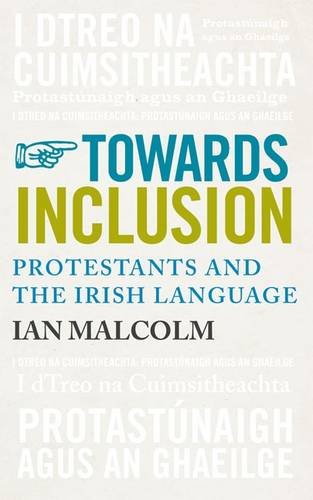
There is also of course the effect this will have on the Irish language classes which occur in both loyalist and nationalist areas. It was a language which Protestants helped to keep alive as Ian Malcolm's excellent book (pictured right) points out. There are many protestants, myself included, who have taken to studying the language that many of our forefathers spoke.
However, as well as the usual Northern Ireland context imagine you have conversational French, Spanish or German and face arrest in one of those nations. Like here the language of courts is above the standard of most conversational speakers. I learnt some business Spanish as part of my learning at University when it was geared to our requirements, as those are words that you don't pick up in conversational classes normally. So does this mean that providing support for people for whom English is a second or third language is to be withdrawn? What about the support provided for people accessing services that is translated to ease their access?
UKIP will not discriminate against you based on ethnicity providing you speak official and legal level English.
(e) UKIP will continue to oppose homosexual and lesbian marriage, upon the basis it unacceptably compromises personal freedoms and represents unacceptable intrusion by the state in matters of personal conscience.
I think I need this translated into a language that I understand, and I have grade B English Language O'Level. For a start opposing something compromises the personal freedoms of those who want the thing that you oppose, surely? So clearly your personal freedoms don't count if you are LGBT, that is clearly the argument here.
Also surely lifting the state's ban on marriages between people of the same sex does away with state intrusion in that area? As it stands by the end of this year, the state will have stopped intruding into who can form a couple through marriage in every part of the UK except Northern Ireland, where state intrusion will still prevail. Also except for the Church of England and Church in Wales who will need secondary legislation denominations or faith groups can come to their own autonomous decisions on this matter, again but not in the Northern Ireland.
Therefore I have to ask is the use of "personal conscience" actually a cover for "perceived group religious conscience" not personal at all, not showing no discrimination based on denomination, as even here in Northern Ireland there are some churches that want to be allowed the option to marry same-sex couples.
Does not descriminate on the basis of sexual orientation as long as your are straight, or bisexual seeking to marry an opposite sex partner, or on basis of denomination as long as you agree with the Evangelical Alliance and Catholic Church and not prepared to enter a conversation like Steve Chalke wants.
(f) UKIP will ensure public sector appointments are made solely on the basis of merit
Now this may relate to the 50/50 recruitment policy in the PSNI which actually ended in 2011. But from last years application figures the number of Catholics and indeed women at only a third of all recruits in each measure is below the level that would have a force that reflects society as a whole.
Indeed UKIP in Northern Ireland with only 2 women out of their 20 council candidates are clearly selecting candidates on merit as long as they are male.
That being said I cannot argue with this point, although you do wonder what is behind it.
(g) UKIP will restrict state interference in our everyday lives and in matters of conscience
Now I can sense another dichotomy here. Which is borne out by the last of their common sense policies for local government page 4 which is "The Judeo Christian values which have served our country well for centuries". It does make you wonder how they are going to represent those of all faith and (more interestingly) none, also are group Judeo Christian matters of conscience going to interfere in matters over which state and local councils have control.
In mind with their common sense principle of tackling political correctness head on (again I refer you to Section 75) there are sections of Northern Ireland society that have not been properly recognised or dealt with until devolution and even then there is some way to go to get full equality for many of these groups. In the Northern Irish narritive this correcting political wrongs from our two dimensional past far more than mere political correctness.
Appears to discriminate on the basis that only Judeo Christian principles need apply forgetting civic duty to those of all faiths and none.
(h) Support and exclusively scientific approach to the issue of blood donations from high-risk groups, recognising patient safety must never be compromised.
This is worded carefully to avoid referring directly to MSM (men who've had sex with other men) blood donations. It also refers to high-risk groups, but latest scientific evidence accepted in England, Scotland and Wales in that men who have not had sex with another man in the last 12 months are not a high risk group.
I have searched for and found nothing else from UKIP NI on this matter. Indeed on the only occasion that this subject was debated in the Assembly their MLA David McNarry didn't contribute and it went to an oral vote only.
But the strong wording of patient safety must never be compromised makes you wonder if that means that the one extra case of at risk blood getting through the system by 3215 be too much of a risk for UKIP to lift it?
Unclear, the second part is the language of the DUP health minister while the first part is correct approach.
Subscribe to:
Posts (Atom)