So the only land border in these British Isles will remain the one that starts on the western shore of Lough Foyle just south of Muff and stretches around the six most north easterly counties of the second largest isle and into Carlingford Lough beside Newry.
The talk of course, in light of the result in Scotland's independence referendum last night, is that there will be a deal deal on devolution to not just them but England, Wales and Northern Ireland too. So what does it mean to those six counties surrounded by than only land boundary with the Eurozone.
The first is that one major power that that part of the UK wants is the power to adjust their Corporation Tax levels to be able to compete with their new neighbours. But what about the powers that they already have? There is already too much of a them and us mentality on various matters, petitions of concern are constantly being used to secure a veto by one community of another. So maybe to allow them to work with more power is a chance to make Stormont work together in a different way.
Maybe one of the powers that is taken away from Northern Ireland to enable policy to be carried is the requirement for a cross community vote at the moment the largest party on either side can stifle the vote, and those that designate as others say it voided. Maybe there is leverage there to maintain the weighted majority of 60% for an area of concern but do away with the need for 40% of each community to also agree. This would led to the ability of cross community agreement but also give the smaller parties and those that designate as other at present to have an equal say in legislation. It might also be a good idea to set up some sort of ombudsman to lay out guidelines and judge if they are met for such a new petition of concern being tabled, one of those areas that it should be done away with is when the competency of a Minister is being debated.
If we can do away with the designations of unionist or nationalist we may well have politics that instead of concentration on them uns and us uns will actually look at the needs of all the people. It may even led to people voting for parties because of what they stand for rather that who they stand with as then you wouldn't necessarily want a party that is conservative standing to block things that benefit others but voting for a party whose policies benefit you and your vision of Northern Ireland.
I think if we are looking at giving more power to Northern Ireland we have to give that power to the people irrespective of who they vote for doing away with the sectarianism is one step. The other might be to create an official opposition. There would need to be a way of looking at this. It would do away with the d'Hondt system of appointing ministers, who would then be only within the hands of the partied of Government, but the danger then is that the Unionists would form that Government between them, so it could be back to the bad old days of the 60s carving up the plum positions only within unionism which would be a retrograde step. This may well be a step too far for Northern Irish politicians and indeed their voters at this time and have to return to the back burner.
But the one thing is that if Northern Ireland is to be given more powers I suspect that we need to look at how better to operate the powers that they currently have to enable progression rather than stagnation.
Friday, 19 September 2014

Monday, 15 September 2014
Why I'll not be signing book of condolence
Across Northern Ireland today books of condolence have been set up for Ian Paisley. While my thoughts are with Baroness Paisley, her five children and her grandchildren and other members of the family I do not feel that I can add my name to a public book of condolence.
While Paisley may have finally got around to realising that working with others was the way to do things this was almost 16 years after the first Anglo-Irish Agreement and for the years from that point and the years even before his rhetoric was as much a recruiter of paramilitaries on both sides leading to death, injury and bloodshed on both sides of the community. Yes he rose to the height of First Minister but that does not make him a great statesman as a great statesman would have been at the forefront like John Hume was. Nor does his inability to see the power and effect his words have make him a great churchman on this account, Jesus after all said "Blessed be the peace makers" and he certainly wasn't one of those in fact he was one of the last hold outs of getting the peace process moving here in Northern Ireland.
I didn't agree with Paisley sectarianism, growing up as I did with friends next door who were from the "other side" according to Paisley yet whose father was in the RUC, that didn't tally for me.
But as I got older I realised that Paisley had another attack in store for me and the way I was. He wanted to keep me down because of my sexuality. His words on the issue of LGBT rights still resonate through too many church folk in Northern Ireland and that is not just within his Free Presbyterian Church. In 2004 when there was the debate on Civil Partnerships in Westminster Paisley said:
Now over 900 civil partnerships here later we know that he had the maths incredibly wrong, part of the reason for him getting the maths wrong was that many same-sex couples didn't dare identify as such back then, others had moved to England during the 70s and 80s to get away not only from the troubles but the homophobia that Paisley and his ilk were spouting. I was one of those who knew I had to get away at the first opportunity, this I did by going to University at Kingston. It was there that even though I knew I was gay I still could hear Paisley's voice and the voice of others back home telling me that as a Christian there was no way I could be. So while I had escaped I wasn't happy, and heaven knows how I managed to survive some of the really down days.
I took me nearly 10 years from when I escaped to England and by this time I had returned home to Northern Ireland to actually be openly true to who I was, wasted years brought on by Paisley. But also there were many others who suffered far worse, people that Paisley never showed a sign of caring for. People that his party still seem to assume are subnormal, and still need to be kept down. The language that they use now is sometimes toned down the the 1982 debate on decriminalistion, or the lowering of the age of consent, or introducing civil partnerships but actually the actions or rather the lack of action is still far behind.
That is another reason why I cannot sign a public book of condolence for this man. Yes he eventually crossed a divide with the republicans, but there were other bridges and other divides in Northern Ireland that he was a figurehead for forging open that have not been repaired. His legacy on LGBT issues lives on not only with the members of his party but in far too many voters left behind (ironically on both sides).
However, while I do hope that he rests in peace and that his passing moments were peaceful and without too much physical pain. The one thing that I cannot do for a man whose greatest trait, many have been saying, was standing by his principles is to abandon mine. The only loss I have is that his is the one voice that might, just possibly have been able to soften the DUP's position on LGBT equality in the short term. I look behind Peter Robinson, who succeeded him, and I do not have hope that that softening will come with the next leader of the DUP, and that is a great tragedy that many young people will look at the situation here and continue to feel that they have to go elsewhere to be fully free of his legacy.
While Paisley may have finally got around to realising that working with others was the way to do things this was almost 16 years after the first Anglo-Irish Agreement and for the years from that point and the years even before his rhetoric was as much a recruiter of paramilitaries on both sides leading to death, injury and bloodshed on both sides of the community. Yes he rose to the height of First Minister but that does not make him a great statesman as a great statesman would have been at the forefront like John Hume was. Nor does his inability to see the power and effect his words have make him a great churchman on this account, Jesus after all said "Blessed be the peace makers" and he certainly wasn't one of those in fact he was one of the last hold outs of getting the peace process moving here in Northern Ireland.
I didn't agree with Paisley sectarianism, growing up as I did with friends next door who were from the "other side" according to Paisley yet whose father was in the RUC, that didn't tally for me.
But as I got older I realised that Paisley had another attack in store for me and the way I was. He wanted to keep me down because of my sexuality. His words on the issue of LGBT rights still resonate through too many church folk in Northern Ireland and that is not just within his Free Presbyterian Church. In 2004 when there was the debate on Civil Partnerships in Westminster Paisley said:
"The census of 2001 found only 288 same-sex couple households in the whole of Northern Ireland. The Government say that only 5 per cent. of same-sex couples will commit to civil partnerships. Well, 5 per cent. of 288 is 14, so 14 couples in Northern Ireland will have the opportunity provided by the Bill, even though a majority of people who have a view on the matter across the political and religious divide oppose it. Their voices were not heard or taken into account. The basis of family law in Northern Ireland is to be changed for the sake of 14 homosexual couples."
Now over 900 civil partnerships here later we know that he had the maths incredibly wrong, part of the reason for him getting the maths wrong was that many same-sex couples didn't dare identify as such back then, others had moved to England during the 70s and 80s to get away not only from the troubles but the homophobia that Paisley and his ilk were spouting. I was one of those who knew I had to get away at the first opportunity, this I did by going to University at Kingston. It was there that even though I knew I was gay I still could hear Paisley's voice and the voice of others back home telling me that as a Christian there was no way I could be. So while I had escaped I wasn't happy, and heaven knows how I managed to survive some of the really down days.
I took me nearly 10 years from when I escaped to England and by this time I had returned home to Northern Ireland to actually be openly true to who I was, wasted years brought on by Paisley. But also there were many others who suffered far worse, people that Paisley never showed a sign of caring for. People that his party still seem to assume are subnormal, and still need to be kept down. The language that they use now is sometimes toned down the the 1982 debate on decriminalistion, or the lowering of the age of consent, or introducing civil partnerships but actually the actions or rather the lack of action is still far behind.
That is another reason why I cannot sign a public book of condolence for this man. Yes he eventually crossed a divide with the republicans, but there were other bridges and other divides in Northern Ireland that he was a figurehead for forging open that have not been repaired. His legacy on LGBT issues lives on not only with the members of his party but in far too many voters left behind (ironically on both sides).
However, while I do hope that he rests in peace and that his passing moments were peaceful and without too much physical pain. The one thing that I cannot do for a man whose greatest trait, many have been saying, was standing by his principles is to abandon mine. The only loss I have is that his is the one voice that might, just possibly have been able to soften the DUP's position on LGBT equality in the short term. I look behind Peter Robinson, who succeeded him, and I do not have hope that that softening will come with the next leader of the DUP, and that is a great tragedy that many young people will look at the situation here and continue to feel that they have to go elsewhere to be fully free of his legacy.
Friday, 12 September 2014
Ian Paisley
There are very few truly jaw dropping moments in politics. One of those happened on the 26th March 2007 which was the date the Paisley led a DUP delegation to meet with Sinn Féin and agreed to enter into government together as the two largest parties. It came months after the St Andrews Agreement which had agreed to new elections and a new executive but still the agreement that Paisley would serve as First Minister with Sinn Féin's Martin McGuinness as Deputy First Minister was truly jaw dropping.
 While that may have been a jaw dropping moment in my life in a case of history repeating itself both my paternal grandmother and myself had one on one meetings and disagreement with him. My Grandmother lived in a terraced house in the Fountain area of Londonderry it was a two up, two down with an outside loo. The housing as as poor as that on the other side of the city walls in the Catholic Bogside during the civil rights movement. But it housed the sort of working class protestants that should have been the DUP as opposed the UUP voters.
But when Dr Paisley came to my grandmother's house he found a deeply religious woman who was prepared to speak her mind. She had been widowed since 1957 and raised two children who went on to University and teaching on her own from when they were 14 and 9. So when he asked her could the DUP candidate rely on her for a vote she said that no the divisiveness that his party and their policies were espousing where not things that she could agree with. She was after all born in Donegal in a very mixed small town dominated by the Catholic Church, Church of Ireland and Presbyterian Churches along the main street.
A similar event to the above happening in 1986 on a Wednesday during my mock O'levels. Paisley and Jim Kilfedder were out and about in Bangor market as was I before heading in for an afternoon exam. When he asked me if Mr Kilfedder could rely on my vote I said "If I was old enough, I'm sorry but I would not vote for you, because I believe we need to start to work with the rest of Ireland to secure a peace that has not existed here in my lifetime." I'm glad that eventually Mr Paisley did agree with me but that it took him 21 years longer to realise it than that 16 year old he met that day.
Of course another reason I never agreed with Mr Paisley came from my sexuality. At the time I was starting to realise that I found other boys more attractive than girls he was on his soap box telling all who could hear (and those megaphones can be heard all down Royal Avenue from his position in front of Belfast City Hall) that he was on a mission to save Ulster from Sodomy. That was something I don't think he ever truly changed his tune on, though there was mellowing of his language on the issue in recent years. If like his change of heart with Sinn Féin made steps to right that wrong as well we may well have unionism in Northern Ireland more able to accept equal marriage here today. Now without the figurehead that formed the DUP we are left with the disciples who seem unable to shift. His intransigence kept Northern Ireland 15 years behind England and Wales from decriminalising homosexuality and the legacy of still trailing must still in part lie at the feet of Paisley and his campaigning in the 80s and preaching from the pulpit to the same tune.
At one point his full title was Rev. Dr. Ian Kyle Paisley MP MEP MLA. He had also been a Councillor, was after he stepped down as MEP appointed to the Privy Council, and upon his retirement from the House of Commons in 2010 was elevated to the House of Lords as Lord Bannside alongside his wife Eileen who four years earlier had become Baroness Paisley of St. Georges in the County of Antrim.
He shall however, as a result of a marriage in the family, remain on my family tree. Our politics may be diversely opposed but there are less than six degrees of familial separation between us.
The Rev. and Rt. Hon. Baron Bannside, Ian Richard Kyle Paisley 6 April 1926 - 12 September 2014

But when Dr Paisley came to my grandmother's house he found a deeply religious woman who was prepared to speak her mind. She had been widowed since 1957 and raised two children who went on to University and teaching on her own from when they were 14 and 9. So when he asked her could the DUP candidate rely on her for a vote she said that no the divisiveness that his party and their policies were espousing where not things that she could agree with. She was after all born in Donegal in a very mixed small town dominated by the Catholic Church, Church of Ireland and Presbyterian Churches along the main street.
A similar event to the above happening in 1986 on a Wednesday during my mock O'levels. Paisley and Jim Kilfedder were out and about in Bangor market as was I before heading in for an afternoon exam. When he asked me if Mr Kilfedder could rely on my vote I said "If I was old enough, I'm sorry but I would not vote for you, because I believe we need to start to work with the rest of Ireland to secure a peace that has not existed here in my lifetime." I'm glad that eventually Mr Paisley did agree with me but that it took him 21 years longer to realise it than that 16 year old he met that day.
Of course another reason I never agreed with Mr Paisley came from my sexuality. At the time I was starting to realise that I found other boys more attractive than girls he was on his soap box telling all who could hear (and those megaphones can be heard all down Royal Avenue from his position in front of Belfast City Hall) that he was on a mission to save Ulster from Sodomy. That was something I don't think he ever truly changed his tune on, though there was mellowing of his language on the issue in recent years. If like his change of heart with Sinn Féin made steps to right that wrong as well we may well have unionism in Northern Ireland more able to accept equal marriage here today. Now without the figurehead that formed the DUP we are left with the disciples who seem unable to shift. His intransigence kept Northern Ireland 15 years behind England and Wales from decriminalising homosexuality and the legacy of still trailing must still in part lie at the feet of Paisley and his campaigning in the 80s and preaching from the pulpit to the same tune.
At one point his full title was Rev. Dr. Ian Kyle Paisley MP MEP MLA. He had also been a Councillor, was after he stepped down as MEP appointed to the Privy Council, and upon his retirement from the House of Commons in 2010 was elevated to the House of Lords as Lord Bannside alongside his wife Eileen who four years earlier had become Baroness Paisley of St. Georges in the County of Antrim.
He shall however, as a result of a marriage in the family, remain on my family tree. Our politics may be diversely opposed but there are less than six degrees of familial separation between us.
The Rev. and Rt. Hon. Baron Bannside, Ian Richard Kyle Paisley 6 April 1926 - 12 September 2014
Friday, 5 September 2014
Just who is too precious? #EdwinPoots
No Freeman shall be taken or imprisoned, or be disseised of his Freehold, or Liberties, or free Customs, or be outlawed, or exiled, or any other wise destroyed; nor will We not pass upon him, nor condemn him, but by lawful judgment of his Peers, or by the Law of the land. We will sell to no man, we will not deny or defer to any man either Justice or Right.
Thus states clause 29 of the Magna Carta one of three clauses that are still in effect in UK law without amendment or repel.The reason while I am starting this at the top of this blog post will be revealed at the end.
However, today Lord Chief Justice Sir Declan Morgan, Northern Ireland's most senior judge said that he expressed concern that comments made by the Minister for Health, Social Services and Public Safety, the DUP's Edwin Poots, were detrimental to the rule of law. Those comments were made after Mr Justice Traecy had ruled that the minister's continuation of the lifetime ban on men who'd had sex with other men donating blood was "irrational".
What the minister said in the chamber of the Assembly was:
"The question is this: will I appeal it? I am very reluctant to appeal it. Number one, it gives the larger parties in the Executive considerably more power. Number two, it refers a lot of governance back to the national Parliament and, as a unionist, should I be that concerned about that? Number three, do I believe that I would get fairness in the Court of Appeal or would there be a circling of the wagons? I am concerned that that may not be the case."
[Official Report, Vol 89, No 2, p55, col 2]
Earlier today Sir Declan Morgan said that he had written about his concerns to the OFMDFM that the Minister was doubting the impartiality of the courts and was also damaging to public confidence in the administration of justice. He added that he has yet to receive a reply to his letter of 18th January which he also release to the public. The text of that letter is below:
RULE OF LAWThis is quite a strongly worded letter to come from the most senior judge to the highest political office in the land. The fact that is has yet to receive a response shows a great lack of respect from either the First Minister or Deputy First Minister to his concerns. However, as the right to due process is outlined by that clause 29 of the Magna Carta which I quoted at the top of this blog post you can see why Sir Declan Morgan finishing with the ultimate damage to the strength of our democracy, Magna Carta is the foundations of it and due process is one of the keystones that survive.
Regrettfully, I am writing to you about the comments made by a Minister which I believe are detrimental to the rule of law in Northern Ireland.
In November the Assembly debated the issue of blood donations by gay men who had been sexually active [sic]*. A challenge to a decision of the Minister, Edwin Poots, that there should be a lifetime ban on blood donations by such men had succeeded in a related judicial review in the High Court some weeks earlier. During the course of the debate the Minister strongly inferred that he would not get a fair hearing should he appeal to the Court of Appeal. While I have no difficulty with judicial decision being the subject of informed comments and criticism, I think it entirely unacceptable for a Minister to suggest that the Court of Appeal in Northern Ireland is biased or unfair, Such a statement is not only untrue, it is inevitably damaging to public confidence in the administration of justice and ultimately to the strength of our democracy.
The only circling of the wagons would once again appear to come from the DUP (as well as many in the UUP) stopping due fairness and justice on matters of LGBT equality which even if won in a court of law are challenged by our own taxes, at our own expense by the Ministers who are supposed to uphold Section 75 of the Northern Ireland Act (1998).
Paul Girvan, Mr Poots DUP colleague, who is chair of the Justice Committee, was present when Mr Justice made his comments and he laid down the law to the judicary that they "don't get too precious about their status".
So another teamster busy circling the wagons from a party with the word Democratic in its title with no idea of the history of democracy, its likes historically to the judiciary and fair process and how this is laid down before anything else that politicians have done afterwards.
Does anyone else think that Mr Girvan and especially Mr Poots with his constant appealing of High Court rulings that go in favour of the LGBT community in Northern Ireland are getting too precious about their position? Are LGBT people not freemen and freewomen who should not be denied or deferred either Justice or Right?
* Sadly Sir Declan Morgan has fallen into the often repeated trap that ignorance about the blood ban leads to. It is not merely gay men who are banned from donating in Northern Ireland, but any bi-sexual man who has had sex with another man, or indeed any man who is straight but once gave a blow job to a mate in his youth. As the ban in on any man who has ever had sex either anally or orally with another whether with or without a condom. It is my one criticism about his wording of his letter.
This never happened to the other fellow
Today is actually the 75th birthday of the only chap to play Ian Fleming's James Bond only one (if you discount the numerous James Bond imitators in the original Casino Royal). Yes George Lazenby the Australian who appeared in On Her Majesty's Secret Service reaches three quarters of a century today.
The film itself debuted just before I was 3 months old, and while it kept more closely to the novel (yes it was one of the adaptations rather than original stories in the franchise) it to me was rather ruined by the constant references back to the Sean Connery films. In fact the major breaking of the illusion that this is the same Bond comes at the end of the opening sequence when Lazenby's Bond breaks the fourth wall and addresses the camera and audience directly with the line "This never happened to the other fellow". Followed by the title sequence showing images of previous instalments, finding certain objects from previous films in Bond's office as well as the whistling of Goldfinger's theme by a caretaker take away from the excellence of the following of the novel. The fact that Doctor Who had already regenerated once by this time and about to undergo a second and played it straight showed how such things should have been done.
It is also rather unique in the Bond franchise of not having all the gizmos and gadgets. Of course he is also the only Bond to have married but of course to lose his wife as they drive off at the end of the film towards their honeymoon. But even before the release in December 1969 Lazenby who had agreed to sign a seven film deal to replace Connery had decided he was walking away from the franchise. His co-star Diana Rigg said this about his decision:
He was an ex-model who had landed the lead in what now over 50 years after its inception is the longest running biggest grossing film franchise in history. Without his walking away from the role we probably would never have seen Roger Moore who like Lazenby would occasionally play Bond mocking characters in further projects.
He has three children with his second wife the tennis player Pam Shiver with whom we was married from 2002-8. But until another actor fails to repeat their lead role in a Bond film it will indeed be something that never happened to the other fellows in only playing the role once that Lazenby will always be remembered for.
The film itself debuted just before I was 3 months old, and while it kept more closely to the novel (yes it was one of the adaptations rather than original stories in the franchise) it to me was rather ruined by the constant references back to the Sean Connery films. In fact the major breaking of the illusion that this is the same Bond comes at the end of the opening sequence when Lazenby's Bond breaks the fourth wall and addresses the camera and audience directly with the line "This never happened to the other fellow". Followed by the title sequence showing images of previous instalments, finding certain objects from previous films in Bond's office as well as the whistling of Goldfinger's theme by a caretaker take away from the excellence of the following of the novel. The fact that Doctor Who had already regenerated once by this time and about to undergo a second and played it straight showed how such things should have been done.
It is also rather unique in the Bond franchise of not having all the gizmos and gadgets. Of course he is also the only Bond to have married but of course to lose his wife as they drive off at the end of the film towards their honeymoon. But even before the release in December 1969 Lazenby who had agreed to sign a seven film deal to replace Connery had decided he was walking away from the franchise. His co-star Diana Rigg said this about his decision:
"The role made Sean Connery a millionaire. It made Sean Connery ... I truly don't know what's happening in George's mind so I can only speak of my reaction. I think it's a pretty foolish move. I think if he can bear to do an apprenticeship, which everybody in this business has to do - has to do - then he should do it quietly and with humility. Everybody has to do it. There are few instant successes in the film business. And the instant successes one usually associates with somebody who is willing to learn anyway."
He was an ex-model who had landed the lead in what now over 50 years after its inception is the longest running biggest grossing film franchise in history. Without his walking away from the role we probably would never have seen Roger Moore who like Lazenby would occasionally play Bond mocking characters in further projects.
He has three children with his second wife the tennis player Pam Shiver with whom we was married from 2002-8. But until another actor fails to repeat their lead role in a Bond film it will indeed be something that never happened to the other fellows in only playing the role once that Lazenby will always be remembered for.
Thursday, 4 September 2014
Dear Equality for all
Yes at the end of last week an anonymous letter writer to the Belfast Telegraph took umbrage at the decision at the end of July by Belfast Pride to award this years community partnership award to the Northern Ireland Equality Commission.
Of course unlike so much of the negative LGBT correspondence in the Northern Press my name and locality are printed at the bottom of my letter. Yes the equality commission is neutral is as far as it is there to gauge to need for action in the wide range of equality areas that are listed in Section 75 of the Northern Ireland Act and other legislation. But sometimes in standing up for those minorities they will not be neutral is standing up to the status quo and conservative thinking people and politicians who do not see the need to change anything.
It is not mean the Equality Commission is a wing of vociferous LGBT activists any more that is is for the Feminist Network, Chinese Welfare, Disability Action, AgeNI or any of the groups working and acting for those other minorities.
Thanks to the Belfast newspapers, we now know that the Equality Commission has been awarded a community partnership award by Pride – the LGBT lobbyists.
Does this mean the commission is now another wing of vociferous LGBT activists? As a neutral quango it must refute the award and sever its association with LGBT lobbyists. If it does not, its funding should be withdrawn.
EQUALITY FOR ALL
Lisburn, Co Antrim
Regular readers can probably accurately guess as to what my first course of action was upon reading those words. Yeah I opened my email account and started to compose the following response published in today's Belfast Telegraph:
It appears that your correspondent Equality for All (Write Back, August 28) is slightly misnamed and is only Equality for Some.
The community partnership award from Belfast Pride is, like the other eight awards, voted for from a shortlist by members of the LGBT community.
The winners of this year's community partnership, the Equality Commission, unlike your correspondent Equality for All, says on its website:
"Our powers and duties derive from a number of statutes which have been enacted over the last decades, providing protection against discrimination on the grounds of age, disability, race, religion and political opinion, sex and sexual orientation. We also have responsibilities arising from the Northern Ireland Act 1998 in respect of the statutory equality and good relations duties which apply to public authorities."
So, yes, one of the groups that is there to provide protection against discrimination is satisfied with the work it has done and at a community award ceremony decided to say thank you for the work it has done and continues to do. I advise Equality for All to come out of the shadows of anonymity and actually become a real advocate for equality for all in our wee country. Who knows, maybe some day he/she will be up for the Pride Advocate of the Year award.
Of course unlike so much of the negative LGBT correspondence in the Northern Press my name and locality are printed at the bottom of my letter. Yes the equality commission is neutral is as far as it is there to gauge to need for action in the wide range of equality areas that are listed in Section 75 of the Northern Ireland Act and other legislation. But sometimes in standing up for those minorities they will not be neutral is standing up to the status quo and conservative thinking people and politicians who do not see the need to change anything.
It is not mean the Equality Commission is a wing of vociferous LGBT activists any more that is is for the Feminist Network, Chinese Welfare, Disability Action, AgeNI or any of the groups working and acting for those other minorities.
Death of a Poet: We Will Remember Them Charles Péguy 4 September 1914
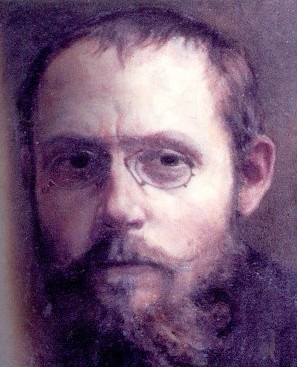
When the war broke out he became a Lieutenant in the 19th Company of the French 276th Infantry Regiment. His military career was short lived, he was shot in the forehead the day before the start of the Battle of the Marne, the second major battle of the war in a bit to prevent the German advance into France and to take away their freedom.
It is therefore his poem Freedom that we will use to remember him, translated below into English.
Freedom
GOD SPEAKS:
When you love someone, you love him as he is.
I alone am perfect.
It is probably for that reason
That I know what perfection is
And that I demand less perfection of those poor people.
I know how difficult it is.
And how often, when they are struggling in their trials,
How often do I wish and am I tempted to put my hand under their stomachs
In order to hold them up with my big hand
Just like a father teaching his son how to swim
In the current of the river
And who is divided between two ways of thinking.
For on the one hand, if he holds him up all the time and if he holds him too much,
The child will depend on this and will never learn how to swim.
But if he doesn't hold him up just at the right moment
That child is bound to swallow more water than is healthy for him.
In the same way, when I teach them how to swim amid their trials
I too am divided by two ways of thinking.
Because if I am always holding them up, if I hold them up too often,
They will never learn how to swim by themselves.
But if I don't hold them up just at the right moment,
Perhaps those poor children will swallow more water than is healthy for them.
Such is the difficulty, and it is a great one.
And such is the doubleness itself, the two faces of the problem.
On the one hand, they must work out their salvation for themselves. That is the rule.
It allows of no exception. Otherwise it would not be interesting. They would not be men.
Now I want them to be manly, to be men, and to win by themselves
Their spurs of knighthood.
On the other hand, they must not swallow more water than is healthy for them,
Having made a dive into the ingratitude of sin.
Such is the mystery of man's freedom, says God,
And the mystery of my government towards him and towards his freedom.
If I hold him up too much, he is no longer free
And if I don't hold him up sufficiently, I am endangering his salvation.
Two goods in a sense almost equally precious.
For salvation is of infinite price.
But what kind of salvation would a salvation be that was not free?
What would you call it?
We want that salvation to be acquired by himself,
Himself, man. To be procured by himself.
To come, in a sense, from himself. Such is the secret,
Such is the mystery of man's freedom.
Such is the price we set on man's freedom.
Because I myself am free, says God, and I have created man in my own image and likeness.
Such is the mystery, such the secret, such the price
Of all freedom.
That freedom of that creature is the most beautiful reflection in this world
Of the Creator's freedom. That is why we are so attached to it,
And set a proper price on it.
A salvation that was not free, that was not, that did not come from a free man could in no wise be attractive to us. What would it amount to?
What would it mean?
What interest would such a salvation have to offer?
A beatitude of slaves, a salvation of slaves, a slavish beatitude, how do you expect me to interested in that kind of thing? Does one care to be loved by slaves?
If it were only a matter of proving my might, my might has no need of those slaves, my might is well enough known, it is sufficiently known that I am the Almighty.
My might is manifest enough in all matter and in all events.
My might is manifest enough in the sands of the sea and in the stars of heaven.
It is not questioned, it is known, it is manifest enough in inanimate creation.
It is manifest enough in the government,
In the very event that is man.
But in my creation which is endued with life, says God, I wanted something more.
Infinitely better. Infinitely more. For I wanted that freedom.
I created that very freedom. There are several degrees to my throne.
When you once have known what it is to be loved freely, submission no longer has any taste.
All the prostrations in the world
Are not worth the beautiful upright attitude of a free man as he kneels. All the submission, all the dejection in the world
Are not equal in value to the soaring up point,
The beautiful straight soaring up of one single invocation
From a love that is free.
Charles Péguy 7 Jan 1873 Orléans, France - 4 Sep 1914 Villeroy, Seine-et-Marne, France
See also: The other poets who died in the war.
Subscribe to:
Posts (Atom)