Showing posts with label Winter Olympics. Show all posts

Thursday, 13 March 2014

Gold Post Boxes for Uniqueness

Apparently the Royal Mail have stated that they will not paint a mail box gold for Northern Ireland's own golden girl Kelly Gallagher. They say the the 59 gold post boxes for the Olympians and 50 for the Paralympians were for a unique occurrence.

With 109 of them that is new definition of unique.

But initially there were only 106 of them all of which were on the GB part of Team Great Britain and Norther Ireland. The other three were awarded for five gold medals one for Bethany Firth in Seaforde, County Down, and for their two gold medals apiece but just one box Michael McKillop in Glengormley, Antrim and Jason Smyth in Eglington, Londonderry. These three were UK nationals who competed for the Irish Paralympic team.

However, the case for uniqueness is strong for Kelly Gallagher. She is the first Winter Paralympian ever to win a gold since the first Winter Paralympics in 1976. Plus she is the first GB athlete to win on snow in either the Olympics of Paralympics since 1924.

Therefore I am suggesting if the Royal Mail really want to honour uniqueness there should be 8 more gold mail boxes.

Firstly we need a gold mail bow in Mottingham, Kent to honour Launceston Elliot. Although he was born in Tasmania to Scottish parents it was here that Britain's first gold medalist is listed in both the 1891 and 1901 census. At 21 he won that historic, and unique, first medal in those first 1896  games in the one handed lift. We did another Gold in those first Games but painting a Mail Box gold in O'Connell Street, Dublin to honour John Pius Boland's gold in tennis is asking for trouble.

Next up we need the Royal Mail to say #Ilovecurling and provide Scotland with four more gold mail boxes, indeed South Lanarkshire would get three for itself. Edinburgh would need to find another one to paint gold for Robin Welsh, Biggar would deserve one for Tom Murray,  and f there are two mail boxes in Carnwath they need painting for the father and son team of William Kilgour Jackson and his son Laurence. William was the skip in the first Winter Olympics in Chamonix, France in 1924 of which the other three all member of the Royal Caledonian Curling Club brought home the gold.

There will of course be purists who insist that Kennsington should receive one gold post box instead of Scotland's four to mark the fact that Madge Syers took GB's first gold medal in an ice or snow sport in the 1908 London Olympics. So maybe we should provide one for here uniqueness as well, so make that nine more gold mail boxes.

There will have to either be one in Lacashire where she is from or Watford where she now resides for Margaret Maughan. She was the archer who was the first GB Paralympian to win gold in the 1960 Games which saw 28 gold medals coming back from Rome that year.

As well as these six seven deserving firsts we will also mark the success earlier this week with boxes in Bangor, County Down and Chatham, Kent for Kelly and her guide Charlotte Evans, for their acheivement in the Visually Impaired Super-G.

This would lead to a total of nine new post boxes marking all the firsts now that we have them all. And there will be five for men and four for women.


Saturday, 8 February 2014

#Principle6 is for all not just the Olympic Zone

The Sochi Olympics*
*Usual Terms and Conditions may or may not apply


While the Opening Ceremony was underway in Sochi this was the scene in Red Square, Moscow.


Principle 6 of the Olympic charter states:

Any form of discrimination with regard to a country or a person on grounds of race, religion, politics, gender or otherwise is incompatible with belonging to the Olympic Movement.
This is clear discrimination against people on the ground of otherwise. President Putin says people can be LGBT as long as they don't touch the children. I see no children in this video.

Thomas Bach in his opening speech last night said:


This is the Olympic Message the athletes spread to the host country and to the whole world. Yes, it is possible to strive even for the greatest victory with respect for the dignity of your competitors. Yes, Yes, it is possible - even as competitors - to live together under one roof in harmony, with tolerance and without any form of discrimination for whatever reason.

It was a part of the message that American broadcaster NBC is facing criticism for editing out.

Yes the host nation if it is abusing Principle 6 of the charter in incompatible with being part of the Olympic Movement. This is what was happening last night and it is time that IOC actually specified that otherwise does include sexual orientation and not leave it vague, and then take action.

Friday, 7 February 2014

Putin and his non-traditional flame

Vladimir Putin has passed the law that there should be no propaganda of "non-traditional sexual relationships", he says it will affect the youth of Russia. Why is it then that Alina Kabayeva, who is rumoured to be his mistress, should be the last person before those who lit the cauldron to hold the Olympic flame?

The other people who carried the Torch in the stadium were

  • Maria Sharapova, she may only have had one Olympic silver medal, but she was world number 1 in tennis and was actually born in Sochi. 
  • Three time Olympic Greco-Roman Wrestling Champion Aleksander Karelin, he has a career record of 887 wins and only two losses. 
  • Double Olympic pole-vault champion Yelena Isinbayeva. 
  • Three time Olympic champion Ice Hockey goaltender Vladislav Tretiak
  • Irina Rodnina who won three successive pairs gold medals in figure skating.
Kabayeva has one Olympic gold and one bronze in rhythmic gymnastics is one gold and one bronze. She hardly ranks amongst the great Olympians. Indeed but by an unfortunate career-ending injury to Daria Kondakova ahead of London 2012 who had far more world medals in a shorter career she may well have even been second to a local Sochi rhythmic gymnast. But of course there are other gymnasts from Russia who are multiple gold medalists.

Indeed the living Russian woman with the most gold medals is a Winter Olympian is Lidiya Skoblikova has six gold medals in speed skating from the 1960 and 64 Olympics. This is not just the most by a clean Russian woman but a record for her sport. Yes she may be 74 but she has six gold medals in an winter Olympic event.

So yes there are questions as to why it appears that Putin managed to get his alleged mistress to hand the torch over to the lighters of the cauldron. Indeed you can almost imagine that he had wanted her to be one later in the order only to be talked out of it by some official or other.

Team LGB at the Sochi 2014 Winter Olympics

Some of my LGBT friends have been calling for a boycott of the Games that got underway yesterday with some qualification competitions, but I have said we should always let the athletes go. The main reason is that without the athletes from accepting nations being there the Russia media would not tell the truth to their own nationals about why such nations were absent.

Brack Obama made a point of selected three LGB athletes to the delegation that is going to the the 2014 Games while he is staying away. But there are a small number of active athletes who will be taking part and some of them have come out recently as a show of defiance to the anti-propaganda laws in Russia.

So who are the out LGB athletes who are going to Sochi.

Ireen Wüst - Netherlands


The Dutch speed skater is going to her third Winter Olympics looking to add to the two golds and bronze she won in Turin and Vancouver. Yes, this bisexual sports woman, who does not fit Russia's idea of "traditional sexual relations", has reached the top of her sport. She won gold in the 3,000m in 2006 in Turin in the long track version of the sport, adding the bronze that year in the 1,500m. That year at a mere 19 she became her nation's youngest ever Winter Olympic Champion. Last time she took the gold in the 1,500m in Vancouver.

She will be taking part in five events in Sochi, the women's 1,000m, 1,500m, 3,000m, 5,000m and as part of the Dutch team in the women's pursuit. In October of 2009 a Dutch magazine she casually stated that she had been in a relationship with her girlfriend since May of that year.

Sanne van Kerkhof - Netherlands

Still with the Dutch there is another speed skating veteren. Although Sanne does her skating on the short track. She just missed out on a medal in Vancouver in 2010 when the women's 3,000m pursuit team came in 4th for the Dutch ladies.

She also happened to be the girlfriend that Wüst was referring to before those Games in Vancouver. They have since split up but are both looking forward to their second Games as out athletes.

She will again be taking part in the women's pursuit looking to step unto the podium.


Cheryl Maas - Netherlands

The Dutch provide yet another of our openly out athletes and this time we head off the ice and unto snow. Cherly missed out on the 2010 Games, but had been in the 2006 half pipe competition.

After she qualified once again she was critical of the IOC offering the Game to a nation with a Human Rights record such as Russia's and when asked about whether she would boycott the Games. She said:

"If you do that, everyone must participate, it is because human rights. This goes beyond homosexuality. If only gay people engage in a boycott, it does not help."

She is married to Norwegian former Olympic snowboarder Stine Brun Kjeldaas who won the silver medal in the women's half pipe at the 1998 Games and was part of the BBC commentary team in 2010.

Barbara Jezeršek - Slovenia

Finally we get to an athlete from a nation other than the Netherlands and we add another sport to the pantheon.
T
Slovenia's cross county skier Barbara Jezeršek is probably not expected to feature in the medals unlike those Dutch competitors. Her best individual performance having been 34th while as part of a Slovenian relay team she has been 9th.

She has been out since 2008 and will be the only out athlete from the former Eastern Bloc countries in Sochi.


Next we have the two athletes who came out publicly as a result of the new law in Russia.

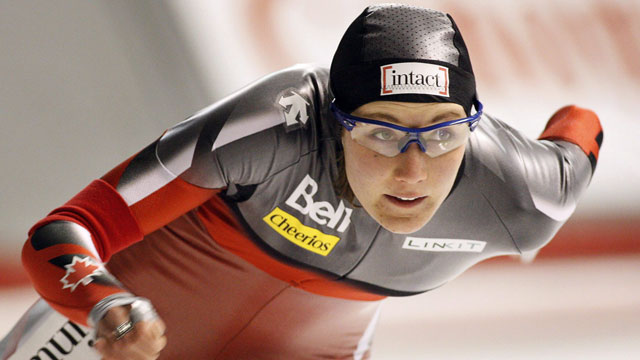
Anastasia Bucsis - Canada

The 24 year old skater made her Olympic debut at her home Games in Vancouver four years ago, although she wasn't part of the Canadian gold rush.

She took part in the women's 500m long track speed skating as her only event four years ago recording the 34th best time. The following year she game out to her friends and family but it was last year at Calgary Pride that she made a public stance about her sexuality.  She said:
"I could never promote that message of concealing who you are with all of this going on in Russia. I’m kind of happy that I did it on my own terms."
Again she will just be taking part in the  shortest and fastest of the disciples in the long track speed skating as her only event.

Belle Brockhoff - Australia

The youngest of the LGB athletes taking part in Sochi 2014 will be the Australian snowboard cross athlete. Like Bucsis she came out publicly last summer as a result of the new law being introduced in Russia.

Speaking at the time the twenty year old said:
"I have a feeling that I would have to kinda go back into the closet a little bit because I don't want to risk my, like, you know, safety, being arrested or deported. I want to be able to compete and live my dream and become an Olympian. That's always what I've wanted to do. ... I honestly find it a little bit disrespectul and a little bit sad not only to me but to other athletes and it's my dream, and I want to be able to be who I am, I want to be proud of who I am and be proud of all the work I've done to get into the Olympics and not have to deal with this kind of law." 
However, speaking last month she said:

"The Australian Olympic Committee has been really supportive and they want me to be safe. They don't recommend me waving a [rainbow] flag around which I won't do.

"The most I'll do is hold up six fingers to represent Principle Six. Possibly I'll do it on camera here or there, and maybe after the heats of my event." 

I know Belle won't be allowed to wear her Principle 6 T-Shirt anywhere near the Games, however, I along with many other will be wearing mine tonight while I watch the Opening Ceremony and I'll be watching out on Sunday 16th to see if she does use six fingers.

From the list there are sadly no openly gay men at the Sochi Games as sadly New Zealand Short-Track Speed Skater Blake Skjellerup who missed out by one spot on qualifying. However, last November while he was competing in Russia he did meet some LGBT activists secretly.

About that meeting he said:

"It was emotional to hear what they were going through. They were afraid on so many levels. The law is very discriminative and oppressive and it's leading to greater violence against LGBT people. At the weekend two gunmen opened fire at a gay club in Moscow and such acts are not uncommon. For many the only choice is to go undergound."
There are also a number of openly LGBT broadcasters, commentators and analysts attending these Games from our own Clare Balding to self-confessed Russia-phile and former USA Ice Skater Johnny Weir.

Thursday, 6 February 2014

Why Putin Leaving Kids Alone is Detrimental to LGBT Youth

We don't need no education, we don't need no thought control.

Hey Olympians, leave the kids alone!

Seems to be the cry that is repeated today by Russia's deputy prime minister.


However, with the anti-propagation law to minors in Russia and therefore actually leaving kids alone to come to terms with their own sexuality is a dangerous thing. Despite what Putin would have you believe kids under the age of consent are quite capable of coming to their own conclusions about who they are attracted to. Indeed I don't hear Russian authorities crying out about underage sex between people of the opposite sex but I'm sure like in every other nation this takes place.

But what is most worrying about the message to leave the kids alone is that during the teenage years before it is legal to have sex young people the world over pair up. They have boyfriends and girlfriends, that is part of a normal adolescence. But what if your boyfriend or girlfriend has the same gender as you, or what if the person you feel attracted to and want to ask out is of that same gender.

There is a problem you face under the new law. You can't seek advice about these feeling the adult giving that advise would be "promoting non-traditional sexual values". Now can you act upon those feelings and ask the other person, if they reject you they or their parents may report you for "promoting non-traditional sexual values" to a minor. You can't even be open about your sexual, as to be open in who you are and who you fancy is in itself a promotion.

By leaving such kids allow to wallow in aloneness while around them there is nobody they can turn to for advise, while their feelings are being condemned from on high as being non-traditional and non-Russian even leaves them in a vulnerable position.

While I was growing up in Northern Ireland while there was Section 28 in place and homosexuality had only recently been decriminalised there was no outright ban on talking to a young person about such things. It just could not be done in a school context. But when you don't grow up in the big city getting access to such services would have been awkward for a teenager. So like the fate of Russian teens I had to wallow alone, with religious and political leaders telling me that what I was feeling was wrong.

By leaving that kid more or less alone I contemplated taking my own live.

Leaving the kids alone, uneducated about human sexuality that is not across genders, and unable to seek advise about their feelings or even if they did being unable to receive it, Russia authorities are endangering those young people.

Article Three of the UN Convention on the Rights of a Child states:

"In all actions concerning children, whether undertaken by public or private social welfare institutions,courts of law, administrative authorities or legislative bodies, the best interests of the child shall be a primary consideration."

Leaving children alone unable to seek guidance on feelings that they have is a thought control of an adverse type. It creates problems, fear, loneliness, paranoia and suicide. Not to mention the homophobia that others feel able to dish out against LGBT people as seen in The Hunted last night.

Monday, 27 January 2014

Principle 6 #Sochi2014

We are only 10 days away from the first qualification events in the Sochi 2014 Winter Olympics. The following day, Friday 7th February as we lead up to the opening ceremony I will be wearing a Principle 6 T-shirt as a mark that although I support the individual athletes I do not think it is right that a nation that fails to uphold Olympic Principle 6 in the day to day live of its citizens in a fitting situation in which to hold the Games.

So what does Principle 6 of the Olympic Charter state?

6. Any form of discrimination with regard to a country or a person on grounds of race,religion, politics, gender or otherwise is incompatible with belonging to the Olympic Movement.

Yet we are heading to Sochi, in Russia that does discriminate in the otherwise category. There is a law on the books against the promotion on non-traditional family values. In other words the LGBT community do not fit into that "ideal". Today the Mayor of Sochi, while saying he is happy to welcome gay people to his city believes they will be the first gay people ever there.

Seeing as Sochi is also a Russian resort town the odds are that this is not the case.

Seeing as Sochi has a population of ⅓ million people the probability is that there are some currently living there or who have done in the past (possibly even the near recent past). That would be a city the size of Belfast, in a nation that has only had homosexual activity legalised for  about a decade less than here in Northern Ireland. So you would have to put it at about a decade ago Northern Ireland visibility, although maybe a bit further back when you consider the way that homophobia there has existed for a number of years.

Also seeing as there are gay and gay friendly clubs in Sochi, who is going there.

I'm just waiting for the first LGBT residents in Sochi to go up to the Mayor's office to introduce themselves.

Saturday, 5 October 2013

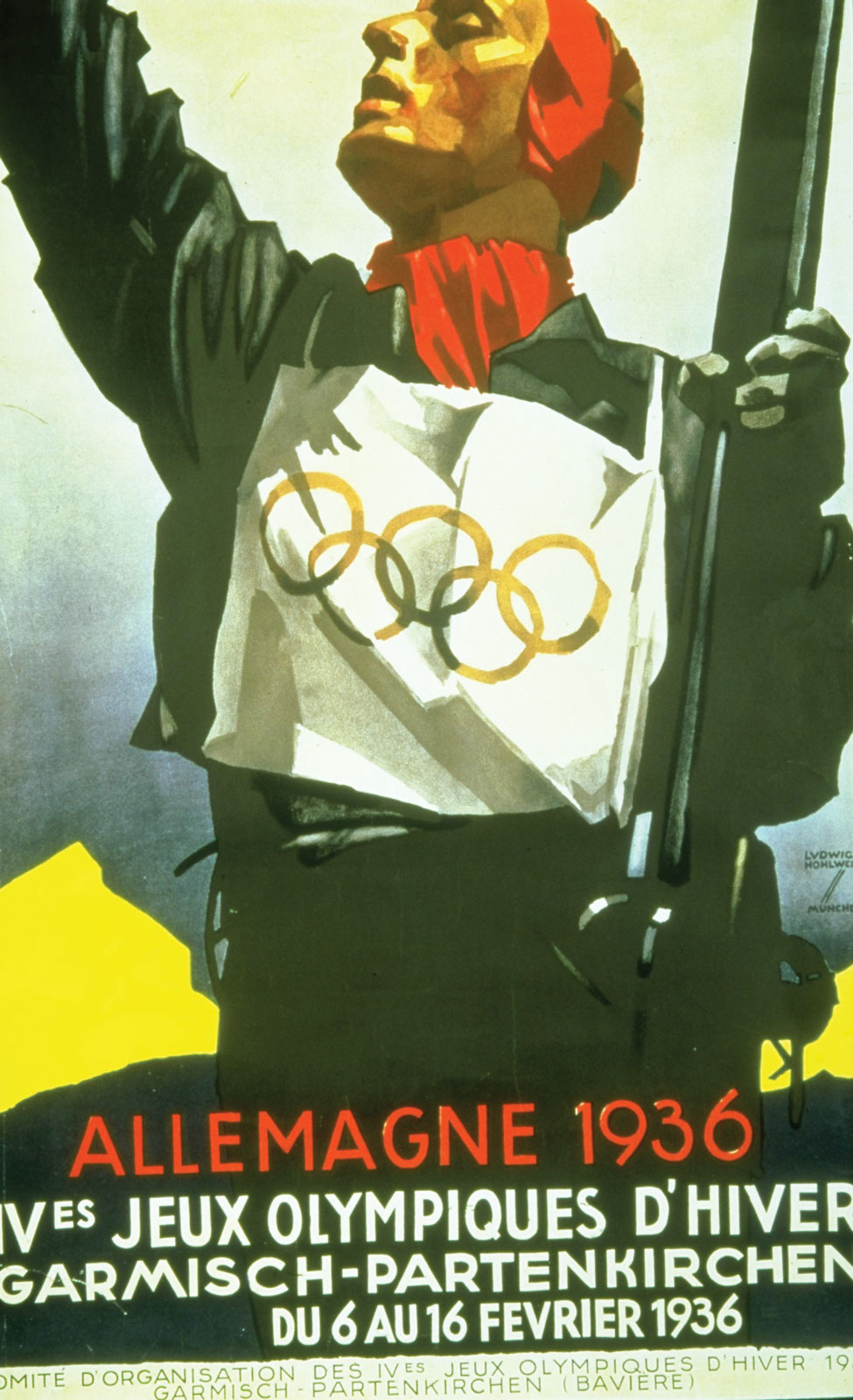
1936 Winter Olympic Games: IV Garmisch-Partenkirchen

In the run up to London 2012 I did a series looking back at all the previous Olympics posting it at 5pm every Friday, I've decided to do the same in the run up to Sochi 2014 with the Winter Olympic Games. You can catch up on any you missed in the Olympiads Revisited tab.

As with the 1924 and 1932 Winter Olympic Games the IOC approached the nation that was hosting the Summer Games of 1936 about hosting of the Winter Games. The twin-town Bavarian resort of Garmisch-Partenkirchen, right down by the Austrian border was chosen.


Competitors 646 (+282)

Nations 28 (+11)
Events 17 (+3)
Sports 6 (+1)

6 February to 16 February 1936 hosted by Garmisch-Partenkirchen, Bavaria, Germany

New nations to take up the Winter Olympic cause were Australia, Bulgaria, Greece, Liechtenstein, Spain and Turkey.

Australia though only officially represented by Ken Kennedy in the speed skating, coming in the 30s in the 500m, 1500m and 5000m, actually had another representative. Frederick McEvoy was representing Great Britain in the bobsleigh, he actually carried the Union Flag in the opening ceremony. He went on to take bronze in the four-man and just missed out in 4th place in the two man event. 

Bulgaria with a team of six took part in both the Alpine and Cross Country Skiing, more successfully in the latter as they DNF or were disqualified in the alpine events. Their men came 15th in the 4x10km relay and all four completed the 18km race. Greece sent one man Dimitrios Negrepontis who actually took part in the Alpine Combined and 18km Cross Country. However, he was disqualified in the second run of the slalom in the combing and did not finish in the cross country.

Liechtenstein despite being the smallest of the new nations actually sent four athletes. Two in the Alpine Combined who also failed in the second run of the slalom, and a two man bob team who finished 18th out of the 23 crews. Spain sent two women in the Alpine Combined, one didn't start the slalom and the other fell foul on the second run., and four men in the cross country 18km.

Turkey sent six men, four of whom took part in the Alpine Combined, one of those Mahmut Şevket was one of the two who took part in the 18km Cross Country, with another and the other Alpine crossover Reşat Erceş  they entered but did not finish the 4x10km relay. Indeed only Şevket finished any of his events, he was the 72nd and last finished in the 18km Cross Country though he was 25 minutes behind the Brit Francis Walker who was 71st and just two seconds shy of 55 minutes behind gold medallist Erik August Larsson of Sweden.

Let's ski downhill


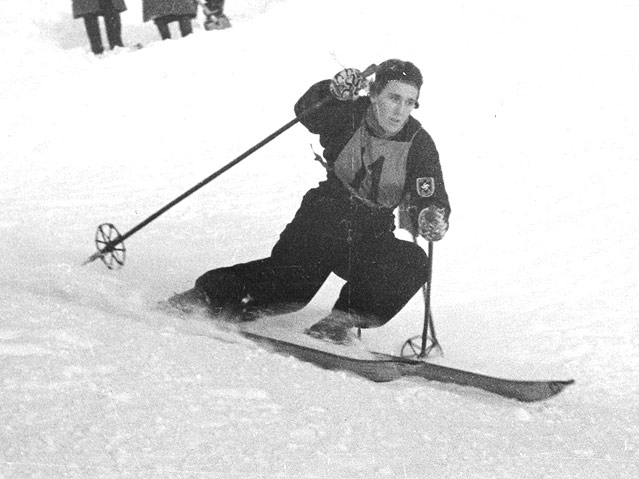
First Alpine Olympic champion Christl Cranz
The first three Olympics had all featured skiing but all of it had been the Nordic cross country variety. Garmisch-Partenkirchen saw the addition of a new Olympic discipline Alpine Skiing.

Unlike the Nordic which went uphill, downhill and along on the flat, this was all in a downhill direction, it had been around as a sport since 1861. The event debuted with two combined events one for men and the other for women.

Both events were dominated by the Germans who took gold and silver in both. But with the women's Slalom happening on February 8th completing their event a full day before the men's Christl Cranz, who was born in Belgium,becoming the first Olympic Alpine champion. She had only been 6th after the Downhill on the 7th, but her superior slalom skills took her to the top of the field. She came ahead of her compatriot Käthe Grasegger and Norway's Laila Schou Nilsen.

In total from 1934 until the out break of World War II in 1939 Cranz had won twelve world championships, five combined, four in slalom and three in downhill, when she hadn't won in the individual disciplines she had won silver. In a German friendly only 1941 World Championships in Cortina d'Ampezzo, she won a final clean sweep and then retired. Her younger brother had finished 6th in the men's event, but ended up being killed on his first day in action on the Eastern Front 22 June 1941.

In that men's event  Birger Ruud of Norway had lead after the Downhill put all three of the men who were behind him moved up one spot to assume the medal spots. Germans Franz Pfnür and Gustav Lantschner while in bronze came Frenchman Émile Allais. Allias was to live to see his 100th birthday on 25th February 1912, but when he died on 17th October last year no pre-war Winter Olympic medalist was still alive.

No success in Alpine but...

Birger Rudd retains his Olympic title
Birger Ruud who had been leading the Alpine combined after the downhill was already a decorated Olympian. He had won the gold in the ski jumping in 1932 in Lake Placid. Along with his brothers Sigmund (who had won Olympic silver in 1928) and Asbjørn (who won the 1938 World Championships) the family were a dominant force in ski jumping in the 1930s.

With two world championships and as the defending champion Birger came into the 1936 Games as the favourite.  Although Sweden's Sven Eriksson managed to jump 76 metres in both rounds to Ruud's 75 and 74.5 metres it was the Norwegian's style points that saw him retain his Olympic title.

He was to return in 1948 at the age of 36 for his third Olympics and managed a silver medal behind another Norwegian, maintaining their record of being the only nation to win the ski jumping, indeed a record they would retain until 1956.

Shock in the Ice Hockey

Great Britain beat Canada twice to earn gold in Ice Hockey
Canada had been untouchable by anybody it seemed but possibly the USA in the Ice Hockey championships so including the 1920 Summer Games they were coming to Germany with four successive Gold Medals.

In the first round unsurprisingly Canada came through their group unbeaten, as did Czechoslovakia and Great Britain in their groups. In the other the hosts lost the group opened to the USA, but went won their other two. But the USA suffered a shock loss in double overtime to the Italians who if they had beaten Switzerland the following day could have knocked out the USA behind themselves and the Germans if they scored enough goals. Fortunately the USA made it through to the second round avoiding embarrassment.

In that second round the Great Britain team stared with by beating the Canadians and then tying with the Germans to top their group. The Canadians had won their other two games and made it through to the final group. While in the other Group USA won all three of their games and were joined by Czechoslovakia in the final.

In the final round yet again Great Britain faced Canada in the first game and yet again won, before beating the Czechs 5-0. In their third Game they were up against the USA. The USA had a final game the next day against Canada so a win here would have given them a change of taking gold even if they only managed a tie in the last game. But instead the two nations played the longest goalless game in Winter Olympic history, nobody scoring in the three periods or three of overtime.

It meant that the last game that was supposed to be the gold medal match between the USA and Canada was only for silver Great Britain with 5 points could only be equaled on points by the USA but would have to have beaten Canada by 5 clear goals to secure gold. As it was the fresher Canadians won 1-0 to take silver.

Triple for Ballangrud

Ballangrud right and Wasenius
Four years on from the mass starts in the speed skating at Lake Placid, the order of man against man was restored, the women's demonstration events in 1932 were not repeated or absorbed into the main programme for now.

The man who seemed to benefit the most was Norway's Ivar Ballangrud. Having come away with a single silver four years before he came away with golds in the 500m, 5000, and 10,000m, in the latter two setting new Olympic records and in the first equaling the existing mark. He was to add a silver in the only other event the 1500m, despite beating the previous Olympic record to his fellow Norwegian Charles Mathiesen.

The next most successful skater of the event was Birger Wasenius of Finland. He took silver in both the longer disciplines and bronze in the 1500m. He was used to coming second behind Ballangrud, indeed four of his six world or Olympic silvers were to be behind the Norwegian. However, at the end of the Games when the call goes out for the young people to assemble in four years hence little did the Finn realise that because of the Winter War between Finland and Russia in 1939-40 that he would be killed in action fighting on the islands of Lake Ladoga on the 2nd January 1940.

Jumping for gold

Herber and Baier about to take off
While jumps were already part of the individual figure skating routines the 1936 Olympics saw a revolution in the pairs. Maxi Herber and Ernst Baier (who also took silver in the mens) were to be the first pair to jump side by side.

The pair were to retire in 1940 and then got married. They had three children together before getting divorced in 1964. Ernst married another figure skater who was only 3 months old when they won their Olympic medal but that marriage only lasted 8 years before he remarried Herber before again divorcing.

Elsewhere in the figure skating Sonja Henie Norway completed in her fourth games winning her third consecutive gold. Although it wasn't to be plain sailing for the Norwegian this time. Great Britain's Cecilia Colledge ran her close in the compulsory figures and when Henie saw the scores posted on the board apparently whipped them down and tore them up. In the free skating programme Henie was to go last while her close rival was second out of the 26 skaters to have to perform before the crowd were warmed up into a frenzy and the judges usually became freer with high scores later on. There was controversy over this perceived favouritism and in later events the staggered draw putting the top competitors together in the last group was adopted to avoid too much shadow of doubt about fairness.

Always the bridesmaid

Reto Capadrutt driving
Swiss bobsleigh driver Reto Capadrutt was taking part in his second Olympics. In 1932 he had taken silver in the two man event and just missed out on the medals with a fourth place in the four man. He came to Garmisch as the world champion in the two man from the event in Igls, Austria the year before. In St. Moritz where the founr man world championships that year were held he had taken bronze.

The four man event took place first on the 11th and 12th of February. On day one he drove his team Switzerland I to a time of 1:23.49 on the first run. This put them behind Germany I on 1:20.73, Belgium II 1:22.22, Switzerland II 1:22.45 and Great Britain I 1:23.48. The second run of the day saw them record 1:19.88, it was only bettered by their fellow countrymen in 1:18:78 and USA I on 1:19.17. It was enough with Germany I only recording 1:23.05, Belgium II 1:23.52 and Great Britain I 1:20.18 to move them up to second place some 0.19 of a second ahead of Great Britain I and 0.41 ahead of Germany I.

On day two the British team took 0.01 off that lead on the first run but the Germans had a disaster losing over 3 seconds. Switzerland II however gained another 0.85 seconds to lead by over 3 seconds going into the last run. On that last run USA I were the fastest a mere 0.07 seconds faster than Capadrutt had driven his crew. He secured another Olympic silver behind his fellow country men.

The 14th and 1th were a disaster for him in the two man event, on run three alone he lost 10 seconds to his fellow Swiss who were fastest on the last three runs but didn't do enough to overhaul USA I's lead from the first. It meant that in a total of 16 legs in the tow Olympic disciplines he had only been fastest down in one run the first of the two men runs in 1932, secured two silver medals and a fourth place.

In the 1939 World Championships the last before the outbreak of war disaster struck as in the four man event he was killed while competing at the age of 27. He was never to get a chance to go one step higher on the Olympic podium.

We will remember them...military patrol

There were rumours of Europe being on the brink of war and the men who took part in the 1936 Military patrol knew full well that if war were to come  they would be some of the first to quite literally face some of their competitors when there was more than Olympic medals on the line. This precursor to the biathlon was still a demonstration sport and open only to serving soldiers therefore in a few short years many of these competitors would see their Olympic skills tested in the field, their skiing and shooting not for glory for for preservation. Unsurprisingly many failed to live to see the next Olympic Games.

The gold medal winning Italians
Of the gold medal winning Italians who were all member of the mountain warfare unit Luigi Perenni died in mountain exercise in August 1943, one of his team mates Enrico Silvestri would join the Italian resistance in 1944 and together with the other two members survive the war.

Silver medal winning Finland suffered hard, their military was thrown into a winter war against the Soviet Union in 1939 which claimed two of their number Kalle Arantola on 12 February 1940 and a week later Olli Huttunen, the third non-officer Olli Remes died in East Karelia during the continuation war on New Year's Eve 1942.

The officer of the 5th placed German team Herbert Leupold was killed on the Eastern Front in the North Caucasus region of Krasnodar Krai on 22 December 1942. He had the rank of Lieutenant at the time of the Games.

But some survived with honour.

French officer Jacque Faure survived the war serving in Norway, as attaché to de Gaulle's General Staff in London, before being sent back to France. He rose to the rank of General. During the Algerian War in 1954-62 he planned a coup against the French Government in North Africa in 1956.

Polish officer Władysław Żytkowicz was active during the German invasion of his country in 1939, he retreated with his troops into Romania after the Soviet Union also invaded Poland as a ally of Germany at the time. From there he made his way to French administered Syria where surviving Polish troops regrouped at the Independent Carpathian Brigade. When the French capitulated to the Germans he moved to British controlled Palestine. He saw action at Tobruk and in the Italian Campaign and at the end of the war smuggled his family out of Soviet occupied Poland to Italy, from where the Polish troops returned to Britain for demobilisation and from there settled in the USA.
 

Friday, 27 September 2013

1932 Winter Olympic Games: III Lake Placid

In the run up to London 2012 I did a series looking back at all the previous Olympics posting it at 5pm every Friday, I've decided to do the same in the run up to Sochi 2014 with the Winter Olympic Games. You can catch up on any you missed in the Olympiads Revisited tab.

The Winter Olympics like their Summer counterparts left Europe for the first time on their third edition and headed to the USA. Indeed if Melvil Dewey, inventor of the Dewey Decimal System for libraries, hadn't established the Placid Park Club in the area in 1895 and developed it as a winter resort as well from 1905, it may well have been the North Elba Olympic Games, but the people of the village changed the name to fit with the Country Club that Dewy had founded.

Competitors 364 (-100)
Nations 17 (-8)
Events 14 (nc)
Sports 5 (+1)

4 February to 19 February 1932 hosted by Lake Placid, NY, USA

The move from Europe did however see less nations sending teams to the Games and less athletes participating, much as has happened in the 1904 Games in St. Louis. Estonia, Latvia, Lithuania, Luxembourg, Netherlands and Yugoslavia didn't send teams from Europe, but Argentina and Mexico surely didn't have the excuse of cost, time and distance as a deterrent having travelled to Europe for the last Games.

The Games were opened by the Governor for the State of New York, where Lake Placid nestles, Franklin D. Rossevelt, in November of that year he was elected to serve his first term as President of the USA. As with the first Winter Olympics and the planned Games for 1936 and 1940 the Winter and Summer Games were to be held in the same nation.

Mass start dumbfounds the European skaters


A mass start at the Lake Placid Games
Speed skating at the time was done in two different ways, in Europe, as we still see in long course, it is two people against each other and the clock with controlled changing of lanes. Yet in the USA and Canada it was a mass start and every man (although women took part in a demonstration at these Games) for himself, much like the short track speed skating at the modern Games.

Whether or not the mass start affected events it is hard to tell but the All Around World Champion and defending 5000m Olympic Champion Ivan Ballangrud of Norway could only manage one medal, a silver in the longest event the 10,000m by only 4.5m having just passed Canadian Frank Stack towards the end. He was behind Irving Jaffe, who had been leading the 10,000m four years earlier in St. Moritz when the competition was abandoned as the ice on the lake where it was being held was melted. Jaffe had also taken Ballangrud's 5000m title.

In the shortest distance the 500m only Norway's Brent Evensen even made it through the heats to compete against an all USA or Canadian final. In the 1500m only the North American nations were represented in the final and Eversen and Ballangrud were the sole Europeans to break the USA and Canada stranglehold of representatives in the 5000m and 10,000m finals.

Indeed it was only another silver from Evensen in that 500m alongside Ballangrud's in the 10k that prevented all the medals either staying the in USA or heading just across the border to Canada. But not even Canada could stop all the gold staying in the USA.

In the 500m and 1500m Jack Shea became the first American to win two golds at the same Winter Games. He was also the the first of three generations of Olympians from his family, his son Jim took part in 1964 in cross-country skiing and Nordic combined and his grandson Jim Shea Jr was to win the gold in the men's skeleton when it became a permanent fixture in the Games in 2002.

Women speeders break unto the ice


Jean Wilson of Canada
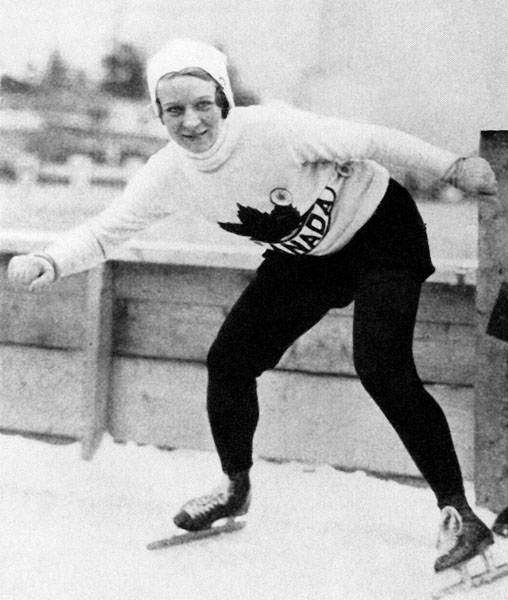
Lake Placid was the first time women took part in anything other than figure skating at the Winter Olympics. although it was only in a demonstration capacity in the speed skating and only over three shorter distances 500m, 1000m and 1500m.

In total 10 women, five each from the USA and Canada took part in these events.

The 500m winner was the sole winner from Canada, Jean Wilson. She had actually been born in Glasgow in 1910 before her family emigrated to Canada. She also took silver in the 1500m and was leading the 1000m before a fall denied her a medal, Elizabeth Dubois who came behind her in the 500m taking that gold. However, after the Olympics she developed the auto immune disease myasthenia gravis and died on 3 September, 1933. 

The winner of the 1500m was Kit Klein of the USA, four years later at the World Championships in Sweden she was able to prove that women were capable of skating further than they had been allowed in 1932. She managed to take 10 seconds of the 3000m World Record in that event. The following day she was 36 seconds under the pre-existing World Record for 5000m only to have had Verné Lesche of Finland skate faster. However, Klein had secured the all around title, but as she was sailing back from Europe after the 1936 Games in which there was no women's speed skating she threw her skates overboard marking her retirement.

From swimming to skating


 Karl Schäfer winning the first of his Olympic titles
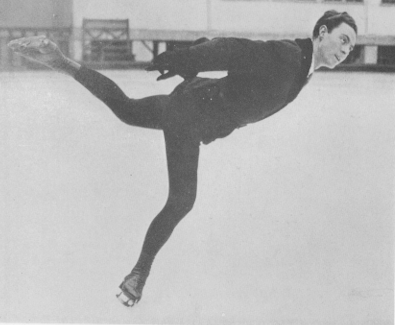
The winner of the men's figure skating, Karl Schäfer, was  competing in his third Olympics. He had just missed out on the medals in skating four year's before when only 18 but had gone on to Amsterdam to take part in the 200m breatstroke for which he was also a multiple Austrian champion. He missed out in the semi-finals while the Filipino swimmer, Teofilo Yldefonzo, who he had beaten in the heats went on secure his nations first Olympic medal with a bronze in the final.

Four years on having been unbeaten as European Champion since 1929 and World Champion since 1930 he was favourite to win in Lake Placid despite the three time Olympic Champion Sweden's  Gillis Grafström being in the field of twelve. Grafström was 38 to Schäfer at 22 and hadn't been tested in a major competition since his final World Championship in 1929. The younger man won both the compulsory figures and free skating with the Swede coming second in both to claim the silver medal in his fourth Olympic ice skating event, including the inclusion of figure skating at the 1920 Summer Games.

Schäfer would go on to defend his title in 1936 before retiring from competitive skating, having won the European title 8 years in a row, the Worlds 7 years and two back to back Olympic titles.

Four in a row, O Canada?
In white, the Winnipeg Hockey Club represented Canada

Yes I know this is only the third Olympic Winter Games but like Figure Skating, Ice Hockey had made an appearance in 1920. Since then the title had been the property of Canada and nobody apart from the USA had even managed to keep them within 5 goals of a difference.

As in 1920 when the Winnipeg Falcons took the first Olympic Ice Hockey gold, the Manitoba city provided the team to represent Canada, this time Winnipeg Hockey Club. In Lake Placid there were four teams entered with Germany and Poland making up the numbers with each team playing the others twice. 

The first and last Games were to be USA v Canada. In that first game Canada took the lead in the second period, but the USA scored an equalising goal in the third period of normal time. So for the first time in Olympic history Canada had failed to win in the time. It was also the first Olympic ice hockey game to go to overtime. Canada were the eventual winners with a goal in the second period of overtime.

With Canada and the USA winning all their other games it came down to the last game to determine the gold and silver. Germany had secured the bronze after beating the Poles in both their matches. Both teams scored in the first period but USA scored in the second, this was the first time that Canada had been behind in an Olympic ice hockey match in history. They did however, score in the third period to force the teams once more into overtime. Neither team could score in the two allowed periods of overtime, making this the first ice hockey match to be a tie in Olympic history. But it was enough to secure the fourth gold in a row for the Canadians.


Faster, longer, steeper


Lake Placid's first bobsleigh track
These are three words than can best sum up the Olympic Bobsleigh run that was purposefully built in Lake Placid for the 1932 Games. Studies were made by the Organising Committee of the best runs in Europe at Chamonix, St Moritz, Grindelwald, Mürren, Engelberg and Davos. They had surveyed a run with a vertical drop of 200m compared with 156m at Chamonix and 130m at St. Moritz.
In the end the Lake Placid track suited the American racers to a tee. Billy Fisk repeated his gold medal winning performance from 1928 driving in the now recognisable four-man event, while Hubert and Curtis Stevens (not related) took gold in the inaugural two-man.

However, the committee were looking ahead at single coasting events, whether toboggan or skeleton for the Olympics. In their proposal to the IOC (page 51)  they said:


"Single-sled coasting of various forms is, however, a feature on most bob-runs, and would seem to be an interesting and appropriate feature for the Olympic Winter Games. It is suggested, therefore, that if single-sled coasting be desired as a feature of the Third Olympic Winter Games, it be held on the Olympic bob-run, without restriction as to the exact form of sled. If the International Federation of Bobsleigh and Tobogganing desires a smoother, faster ice surface for the single-sled event, this can readily be provided by holding the single-sled event at the beginning of the Olympic period and re-icing the surface for the bobsleigh event to be held toward the close of the Olympic period."

In the end, apart from the return of the Games to St. Moritz and a second skeleton event on the Cresta Run there was no introduction of single-sled coasting events until the introduction of the luge in 1964 and the permanent inclusion of the skeleton from 2002. Putting the men behind the 1932 games 30 and 70 years ahead of their time.

Dogs have their day in Lake Placid


The only time dogs have taken part in the Olympics
While horses had made their sole Winter Olympic appearance in 1928 in skijoring it was the turn of dogs in 1932. Again it was only as a demonstration event that dog sledding made its appearance on the Olympic stage.

American and Canada were well know for their dog-sled racing coming out of the practical need to get around over the vast distances in the frozen north during winter. Lake Placid itself had been holding an annual race ahead of it being awarded the Games.

In the end the two top sledders of the day Canada's Emile St. Godard and USA's Norwegian-born Leonhard Seppala would be the class acts over the 40.5km (25.1 miles) course. The actual event was held over two days a fortnight before the Games commenced.

In the first run St. Godard had an advantage of just 91 seconds over Seppala both of them being some 13 minutes ahead of the rest of the field. Seppala however, lost a further 6.5 minutes on the second run when St. Godard was again the fastest.

Friday, 20 September 2013

II Olympic Winter Games: St. Moritz 1928

In the run up to London 2012 I did a series looking back at all the previous Olympics posting it at 5pm every Friday, I've decided to do the same in the run up to Sochi 2014 with the Winter Olympic Games. You can catch up on any you missed in the Olympiads Revisited tab.

In 1925, following the success of the week of winter sport in Chamonix, the International Olympic Committee decided that every four years there should be a Winter Olympic Games, entirely separate from the Summer Games. Chamonix was retrospectively called the First of these Winter Olympiads. As Amsterdam had already been selected to host the 1928 Summer Games they were given the first refusal to host what were now the Winter Games. But the lack of Alpine landscape and guaranteed cold weather meant that they turned down the offer.

Switzerland were approached and nominated three possible hosts. Davos, Engelberg and St. Moritz. At the 25th IOC congress is Lisbon, St. Moritz were chosen to the first city to host what was to be known before it took part as the Winter Olympic Games.


Competitors 464 (+206)
Nations 25 (+9)
Events 14 (-2)
Sports 4 (-2)

11 February - 19 February, 1928 hosted by St. Moritz, Switzerland

The new nations

The number of nations had increased by more 50% with these games now being an official part of the Olympic movement. The newcomers included the first Winter Olympic delegation from the Southern Hemisphere in the shape of Argentina, as well as Mexico, Estonia, Germany, Japan, Lithuania, Luxembourg, Netherlands and Romania.

Of the new nations only Germany managed to win a medal, although they had sent the largest delegation of competitors to the Games with 44 they only received a bronze in the five man (as it was at the time) bobsleigh. Argentina managed to finish in both 4th and 5th in the 5 man bobsleigh.

From gold to war dead


In that five man bob there was a young driver who at only sixteen was to be the youngest gold medallist in any event until 1992.

Billy Fiske was born in New York but was at school in France in 1924 when he came across the world of bob-sledding. Four years latter he was the driver of USA II who bet their compatriots in USA I by 1.5 seconds. Fiske drove his sled went fastest on the first run, but despite the other USA team going faster on the second of the two runs they were able to hang on to their lead, along with his teams mates Clifford, Grey, Geoffrey Mason, Richard Parke and Nion Tocker.

Four years later in his home Games at Lake Placid Fiske repeated his gold medal winning performance in the now four man bob, again with Grey, but alongside Eddie Eagan and Jay O'Brien.

He was invited to lead the bobsled team in 1936 at Garmisch-Partenkirchen in Germany, but he refused. Some believe that his refusal was because he didn't agree with the politics of Germany at the time. If so, that may explain why he was one of the  seven American volunteers to fly planes in the Battle of Britain. He joined No. 601 Squadron of the RAF on 12 July 1940 after completing his pilot training. On 16 August 1940 along with the rest of the squadron he scrambled from Tangmere in his Hurricane fighter, but after just 15 minutes of flying time a German gunner put a bullet through his fuel tank.

With his hands and ankles badly burnt and his aircraft damaged he headed for home, glided his aircraft over the hedgerow at the edge of the airfield and landed. Although he had to be extracted from the plane by ambulance personnel. Shortly after his fuel tank exploded. He died the following day in hospital in Chichester, and for his funeral his coffin was covered in both the Union Flag and Stars and Stripes. He received the 1939-45 Star with Battle of Britain clasp posthumously. Although he was not the first American born pilot be killed in action, he was the first who was still fully a American citizen and there is a memorial to his service in St. Paul's Cathedral what was unveiled on 4 July 1941.

Finally arrived four years late


4 years late Burmeister
Estonia's flag had flown at the start of the 1924 Games the one representative they were meant to have sent Christfried Burmeister to take part in the speed skating. He was withdrawn by the federation although as the Estonian sports officials did not tell the Olympic organisers their flag still was present at the 1924 Opening even though they did not actually take part. 

In 1928 Burmeister was joined by his fellow countryman Aleksnader Mitt in the speed skating events. Burmeister was the better placed in the shorter events 15th in the 500m and 18th in the 1000m, to Mitt's 22nd and 19th positions. But in the 5000m Mitt who was 5 years younger was better placed coming 21st three places better than Burmeister. The 10,000m didn't take place due to the ice on the outdoor lake on which the event was being held melting too much.

Mitt would return in 1936, Estonia did not send a team to the 1932 Games, which would be the last time that Estonian winter sports men would take part in a Winter Olympics under their own flag until 1992 after the break up of the USSR.


Four years older now the darling of the Games

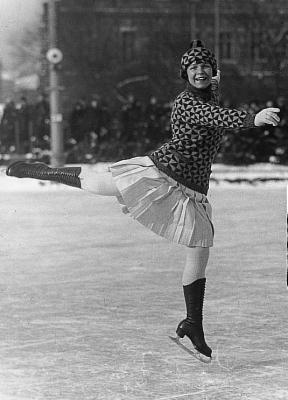
 In 1924 an eleven year old from Kristiania, by now back to older name of Oslo, made her Olympic debut. She had been last of the eight women in the figure skating then, having to skate over to the side of the rink
 during her routine for directions from her coached. Four years on she had come of age.

Sonja Henie had won the world championships the previous year, when she was 14 the first of her unprecedented ten. It was a split decision on the scoring system of the time 3-2 over the defending Olympic and World Champion Herma Szabo of Germany. Then the three judges who placed Henie first were all Norwegian and the Austrian and German judge had placed Szabo first.

Now at fifteen there was to be no doubt the judges were from Norway, France, GB, Belgium, USA, Austria and Germany, although Szabo did not take part to defend her title. But Henie came first in both the compulsory figures and free skating and finished some distance clear of the battle of the minor medals. While she had a 200 point margin there was only 40 points separating 2nd to 5th. Fritzi Burger of Austria won silver because of better judges placings than Beatrix Loughran of the USA who had scored more points.

Henie would go on to defend her title in 1932 and 1936, Burger would have to look up to her on the top step again in four year time with a second silver.

Clean sweeps in cross-country

The Cross County skiing had two events over 18km and 50km and in both there was one country that stood on the podium, though not the same country for both. In the shorter event it was Norway and the longer discipline saw the Swedes take Gold, Silver and Bronze. In fact such was the Nordic dominence in the event that only Otto Wahl of Germany managed to break in amongst the Norwegians, Swedes and Finns in the top 10, doing so in the 50km.

Johan Grøttumsbråten
Johan Grøttumsbråten won the 18km in 1 hour, 37 minutes and 1 second a full two minutes ahead of his fellow countryman Ole Hegge. This was an improvement on his silver from four years previously, that year he also managed bronze in the 50km and Nordic Combined. He was to go on and complete a double in St Moritz winning the Nordic combined, in another Norwegian 1-2-3. In 1932 he would repeat his success in the 18km. 

In the 50km Per-Erik Hedlund finished 13 minutes 27 seconds ahead of fellow Swede Gustaf Jonsson who by comparison was a mere 16 seconds ahead of Volger Andersson. The margin of victory by Hedlund has never been beaten, nor has anyone come close to it. In these games in wore a white ski suit and a red had this was to be the uniform of Swedish Nordic skiiers until 1976, before they adopted the traditional national colours of blue and yellow.

When in St. Moritz...do as the Cresta runners do


The Heaton brothers
The resort of St. Moritz is famous for its Cresta Run and the daredevils who go down it head first. Indeed Billy Fiske (see above) is one of the champions whose name appears on the board in St. Moritz. So of course the skelton was to appear as an Olympic sport on the famous Cresta Run on both the occasions the Games visited St. Moritz, the other being 1948. It wasn't to become a permanent part of the Olympic calendar until 2002.

The USA were represented by two brothers Jennison and John 'Jack' Heaton, their main challenger came from GB's David Carnegie, 11th Earl of Northesk. Jennison was the older of the brothers by 4 years and had been the driver of USA I in the five-man bob which had lost out to Friske, but on the Cresta run over three runs his aggregate time was 1 second faster than his younger brother. Carnegie ended up a further 2.3 seconds back in bronze.

Jack was to appear in two further games in 1932 he was the driver of USA II in the two-man bob taking bronze and when the Games return to St. Moritz in 1948 he took part again in the skeleton and yet again took silver.

Demonstration events

Once again there was military patrol, the forerunner to the modern event of biathlon, though instead of having full Olympic status was reduced to a demonstration sport. Yet again it was exclusively for military personnel. It was won by four Norwegians who had a interesting diversity of participation in the Olympics. One of their number Ole Reistad was making his second Olympic appearance having already taken part in the Modern Pentathlon at the 1920 Summer Games, coming 14th. Reidar Ødegård was to also take the bronze medal at these Games in the 18km Cross Country skiing. Another of their team Ole Stensen would go on to take silver in the Nordic combined at the 1932 Winter Olympics.


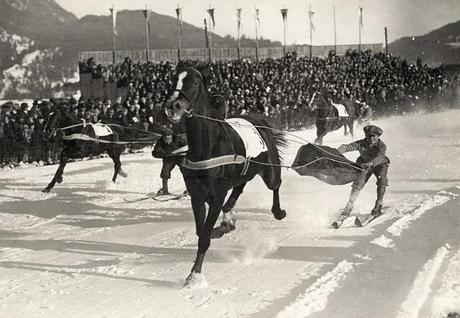
Skijoring on the lake at St. Moritz
As well as the military patrol there was another demonstration sport at the Games that was making its sole appearance.

The sport of skijoring involves people on skis being pulled behind dogs, horses or some mechanised device. It had developed as military discipline and sport as it was used for speedy military dispatches. For the Games in St. Moritz it was held on a frozen lake with all the competitors starting en masse, without any jumps or obstacles on the course as happens now in similar events in North America. It turned a clean sweep for the host nation Switzerland. 


Top of the pile

Norway only had 25 athletes at these Game but were top of the medal table securing 15 medals in total. 6 Gold, 4 Silver and 5 Bronze. Along side Sonja Henie and Johan Grøttumsbråten's double, there were golds for Alf Andersen in ski jumping and in speed skating for Bernt Evensen 500m and Ivar Ballangrud 5000m. 
Evensen completed a full set of medals with silver in the 1500m and bronze in the 5000m. Ole Hegge and Reidar Ødegård came behind Grøttumsbråten in the 18km cross country skiing and Hans Vinjarengen and John Snersrud completed the other sweep of medals behind Grøttumsbråten in the Nordic combined. The other silver was Sigmund Rund in the ski jumping with speed skaters Ballangrud and Roald Larsen completing the haul with bronzes in the 1500m and 500m respectively.

Friday, 13 September 2013

I Olympic Winter Games: Chamonix 1924

In the run up to London 2012 I did a series looking back at all the previous Olympics posting it at 5pm every Friday, I've decided to do the same in the run up to Sochi 2014 with the Winter Olympic Games. You can catch up on any you missed in the Olympiads Revisited tab.

The 1924 Summer Olympics were to he held in Paris, France. In the 1908 and 1920 Summer Games Figure skating had featured and in the 1920 Ice Hockey had also taken part. In 1921 the decision was made to have Semaine Internationale des Sports d'Hiver (International Winter Sports Week) at Chamonix as part of the Paris Games.

Although the idea of a Winter Sports Week associated with the Olympics was not a new one. It has first been put forward for 1912 as part of the Stockholm Games, but was turned down by the hosts as there already was the multi-event Nordic Games first held in Sweden in 1901, which would continue to run until 1926 with only one of the eight held outside Sweden; Norway 1903. There was meant to be a Winter Sports Week in 1916 when speed skating, figure skating, ice hockey and nordic skiing would have taken place at a German winter sports venue, but the war intervened.


Nations 16
Competitors 258
Sports 9
Events 16

25 January to 5 February, 1924 hosted in Chamonix, France

The original nations to take part in what were to become the Winter Olympics were:

  • Austria
  • Belgium
  • Canada
  • Czechoslovakia
  • Finland
  • France
  • Great Britain
  • Hungary
  • Italy
  • Latvia
  • Norway
  • Poland
  • Switzerland
  • Sweden
  • United States
  • Yugoslavia
The nine sports that were represented being bobsleigh, curling, figure skating, ice hockey, military patrol (aka biathlon), nordic skiing and speed skating. Perhaps surprisingly to us today the Alpine Skiing wasn't to feature until 1936.

First gold...

Winner of the First Winter Olympic Gold Medal
On the second day of the Games the first gold medal was awarded in the 500m speed skating.

The winner of that first gold was a native of Lake Placid a two time Winter Olympic host and the only non-Nordic medalist in the speed skating. His name was Charles Jewtraw.

However, the other medals in speed skating went to Norway or Finland. But it was the Finns that took the other 4 gold medals and one Finn took home a medal in all 5 events.

Clas Thunberg from Helsinki had come tied in third in the 500m, but took gold in the 1500m and 5000m and silver in the 10,000m. As a result of his performances in the four events he was awarded the all-round gold medal as well based on his finishing positions. He took a further two golds in the 1928 Games at 500m and 1500m.

First female Winter Olympic Gold medallist
Unlike the Summer Olympics where women first competed in 1900 (and then only in golf, tennis and croquet) the Winter Olympics had female participation from the off, although only in the figure skating. 

The first female gold medalist at the Winter Olympics was therefore in the ladies individual.  The only competitor in Chamonix who had Olympic experience was Theresa Blachard (née Weld)  from the USA who had won the bronze medal in Antwerp. However, she was to finish just out of the medals in 4th (something she had done with partner Nathaniel Niles in the pairs 4 years previously). 

The winner was Austrian skater Herma Szabo, with the first female silver and bronze medalists being Beatrix Loughran (USA) and Ethel Muckelt (GB).

However, the 11-year-old skater who came 8th and last is the one that most people remember. Her name was Sonje Henie and the Norwegian would go on to win gold at the next three Olympics.


The defending Summer Olympic Champions

There were two champions in winter sports defending their titles at these first Winter Olympics. The first to complete their competition was Gillis Grafström of Sweden in the men's figure skating. On the sixth day of the Games he entered the history books as the first champion to retain his title in the Winter Olympics.

The other champions from the 1920 Summer Games were Canada in the Ice Hockey. They soared through their group scoring 85 goals in the three games against Czechoslovakia (30), Sweden (22) and Switzerland (33) without conceding one. In the final round robin round they dropped 2 against Great Britain, but scored 19 and another against USA but scored 6, in the tightest game they faced in their defense against the only team that looked to be on a par with them.


The First Olympic Bobsleigh

Nine sleds from 5 nations took part in the inaugural Olympic bobsleigh. Two each from France, Great Britain, Italy and Switzerland with a single sled from Belgium. 

The equipment was very different from what we will see now; an open sled, the team wearing woolen jumpers and leather hats for protection. Even the run was different with snow laid up to form bends without the concrete structures and freezing pipes we know today. There was also a rolling start rather than the run.

In the end the gold was won by the Swiss team of Alfred Neveu, Eduard Scherrer, Alfred and Heinrich Schläppi, Grat Britain came second and Belgium third. The Schläppi brothers would be the co-Presidents of the first post war Winter Olympics in 1948 at St. Moritz.

Military Patrol aka Biathlon

Like the Modern Pentathlon in the Summer Games there was an event that started out purely as a military competition. Although in this case it wasn't to be the official Olympic event of Biathlon until 1960.

Six nations had sent teams of 4 to compete in the event which combined cross country skiing and shooting, Czechoslovakia, France, Finland, Italy, Poland and Switzerland. Each team consisted of one officer, one NCO and two privates, the officer would carry a pistol and not take part in the shooting, the NCO and privates would also carry backpacks with a combined weight of 24kg. The course would include between 500m and 1200m of climbing, therefore trying to replicate the conditions of a patrol out in the snow.

There was bad conditions on the course on 29 January when the event took place and the teams from Italy and Poland failed to complete the course. But the first winners were Switzerland Dennis Vaucher, Alfred Aufdenblatten and brothers Antoine and Alphonse Julen.

The fifty year long error

The Ski jumping in the first Olympics was dominated by the Nordic nations, indeed initially it was announced that Norway had won all three of the medals. 


The event took place at Le Mont and the K point of the hill at that time was at 71m. The winner was Jacob Tullin Thams, who would later win a silver medal in the 8m class for sailing at the 1936 Summer Olympics. In second was this compatriot Narve Bonna and the initial third place went to another Norwegian Thorlief Haug. 

However, in 1974 and error in the calculations in those Games realised that the bronze should have been award to the USA's jumper Anders Haugen; although as he was born in Telemark*, Norway really another Norwegian. The error had been spotted by a Norwegian sports historian Jacob Vaage at the 50th anniversary reunion of the Norwegian team. Therefore on 12 September 1974 an 86 year old Haugen was presented with that Bronze medal by Anna Maria Magnusson, Thorleif Haug's youngest daughter.

Haug who had died in 1934 probably wouldn't have been too upset, he had three gold medals from those Games in 18km and 50km Cross Country and the Nordic Combined.

In total the top five jumpers in the first ski jump contest had all been born in Norway.

Great Britain's best Winter Olympics

The GB Curling team on their way to gold
The 1924 Games are still Great Britain's best ever in the Winter Olympics. Bronzes were secured by Ethel Muckelt in the women's figure skating and the Men's Ice Hockey (there was no women's until 1998). The British four-man bob of Ralph Broome, Thomas Arnold, Alexander Richardson and Rodney Soher took silver. But it was in Curling that GB won their first winter Olympic gold medal.

The curling team father and son William and Laurence Jackson, Thomas Murray and Robin Welsh won the gold medal match. All four were members of the Royal Caledonian Curling Club and Welsh in 1895-6 had played four times for Scotland in Rugby Union. It was skipped by William Jackson in the final, but there were four other members of the team John Robertson-Aikman, John McLeod, William Brown and Major D.G. Astley. The last of these Major Astley played for Sweden in their silver medal play off match against France those winning a gold and silver medal in the same event. However, until 2006 the 1924 Curling event was deemed by the IOC to be only a demonstration event.

But No gold for the hosts

Since the first Summer Olympics in 1896 every host nation had taken first place, and since 1904  gold, in at least one event. However in Chamonix the French failed to follow suit. They came away with only three medals all of them bronze in the curling, pairs figure skating and military patrol. Though it could have been worse as the Curling medals were only awarded in 2006 after the event was recognised as an official part of the programme.

* Telemark is the region of Norway that gives it name to characteristic Telemark landing with one foot in front of the other that all ski-jumpers must land to receive maximum style points.