Showing posts with label Vince Cable. Show all posts

Thursday, 14 October 2010

Nick Why Aren't You Listening to Us?

I've just received an email from Nick Clegg, one which I am rather disappointed to have received. It is one to general members and not to the various PPCs like myself who signed the NUS pledge on tuition fees. Therefore it is addressing me as an ordinary member not someone who with the confidence of our funded manifesto, was confident we could honour our pledge not to increase the student cap no matter how bad the economy was. Who stood before various meetings, on numerous doorsteps and wrote many emails telling people we would and we could honour this pledge no matter what.

He starts (there are bits of Fisking in red by me):

I am painfully aware of the pledge my colleagues myself included and I made to you and to voters on tuition fees ahead of the General Election. Departing from that pledge will be one of the most difficult decisions of my political career it is one that after 22 years of struggling on this issue I still will not depart from. It means doing something that no one likes to do in politics – acknowledging that the assumptions we made at election time simply don’t work out in practice but our assumptions were to reduce it over 6 years before the election, now we are looking to increase. Surely the next logical assumption, a middle ground, is to hold off the reductions a bit longer. With the benefit of hindsight, I signed a pledge at a time when we could not have anticipated the full scale of the financial situation the country faces now and the absence of plausible alternatives for students to the arrangements we are now advocating.
He carries on saying:

We have broadly endorsed them but this is an enormously complex issue and we will take the time needed to get it right. Yet with the report announced at 9am we had Vince Cable fully endorsing it at 3pm. This despite it being a complex matter that we needed to get right. Even the coalition agreement allowed our Liberal Democrat MPs time to gauge what the Browne report said and to take action (admittedly only abstain) if it went beyond what we believe in. I think that applies to all our MPs up to the level of Deputy Prime Minister.
But I'm glad that part-time students are included in funding in the same way as full time students, that is a manifesto pledge delivered. I'm glad that Vince Cable still disagrees with a graduate tax as that is not progressive and discriminatory against graduates who fail to find graduate level employment.

However, I do have concerns about the final remarks:

The overriding principle for Liberal Democrats is that any system of higher education funding is fair I agree wholeheartedly. It should increase the number of students from disadvantaged backgrounds Still agreeing; it should increase social mobility agreeing again; it should ensure fair access for all and not put anyone off attending university agree; it should increase the already world-class teaching and research at our universities agree; and it should ensure that those who earn more pay more agree.


Yet I agree with all this but it is not achievable under the Browne recommendation. The payments to some Universities will be higher to the prestige Universities will be higher. The number of students from disadvantaged backgrounds will be put off my fees which may be as high, or higher, than the family income. Social mobility will not be enhanced a the poor students will have to deal with the extra amount they have to pay back, at a commercial rate of interest. They'll be even more hogtied than the current graduates are. If penalising our students to increase world-class teaching and research is involved that is wrong. We pledge it should be free to all at the point of entry. As for those who earn more paying more yes. However, with lifting the cap all will be paying more to pay it back.

Yesterday there was a growing groundswell from MPs, PPCs other elected positions and ordinary members against the endorsement of the Browne report by "our" party. Linda Jack at conference asked Nick could we trust him with our party. Our party has told the leadership time and again down the years that we will not bend on tuition fees. Our party is telling him that again now, yet somehow he seems to be ignoring that, or the fact that we have a get out if we disagree with Browne, and is actually endorsing rather that saying we cannot support this and abstain.

Nick are you listening? We don't agree! We shouldn't endorse. Many of us are angry not with the Browne report but the way in which our leaders are rebelling against the will of the party on this. We are democrats it is the party that decides policy.

Thursday, 15 July 2010

Once Upon a Time in a Polytechnic Not Too Far Away...

Episode IV: A Dying Hope*

When I was only two Margaret Thatcher took away free school milk, yet somehow I still got mine through my primary school days. When I was a student and I was old enough to do something about it she started to completely phase out grants for students and replace them with loans.

So it was that one of my first campaigns and indeed I think my first public march was on Westminster in the late 80s shouting for 'Grants not Loans'. The basic argument is the same that the more people have to pay for their own education the more you price out those with ability from the poorer areas of our country who might just make a difference to our world.

I'm going to cite an interest in this as one of those who wouldn't have gone to university without assistance was the son of late french polisher and a quality controller in a shirt factory. He lived in a two up two down without an inside toilet, bathroom or telephone. The only advantage he had over some on the other side of the Derry walls was that as a protestant he would have a vote when he came of age. Because that person was the first of the Glenn's to go to university my father. He went on to a career in teaching when he affected the lives of many and inspired them either to take maths seriously or to get involved in computers when they were still a novelty and then beyond.

The issue of fees has been a hot potato in Lib Dem conferences for a number of years now, not least because we delivered the removal of top up fees in Scotland when we were in coalition. So therefore imagine my shock when Vince Cable today announced that he was asking Lord Browne to look into the idea of a graduate tax as a matter of 'priority'. Seeing as we stood on a platform of removing fees for students when we could afford it to suddenly start talking about a graduate tax is a reversal in our commitment to education.

I also recall that Vince defended the VAT rises with a glib comment that he never stood in front of the VAT Bombshell poster. Well lucky him. However, I was proud to be there for the launch of that poster in Glasgow. I still say that VAT is a regressive tax and has no place in a progressive society that looks out for those least able to look after themselves. Especially as even those who don't pay income tax pay some VAT.

I'm equally glad to say I've waved a placard saying grants not loans. Kept on fighting to do away with the unfairness of the Students Loans Company. Glad that in Scotland our party has backed a minimum income guarantee for students and that we were fighting as recently as May to do away with top up fees as and when we could afford to do so.

I do not agree with Vince that this is a priority. I object to the fact that he even thinks it is. A student priority at the moment is a way for our recently graduated to find employment, and by that I mean paid employment. Sure internships give skills but no money and that is not what our brightest spent 3 or 4 years to get their Bachelors or Masters degrees to go on to. Having graduated in the last major recession I know how tough that can be.

* Not yet it isn't I'll be fighting on.

Thursday, 22 April 2010

Qualified to Lead the Economy and Keep IMF from the Door

So Ken Clarke with his Law degree thinks that leaving the economy in the hands of Doctor Vince Cable (that PhD is in economics) and former lecturer at Glasgow University and the London School of Economics will lead to the IMF having to bail out the UK. At least that seemed to be implied as the Tories continued to say that only by giving them the keys to Downing Street as a block set will that be avoided.

I'm sure Clarke doesn't think that Alistair Darling a fellow lawyer is better qualified that the former Shell Chief Economist. So that must leave the modern historian George Osborne as the best economic mind to deal with an economic crisis.

It's ludicrous to think that voting for more LIb Dems will lead to a destabilised economy. Indeed one thing we have been saying is that we should get all the parties together to work out an economic plan to get us out of this. Looking at the manifestos of both Labour and the Conservatives one thing that is lacking is that clear plan.

Here's one that George and Ken may want to consider five tests before we start to cut the deficit and indeed possibly before the Tories might end up having to fall back on the IMF.
  • the rate of growth
  • the level of unemployment
  • credit conditions
  • the extent of spare capacity in the economy
  • the cost of Government borrowing
I'm sure both Clarke and Osborne will come across those ideas when they actually get back to scrutinising the Liberal Democrat manifesto* rather than scaremongering and spreading fear. It is the spreading of fear from the Tories that is actually causing the bankers to panic rather than a promise of hope to work through this economic strive together whatever the outcome on May 6th.

However, I guess the Tories are too short sighted to see things that way.

* Scottish version also available.

Wednesday, 14 April 2010

Do It Vince Cable's Way

You just have to love this.

Brown U-Turns on Fault with Bank Regulation

Do you recall Gordon Brown the Prime Minister saying that the banking crisis was brought on my a world wide problem and nothing to do with Gordon Brown the Chancellor?

Do you recall Vince Cable warning both Gordon Brown the Chancellor and Gordon Brown the Prime Minister of serious flaws in banking regulation that needed to be dealt with?

You probably won't recall George Osborne nodding his ascent of the former and barracking the later.

Well in an interview to be aired tonight Gordon Brown has finally admitted that he was wrong.

"In the 1990s, the banks they all came to us and said, 'Look, we don't want to be regulated, we want to be free of regulation.' And everybody in the City was saying ... and all the complaints I was getting from people was, 'Look you're regulating them too much.' And actually the truth is that globally and nationally we should have been regulating them more."


As for the Tories he said they had urged him to be even lighter handed on the banks adding:

"You don't listen to the industry when they say, 'This is good for us.' You've got to talk about the whole public interest.

"And so we are tougher on the banks and tougher on the way they behave and we can be relied on to make sure the banks act in the national interest."


So who would you want in charge of the economy?

  • Someone who's taken soundings knows what he's talking about and is still saying we need to be tough on banks, like Vince
  • Someone who's prepared to act because one interest group have said it was god for them who then realises later, when it is too late, that other views are important, like Gordon
  • Someone who doesn't seem to know what is going on or realise how bad things are and is prepared to carry on, like George.
I know which of those three I'd rather have. The steadying yet firm hand, the foresight and forethought of Vince Cable stands out head and shoulders above the other options.

That's why a vote for the Liberal Democrats is not a wasted vote this time around on May 6th. It actually makes sense to vote for the party that's been making sense over our biggest problem for the last decade.

Saturday, 10 April 2010

Big Business Bosses Being Used - Says Cable

Vince Cable speaking in today's Guardian says that businessmen on inflated salaries lecturing the rest of Britain on how to run the country are "utterly nauseating" and "being used" by the Conservative party. This is of course in response to 80 of them signing the Conservative co-ordinated letter on the single issue of National Insurance contributions. As Vince says:

"I just find it utterly nauseating all these chairmen and chief executives of FTSE companies being paid 100 times the pay of their average employees lecturing us on how we should run the country. I find it barefaced cheek."


As is pointed out the fact that Cameron is also asking that senior managers in the public sector should not get paid more that 20 times that of the lowest paid in their organisation would mean that vast majority, if not all, of those 80 signatories would have to take a pay cut to meet such a cap*. Aiden Harvey of Tullow Oil would be top of the heap having to cut his pay by £27m.

Of course there is no mention of the private sector having to following the same restraints as the public sector, how else would Dave get them onside. But as Vince points out this is a dangerous game for a politician who would be Prime Minister to play: We've been there before and being at the behest of business and the city got us into the mess we are in now:

"Brown, having kowtowed to the City for the best part of a decade, and having tried to co-opt captains of industry into the big tent, is in a very weak position."


Vince Cable also says that in the first week of the campaign the Labservatives have not answered the important question of how they will cut the structural deficit the country faces. In other words they are still avoiding that question asked on the Chancellor's debate that only Vince answered with what and how, rather than the when of Darling Osborne. As he points out for six months before the election the Tories were saying the deficit was the number one concern.:

"[They said] we are going to have a collapse of sterling, lack of confidence, bond markets evaporating, but then in the first week of the election, instead of focusing on the deficit, they say waste and efficiency are going to be dealing with the deficit, so completely evading the main issue.

"I am all in favour of getting rid of waste and inefficiency, but what is now being shown by people looking at critically is that it is not an easy route. It is in fact cuts by any other name".

He has pointed out that the Lib Dems have highlighted £10bn above the Government plans that will halve the deficit by 2013-14. That is dealing with the macro-economics of the situation rather than Osborne fiddling about with the micro-economics to suit his parties suitors, as well as the Osborne and Cameron estates.

* The 10 FTSE 100 bosses who signed definitely all fail the public sector cap test.

Sunday, 4 April 2010

Cameron Says 'Vote Lib Dem You Become King Makers"

Ok he didn't exactly but may as well have. Here's why.

David Cameron has admitted that there is a possibility of a hung parliament, or course says he doesn't want it, that it 'would damage UK'. Why is he so scared? Because a hung Parliament is a defeat to the Labservative Party's game of pass the parcel. Because a hung Parliament could, should and would lead to a major shake up of the politics of this country as we know it.

But his argument that a strong Government is what is needed to make long term decisions. But do majority Governments always make good long term decisions. Let's take a lesson from history. Just at random lets take the 16th September 1992 as an example. Now we need an eye witness to what happened that day to tell us exactly how long term decisions were not getting made that day.


No not the guy in the front, my MP at the time and all the Chancellor of the Exchequer the guy in the shadows. Yeah you see it wasn't a hung Parliament that was unable to make long term decisions that Wednesday it was one with a majority. The government up the base rate from 10% to 12% to 15% to the above when they pulled out of the Exchange Rate Mechanism and returned the bases rate to 10% all in the space of a few hours.

So of course the Labservatives learnt from that lesson and freed up the banks to make their own decisions after 1997. Only then of course the banks messed it up all by themselves.

You see only one party is prepared to make real changes that will prevent either of the above happening again. The Labservatives, hey just want to trim around the edges, the Lib Dems are however looking to make a radical change that will cut to the heart, a change that will make the recovery sustainable possible. The Labservatives are scared that they have lost the initiative, Vince Cable came across well in Monday's chancellor debate and now it looks like people want the Lib Dems to run the economy. Of course that is bad news for Cameron, but not going to damage the UK.

Tuesday, 30 March 2010

Vince on Top in Debate

"The Labour government led us into this mess. They have done severe damage to pensions and savings, they have wasted a vast amount of money on over-centralised public services.

"The Tories presided over two big recessions in office, they wasted most of the North Sea oil revenue, they sold off the family silver on the cheap. Now they want to have another turn to get their noses in the trough and reward their rich backers.

"The Liberal Democrats are different. We got this crisis basically right. We are not beholden to either the super rich or militant unions."Check Spelling


Vince Cable's closing statement in last night's Ask the Chancellors debate on Channel 4. The Guardian says that Vince drew first blood as the election truly kicked off, The Independent says he came out on top of the opening battle.

Even the readers are saying the Vince was head and shoulders above in the Guardian's poll. And the host Channel 4 are reporting that it was Vince that impressed the audience.

Last night it was easy for the supporters of all three parties to be partisan, but watching the neutrals it was clear that Vince was the one that was impressing the people that needed to be impressed, not the party faithful but those yet to decide where they will place their X.

Of course the big two parties are brushing it off, George Osborne in his closing remarks saying "there won't be a Lib Dem government" but if the Lib Dems continue to convince people we are the actual change, we are the ones who finger is on the pulse, you can never tell.

Wednesday, 24 March 2010

Building Blocks for a Recovery?

Today is probably going to be different from any of the other pre-election budgets I've heard since the 1980s. There isn't the leeway that is normally allowed to make it a give-away budget to all and sundry.

However, the effects of this budget may also be short lived, both the Conservatives and the Liberal Democrats are promising an emergency budget in the event of them winning the General Election and it is not even clear if what the Chancellor sets out now would be what a Labour Government wants to stick to if it is returned to power.

So what are the main themes that are being speculated about. The Guardian tells us Darling is looking to close tax loopholes, though not tellingly some of the ones that Labour themselves helped open up that Vince Cable has highlighted. The Times tells us that nuclear power and wind will be at the heart of a green economic recovery, but what about other renewables and indeed what about Vestas the UK's only wind turbine manufacturing plant when it shut down about this time last year that was hardly a 'prudent' failure last year to echo Lib Dem recovery plans now.

The little man above is made of 44 blocks of Lego, I think he is more capable of steering Britain out of this recession that was deepened by Gordon Brown's budgeting while chancellor. Not that I think George Osborne is any better. Will Labour build out of a future to make it fairer to the ordinary tax payer? I doubt it their record speaks for itself, they'll use VAT and National Insurance to raise revenue like they have done for 13 years, making the poorest pay proportionately higher taxation than the richest who can employ accountants to get them around payment of so much.

While Labour are looking at off-shore loopholes the Liberal Democrats have also pointed out some of the loopholes created by Labour and the Conservatives before them that also need addressed. Plus we'll be lifting the threshold to make the minimum wage almost a tax free full time wage.

The budget today may in the words of Holywood go straight to DVD, it will be replaced by the blockbuster to come as the real deal, the one that really will take us through the next 12 months. Whether that has Lib Dem input or indeed leadership is up to the people.

Sunday, 21 March 2010

Your Economy Needs Vince

The Treasury are taking Liberal Democrat economic policy seriously. They have called in Vince Cable for detailed discussions with the permanent secretary Nicholas Macpherson about the Lib Dems will be demanding from both Labour and the Conservatives in the light of a coalition, and the possibility that neither George Osborne or Alistair Darling will be Chancellor but Vince.

Of the meeting Vince has said:

"[Nicholas Macpherson] wanted to know what we attached priority to. He wanted to know what we felt strongly about."


He added that the Liberal Democrat ideas on tax and spending were well received and he wasn't told by the Permanent Secretary that he couldn't do that.

Vince had seen the issues with the banks that unraveled in 2008 a full 6 years earlier, and like a modern day John the Baptist was preaching from the wilderness that was the Lib Dem benches. Now he is being considered as a serious and credible candidate to get the economy out of this mess, not just by the Treasury but also by the Labour and Conservative parties.

I think it is a clear sign that a Lib Dem vote is not going to be wasted. If it returns more and retains all of my colleagues in the House, making the likelihood of a hung parliament more likely, we could well have the safest pair of hands on the tiller for economic recovery.

Friday, 19 February 2010

Fasten Your Seatbelts: Economy Facing Turbulence


Just when Labour thought they had pulled off a feather soft landing it appears that the UK economy is still up in the air and is still facing turbulence

A number of indicators are suggesting that the possibility of a double dip is even stronger that was initially feared. The oh, so small recovery in December, may end up being also oh, so short lived. So what are the figures that are causing concern.

  • A £4.3bn deficit in public sector borrowing - first time on record Treasury ahs not recorded a January surplus
  • 1.8 per cent drop in sales volume from December to January - three times worse than expectations worse month since June 2008.
  • Sale on household goods down 13.4% fastest drop since 1988
  • Fuel sales down 11.1% as a result of the poor weather.


Of course VAT going up in January may well have meant that the recovery in December was spurred by people buying stuff before the price went up. Looking at the household good which are often a January sale stalwart this may well have been the case. The possibility may have been that the recovery in December may only have been a blip ahead of the Governments own tax proposals taking effect. It might just be that the recovery hadn't really started, but people were making the most of the last month of 15% VAT, while this was still a stimulus.

If we were in an airplane no doubt the chief steward would come on the tannoy telling us to refasten our seatbelts as we will be experiencing turbulence ahead. Sixty of the wise passengers, who have a fair idea how to fly this plane have passed a note to the chief steward, a man called Darling, agreeing with his decision to delay Government spending cuts until 2011. The concern it that there may be a change of aircrew mid flight, that may not heed their memo and head straight into the storm.

The potential replacement crew's chief Steward, George Osborne, is saying that it is a lack of a logged flight plan to get us out of this mess that is losing the confidence of the passengers and indeed others who may be looking to invest in the airline. A former close follower of that band of sixty with more air hours than George when it comes to such decision, Vince Cable, has said that yes there needs to be a clear plan to deal with the deficit, but also considers that when to make to begin to make those cuts should be determined on the strength of the economy in a years time. Indeed he is itching to get on that tannoy to say:

"We've got to look at what is happening in the real economy and not be based on political dogma."

The replacement crew seem to have been on an easier that is sufficient simulator, to get ready to take over, and still seem to be blinkered by that rather than what is going on around them. Possibly spending too much time in first class and not enough checking what is going on in coach.

Wednesday, 27 January 2010

Fisking Harriet Harman


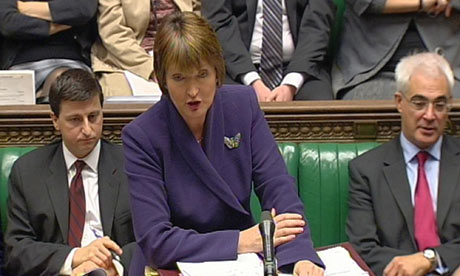
So today in (Deputy) Prime Minister's Questions Vince Cable stepped up to ask Harriet Harman about the widening inequality gap, which I'd picked up on earlier.

So in response Ms Harman said it had got wider under the Conservatives.

Well to be honest it did, but that is not the end of the story, it got even wider under Labour. Indeed the differential (equivalent to 100 times the wealth) between the top 10% of earners and the lowest 10% is greater than at any time since 1961.

One wonders just how Harriet can justify her statement that her Government have helped the poor when the opposite appears clear.

Friday, 15 January 2010

Osborne Should Learn His Recession Highway Code

"Mirror, signal, manoeuvre."

That is the order of actions to be taken over overtaking, changing lanes etc whilst driving a car. The equivalent, "look, announce, move" may well be said of a Chancellor driving an economy out of recession. Such a warning that the Conservatives party are not going to do this has come from Vince Cable, the Liberal Democrats Treasury Spokesman.

"It's foolish to set a political timetable with no regard for the state of the economy. There's a big risk that if cuts begin suddenly and on a purely political basis the economy will be plunged back into recession.

"What is needed is a set of clear economic tests, which include the growth of the economy and employment, as well as conditions in international markets, to judge when contraction of spending should begin or be accelerated."

The reason for such a call is the announcement that George Osborne is liable to make cuts within the first 50 days of a Conservative Government. Speaking and the London School of Economics he said:

"Programmes that represent poor value for money, excessive spending on things like advertising and consultants, spending on tax credits for people earning over £50,000, and spending on child trust funds for better-off families will all have to be cut during the financial year."

Adding:

"Everyone knows the government's spending plans for next year are driven by a looming election and not economic reality. So, with the date of the general election increasingly likely to be after the beginning of the next financial year, that means we will need to make early in-year reductions in existing plans."

Therein lies not one but two problems. The first is as Vince has pointed out what George is actually doing is also announcing a budget 'driven by a looming election and not economic reality'. Some of the cuts that may well be representing poor value for money may well be important ones for the economy. Just what value of money is the Tory party going to use?

The second is that he has now announced where he is targeting cuts. Expect a little bit of accelerated budget spending on some of those programmes that fear they are at risk of cuts at the start of the financial year. Commitment to spend the money before it can be taken away. If the election is May 6, that would mean George's quick budget would come by 25 June. So spending may be accelerated first quarter of the financial year to avoid it being taken away, then a slow down in the remainder of the year for fresh spending.

Therefore it is possible that the acceleration and contraction of spending may well be outwith the control of a Conservative Chancellor. He is hinting that the two-thirds cut and one third tax to cut into the deficit he is looking at an 80:20 ratio to accelerate this reduction himself. Of course Vince is merely reiterating the opinion he took over the weekend when he said;

"My party takes the view that the government's eight-year plan, with a four-year halving of the deficit, is a reasonable starting point.

"My judgment is that we will probably discover that it is not enough, but we have to start somewhere and it is a reasonable working assumption."

Vince was ignored over the issue of Bank deregulation that got us into this mess. He's sized up the situation and cast his eye over the best way to now bring us out of it at present that needs careful care. It is the reason that the Lib Dems have cut back on new spending commitments, even though they are dear to our heart. It's about the economy, stupid. First and foremost at this time it is about making that flow as smoothly as possible.

Of course the rapid budget is nothing new in Conservatives taking over from Labour they did just that in 1979. It was a radical shift to try and lift the UK out of recession, spending was cut and taxes were raised. Of course then the Government was fighting inflation, but the effect was falling aggregate demand and reduced growth. Unemployment quadrupled in those early years to the height of 3m. Then it lead to a full scale recession, now it could plunge us back into one.

Thursday, 31 December 2009

Union Backs Lib Dem Tax Policy

The Public and Commercial Services Union has said that to beat the recession the concentrating on tax avoidance, evasion and non-collection instead of making merely "savage" heavy cuts. They reckon that £70 billion was lost through tax evasion and £25 billion through avoidance, while uncollected tax increased by £2.7 billion to £27.7 billion this year.

Now where I have heard that message before?

Alistair Darling?

No.

George Osbourne?

No.

Vince Cable?

Absolutely and not just a random statement but an ongoing statement of intent.

Yes he did mention it in his conference speech in Bournemouth:

"Spending first. If public spending is cut in the usual way – slash and burn – there will be great damage to local and national services. Good will be cut with bad. Front line services will be butchered and lower paid workers will bear the brunt of cuts.....

"The Liberal Democrat approach to tax is also fundamentally different from the Tories. The Tories top priority is to cut taxes on millionaires. Our top priority is fairer taxes for those on lower and middle incomes.....

"So, my priority would be to cut income tax for those on low and middle incomes. Any such tax cut would be paid for by closing tax loopholes and privileges enjoyed by the relatively wealthy: the big differential between top rate income and capital gains tax; the exceptionally generous tax relief on large pension pots; and the blatant abuse of tax haven status including businesses paying stamp duty offshore. A programme due to be screened this evening will expose complicity on a large scale in tax dodging by Lloyds: a bank part owned by the tax payer. This must be stopped, now."


Oh yeah, Vince yet again looks at the big picture and sees a flaw in the perception of the other two parties in what to do. As I said this was far from an isolated statement. In June writing in the Independent he noted:

"The danger of allowing big differentials to arise between taxes on earnings and capital was clearly understood by Nigel Lawson and the last Conservative government, which taxed them at the same rate. This Government's enthusiasm for incentivising entrepreneurs led to a tapered rate, then widely abused and now abolished, leaving a gaping hole in the defences against tax avoidance.

"Another tax boost to bankers' bonuses is continuing higher rate relief on pension contributions. The Government has removed relief for earnings over £150,000 but that still leaves over £100,000 which enjoys the relief.

"And those with entitlement to non-dom status will also have calculated that it is worth paying the Government's poll tax of £30,000 if they can continue to channel income or capital gains offshore, outside UK tax.

"I am not a tax accountant and I am almost certainly underestimating the scale and scope of tax avoidance under the highly abusive, complex, structured arrangements designed by specialists for the banks' clients and staff. The Government has, in recent years, moved towards an Australian-style general anti-avoidance rule in order to help HMRC combat abuses and it is unclear whether these new bonus-related schemes have cleared that hurdle. If they have, someone in HMRC is being taken for a ride"

You see he is a man who has even noticed that current Government policy has made it easier to avoid paying full taxation, for those with the nous and resources to be able to take advantage of the system. Gordon is telling voters not to wreck the recovery but he and Darling have already wrecked the system in ways that has led to the tax gaps mentioned.

Back in February writing in the Guardian he also said:

"The evidence of systematic tax avoidance by rich individuals and UK-based companies strikes a particularly ugly note in these straitened times. There is an all-party consensus that non-domiciles should pay more (though the Conservative-backed government scheme makes no distinction between the super-rich and non-doms of more modest means). My own party wants to tackle more systematically the anomalies that make it possible to avoid paying even the top 40% rate, let alone 45% or more.

"The tax avoidance by corporations is, however, much greater and more difficult to identify. The simple point is that companies should be paying 28% of their UK profits in tax, while the evidence suggests that many high-profile British companies pay much less.

"Companies are, of course, not individuals but legal entities. Any corporate tax is ultimately passed on somewhere else - in reduced dividends or wages or in higher prices. Corporate profits may not be an ideal tax base. But there is surely some basic justice in the proposition that companies should pay the government of their host country for the infrastructure and other tax-financed services they receive: education, health, transport systems, policing"

Here is a man who has been talking about this all through 2009. Sure Darling and Osbourne may well take action based on the Public and Commercial Services Union's New Year Press release. But who do you want leading the economy as we run into the next general elections? The parties taking a knee jerk decision to follow last minute advise from the experts, or the party that has been talking the talk and making the decisions that have pre-empted that call?

The Lib Dems believe in fairness and getting the balance right between spending, tax rises and getting hold of what is rightfully HMRCs but has been overlooked or neglected.

Saturday, 10 October 2009

We Don't Need Another Overpromising Chancellor


Don't get me wrong I'm all for an aspiring Chancellor seeking economic advice from Economists, after all my degree is in economics so I know the importance of gauging other's opinions. Also I did say earlier this week that George Osborne,

"Like any mediocre student...went to the library and looked up what the master [Vince Cable] had written, taken some key points out of it, tried to pass it off as his own work, but fell short as the whole thing doesn't fit right together."


So the fact that he had also read and used figures from a National Institute of Economic and Social Research paper in preparation for his big keynote speech would be good news. Shouldn't it? Well no apparently he misunderstood that as well to the tune of £3bn or a period of 5 years out.

The previous chancellor promised he's done away with boom and bust. We now say, 'huh?'. Our current chancellor Alistair Darling has mispromised recovery and misrepresented respected economic sources in his budgets. A fact that Darling failed to understand his own incompetencies when he condemned Osborne by saying he:

"has overclaimed comes as no surprise at all. He has shown a shocking lack of judgment through this crisis. His erroneous claims on what he would raise from his pension cuts are just another example."
We don't need another chancellor who is that fictional with the fact, but that is how it is shaping up. At the start of the week of Conservative Party conference we were promised by Dave on the Andrew Marr show that they would be straight talking, and we certainly got austerity, doom, gloom and reality biting home. But have we been oversold the hope? Has Osbourne really promised 5 years quicker to deal with something than is achievable?

If he has he has taken the decision that it fits into the election cycle pattern rather than reality. Not everything is achievable in the 4-5 years that most UK Governments are elected into, that is a reality that we need to wake up to. Politicians can't promise the world and expect to deliver it in one term, if that is not doable.

Osbourne tried to wiggle out of the £3bn difference in claiming that he was accounting for inflation to come up with his 10 year hence figure. However, the NIESR said:

"There is no way of knowing how much it will save except in today's money.. The general principle behind raising the retiring age to 66 is sound. Indeed there is a good case for a rise earlier than the Conservatives are proposing. As we understand it, the full benefits of the package that the Conservatives are proposing will not be realised until after 2020. In 2016 it will only raise £4bn, rising to £10bn in 2023, with the full effect coming in 14 years' time."
So not £10bn in today's money (£13bn with 'inflation') by 2020 as George promised and tried to argue away.

What they can promise is to sort out the system to make the improvement possible. The current chancellor in his last budget overpromised on the recovery the country would rebound with, as figures since have proven. The man who may be next has misrepresented and overpromised another think tank.

We don't want, need nor deserve chancellors who look at economic advise a guideline figure and then try and improve on that. What we do need is someone in charge of our economy who understands economics the principles and mechanics behind what advise is given, not someone playing bridge or poker and merely upping the bidding. Vince Cable shines in that respect above both Darling and Osborne, he knows the issues, understands the theory and reasons the best and doable solutions. If you want straight talking he's the man.

Wednesday, 16 September 2009

It's a Matter of Trust

Peter Riddell in today's Times looks at a Populus Poll on the most trusted politicians. Top of the list comes Lib Dem Shadow Chancellor Vince Cable who is more trusted by Tory voters than William Hague, George Osbourne or Boris Johnson. He also scores over 53.4 on the scale of 0-100 of trust with Labour voters too.

The only other leading politician to score over 50 with the supporters of another party is Lib Dem leader Nick Clegg, who is also the third most trusted non-Labour politician behind Cable and Johnson, only just 0.1 behind the London Mayor. Overall the rankings have Cable ahead of, David Cameon, Hague, Clegg, Johnson, Osbourne Gordon Brown, Tony Blair, Alistair Darling, Michael Gove, Harriet Harman, Peter Mandelson.

One thing this Populus poll does show is that the Lib Dems are being trusted on the big issues of the day like how to handle the economy across party divides. Of the three potential people to help the UK emerge from recession after the election and deal with the debt Brown and Darling have gotten us into Cable is the man the people would like to see at the helm. Seeing as he scored 6.8 points higher than Osbourne from his own supporters why are the press talking about the Tories as being the best party to take Britain forward? The country seem to not really trust that idea?

Saturday, 30 May 2009

Brown's Last Ditch Roll of The Dice

Gordon Brown despite having on paper a Parliamentary majority is considering a deal to bring prominent Liberal Democrats into Cabinet in a 'game-changing move. However, his game must be well a truly up if he is again reconsidering this step.

When he first took over from Tony Blair the Prime Minister approached various senior Lib Dems in the Commons and Lords to take some role in his new administration. He was rebuffed from all sides. Now in his desperation of what he may be facing on Thursday in the European elections he is considering it again.

However, following Nick Clegg's comments from Thursday any such deal at this time will only be temporary. Gordon is trying to strike a deal with the party that is looking for reform of Parliament before going to a General Election because the other party is calling for one now. So Gordon if you want a deal with the Lib Dems it looks like you will setting forth a 100 day legislative timetable along the Clegg lines and facing your parties future in the Autumn at the earliest opportunity thereafter.

Those are the only conditions that the Lib Dems at this stage will possibly agree to work with Labour. Yeah in the meantime we may lend you Vince to help Alistair out over the economy, but most of the time we'll be pushing through the Third Reform Act(s) so that the people have more say, that their Parliament is more transparent and fair, and that they can take action if ever Parliament or Parliamentarians sink so low again.

This time Gordon we are playing hardball, we won't be pussyfooted around like the eventual empty promises of Blair following the Cook-Maclennan talks. We want those changes plus more now. All or nothing and we can't guarantee you survival even if you do.

Monday, 20 April 2009

Fairer Tax is Possible and Right for Now

One hundred years ago in 1909 David Lloyd George rose to the Liberal Government's dispatch box to present what was to go down in history as the people's budget. From the speculation of what Darling is going to announce of Wednesday the people aren't going to do too well out of the budget marking that centenary.

However, step forward Vince Cable alongside another Liberal leader Nick Clegg with the ideas that really do put the people first. This morning they announced plans that would effectively cut income tax bills for those on low and middle incomes by £700. This will be done by raising the personal tax allowance to £10,000 pounds.

How can this be afforded? Well it will merely be a tax switch, no additional revenue will be required to fund this initiative. The Labour Government already estimates that £10-40bn is lost though tax loops of the most wealthy, those who have led this country into the level of debt we are currently in. By targeting approximately £3-4bn of that lost taxes this aim of helping those on the lowest income can be achieved. By doing so it will lift 4 million out of income tax altogether.

Measures which the Liberal Democrats are proposing to use include:

  • Restricting tax relief on pension contributions to the basic rate (why should the top earners benefit proportionately more than those cleaning their offices, indeed normally their relief is just another perk)
  • Taxing Capital Gains at marginal income tax rates (basically closing once again one of the loopholes closed by Nigel Lawson that the rich had used to avoid paying the highest rates of income tax. A loophole reopened by Chancellor Gordon Brown)
  • Tackling Stamp Duty Land Tax Avoidance and Corporation Tax Avoidance (two of the ways that business have been robbing the hard working for years)
  • Subjecting benefits in kind to National Insurance Contributions as well as income tax and applying National Insurance to multiple jobs (why should the perks of the well paid not be taxed when the poorer have to scrimp and safe for some of the same things)
  • Switching aviation taxes from per person to per plane and increasing taxation on non-lifeline domestic flights (so those with no option but to fly don't need to worry but the cleaner services like the train, video conferencing, home working etc may become more attractive to those execs who fly weekly of course enough still will for this to still raise revenue)

But why bother, aren't we in a time of low inflation? Well yes the headline rate of inflation is at it's lowest for ages but this is not what those on the lowest incomes experience. Indeed the things that fill their spending at the things that are still going up faster that that headline rate.

Can we still be talking about cutting taxes when the Government are talking about cutting public expenditure? Yes we can. We're not actually talking about cutting the tax raised merely switching the attention from those who are disproportionately over taxed by making those who can afford to pay accountants (like my brother) to avoid paying their fair share at least in some easily to remedy areas. Also cutting public expenditure at this time is going the wrong way we need to start growing again first, although Darling may try and talk you into believing that it all that can be done on Wednesday, but we all see that the Labour Government has run out of ideas.

How much will people lose out and how much will people gain? Well the £700 is the headline figure. £10k will go some considerable way to lifting most of the income of those full time workers on minimum wage out of taxation which is far more than this Government tried to do last year by taxing them more by removing the 10p rate of tax. However, there is a fairness in helping those who can't afford to help themselves whereas looking at the businesses and high earners to burden a fairer share of their responsibility.

Saturday, 14 March 2009

Scottish Lib Dem Conference Day 2 Live Feed

Well if Day 1 worked you will have seen the feed of the #sldconf hashtag. Welcome to Saturday's live feed of the Scottish Lib Dem Conference.

Highlights

10:00 Minimum Income Guarantee
10:30 Financial Inclusion for Low Income Borrowers
11:30 Speech by Vince Cable MP
14:50 Emergency Motion
15:20 Leader Q&A
15:40 More Powers for the Scottish Parliament

Tuesday, 11 November 2008

Banking 101 for Calum Cashley

Calum Cashley in his latest post says:

"Hang on, says I, was it Burt and Mathewson who got HBoS into trouble? No, indeed it was not, it was Stevenson and Hornby, these are the jokers who got the bank hopelessly lost and are now claiming to have the map which will get the bank back out of the swamp. Who do you trust?"


George Mathewson may have retired as Chairman of RBS in 2006, while Peter Burt as Chairman of the BoS attempted to take over the NatWest and merged the bank with the Halifax. Seeing that as far back as 2004 Vince Cable was warning against the rising debt levels in our banks:

"We cannot avoid the fact that by this summer individuals are collectively going to be more than £1 trillion in debt and the relationship between debt and income is higher than it has ever been historically. Each month lending is increasing by around £10 billion of which a large proportion is unsecured lending.

"This is an issue which needs urgent attention, with interest rates predicted to rise by over 1% in the next year we need to decide what level of debt is sustainable or many will find themselves unable to sustain their debts as the costs of repayments rise."


Therefore neither man can be as completely exonerated as Mr Cashley would have us imagine. So while I say we have to do evenrything to save our banks lets be level headed and Barak Obama-like about this and not territorial and John McCain-like.